A “Part Two” is also worth checking out.
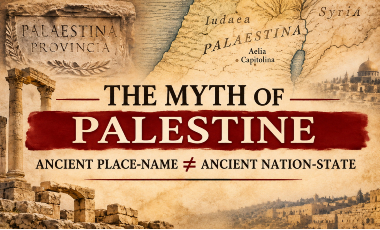
For Jewish history, the rebellions against Rome mark a major turning point. They cost hundreds of thousands of Jewish lives and sent many of the survivors into slavery and exile. They reduced the Jewish people to secondary status in their own homeland. Indeed, the revolts put the future of Jewish survival there in question, although they did not end it. It’s a common misconception to think that the Romans finished the Jewish presence in the Land of Israel. They did not, but they did do an enormous amount of damage. Rome destroyed the Jewish capital, Jerusalem, and its crowning glory, the Temple. Rome ended the daily sacrifices that marked the heart of Judaism and ruined the priesthood who carried them out. Rome decimated the largest and most prestigious Jewish Diaspora community in the Roman Empire, the Jews of Egypt. As if to add insult to injury, the Romans changed the name of the country from Judea (“land of the Jews”) to Syria Palaestina, or simply Palestine (“land of the Philistines”). In no other case did the Romans punish a rebellious province by changing its name. Then again, no people had rebelled as often as the Jews.
Barry Strauss, Jews vs. Rome: Two Centuries of Rebellion Against the World’s Mightiest Empire (New York: Simon & Schuster, 2025), introductory section.
I ASK GROK:
What was the name of the revolt that made the emperor change the name of Judea to Palestine?
GROK RESPONDS:
The Bar Kokhba revolt, roughly one thirty-two to one thirty-five AD. After crushing it, Hadrian merged Judea with Syria and renamed the whole province Syria Palaestina — deliberately invoking the Philistines, Israel’s ancient enemies, as a final insult. It’s one of history’s more petty name changes, and the name stuck for centuries.
The interesting wrinkle is that “Palestine” wasn’t new — Herodotus used it for the coastal strip centuries earlier. Hadrian just expanded it to erase Jewish identity from the map. Want me to dig into what actually happened during the revolt itself?
I ASK GROK:
No, there’s some people out there, authors that mention that the Philistines actually disappeared as a distinct people.
GROK RESPONDS:
They’re right. By the sixth century BC, after Nebuchadnezzar’s campaigns, they’d been absorbed into the surrounding Semitic populations — Assyrians, Babylonians, and later the Phoenicians and Judeans. No language survives, no inscriptions after a certain point, nothing. Archaeologists still argue about whether they were Aegean migrants or locals who adopted that material culture, but either way, as a people they were gone long before Hadrian picked the name. Which makes his choice even more of a literary flourish than a demographic one — he was reaching back to a ghost.
A recent missionary came to speak at the church I belong to. While I did not hear much of the presentation, I heard enough to make my historical antenna go up. Unfortunately, that particular presentation was not recorded. But Sameer’s ideas are expressed here:
- “A Pastoral Appeal to Church Leaders in America from a Palestinian Pastor” (YOUTUBE)
My appeal would be to truth, and to history. Not to a fictitious idea know as Palestine.
First though, before sounding harsh, I would just like to note that Pastor Dabit may have some nuances I am not aware of or views that align closer with mine. I do not know, and my “not knowing” is worth knowing. Heh. This being said, many view “Palestine” as a real, historical country, and not a larger area, like North America being used to select out a people called “North Americans” and founding a country by that name.
See my previous May 3, 2017 post on this, “Are Palestinians Indigenous to ‘Palestine’?” Something I have been noting since March 29, 2010 on my old blog.
Here is an example of what I mean, via THE TIMES OF ISRAEL:
- “Back when Palestinians insisted there’s no such place as Palestine”
The thrust of the Palestinian legal case today is that Palestine is a centuries-old geopolitical entity whose residents are entitled to statehood as a matter of international law. But that has not always been the Palestinians’ legal position.
Immediately following World War I and continuing through most of the British Mandate period (1922-1948), Palestinian lawyers and witnesses argued repeatedly before various tribunals that there was no such place as “Palestine.” Instead, they claimed the area known colloquially as “Palestine” was in fact part of Syria, or “southern Syria” to be precise. Following the Israeli War of Independence, the Palestinians changed course and pledged their loyalty to Jordan.
It seems unthinkable that any Palestinian lawyer or legal scholar would argue today that Palestine is part of Syria or Jordan, but those were the predominant Palestinian legal positions from the end of World War I until the Six Day War.
For example, in November 1918 a Palestinian Arab group filed a petition with the French Commissariat in Jerusalem “begging that Palestine might be formally included in Syria.”
In February 1919 the Arab Delegation from Palestine to the Versailles Peace Conference submitted a formal petition urging that rather than be recognized as an independent state, Palestine should be deemed part of and merged into Syria. The petition said, “We consider Palestine as part of Arabic Syria as it has never been separated from it at any time. We are connected with it by national, religious, linguistic, natural, economical and geographic bonds . . . In view of the above we desire that our distinct Southern Syria or Palestine should not be separated from the Independent Arabic Syrian Government.”
The Arab legal argument that there was no such political entity as “Palestine” continued after the League of Nations awarded the Palestine Mandate to Britain in 1922. For example, in 1925 Jamal Effendi-Husseini, a prominent Palestinian Arab, challenged a decision of British High Commissioner Sir Herbert Samuel allowing local postage stamps to bear an inscription in Hebrew identifying the country as “Palestine E.I.” (Palestine Eretz Israel).
Husseini’s lawyer, Auni Bey Abdul Hadi, argued to the court that “Palestine” was “not an Arab word.” Auni Bey insisted the correct name of the country was “Southern Syria.” “Palestine,” he argued, had no separate existence and was in fact part of Syria.
Following the Hebron Massacre in late August 1929, the British Government convened an inquiry commission under the leadership of Sir Walter Shaw. A witness for the Arab side, Saleem Farah, testified under oath on November 27, 1929 that prior to World War I, Palestine was never regarded as a separate political entity.
The Grand Mufti of Jerusalem, Haj Amin al Husseini, also testified before the Shaw Commission. The Mufti conceded in his testimony that the League of Nations Mandate for Palestine granted political rights in Palestine to the Jews, but not to the Arabs.
Many other prominent Arabs also argued Palestine should have been regarded as part of Syria. George Antonius, author of the acclaimed book “The Arab Awakening,” testified before the Palestine Royal Commission (the Peel Commission) on January 18, 1937 in Jerusalem. Antonius spent a considerable portion of his testimony arguing Palestine had always been part of Syria. He noted “Palestine has always been an integral part of Syria and that what was common to Syria was common to Palestine.”
Following the Israeli War of Independence, the Palestinians declared their allegiance to King Abdullah I of Jordan at the Jericho Conference in December 1950. Abdullah invoked the resolutions adopted at the conference as the legal basis for Jordan’s annexation of the West Bank. ….

Another TIMES OF ISRAEL article:
- “The Invention of the Palestinian People”
…. On a related tangent, in 1948, the invasion of Israel by 6 pan-Arab armies had NOTHING to do with creating an Arab Palestinian state but ALL to do with a classic imperialist Muslim scramble for Palestinian territory. Had they succeeded, as the first secretary-general of the Arab League, Abdel Rahman Azzam, admitted to a British reporter, Transjordan “was to swallow up the central hill regions of Palestine with access to the Mediterranean at Gaza. The Egyptians would get the Negev. The Galilee would go to Syria, except that the coastal part as far as Acre would be added to Lebanon.”
Had Israel lost the war, its territory would have been divided among the invading Arab forces. The name Palestine would have vanished into the dustbin of history.
So, are the “Palestinians” an invented people for purely political (anti-semitic) purposes?
Well, even Mandate Palestinian Arab leaders during the British mandate era (1920-48) who, as products of the Ottoman imperial system where religion constituted the linchpin of the socio-political order of things, had no real grasp of the phenomenon of nationalism. Hence, they had no interest in the evolution of a distinct Palestinian nation, or acknowledging a Palestinian “people”, because there simply wasn’t one.
As an example that there was no concept of “Palestinian” nationhood or peoplehood, the April 1920 pogrom in Jerusalem was not in the name of independence of the “Palestinian people” of the Mandate area, but under the demand for its incorporation into the (short-lived) Syrian kingdom, headed by Faisal ibn Hussein of Mecca….
In 1926, the Arab Executive Committee still referred to Palestine as the unlawfully severed southern part of “the one country of Syria, with its one population of the same language, origin, customs, and religious beliefs (emphasis mine), and its natural boundaries, as I pointed out earlier.
In July 1937, the Arab Higher Committee (AHC) justified its rejection of the Peel Commission’s recommendation for the partition of Palestine on the grounds that “this country does not belong only to [the] Palestine Arabs (that qualifying noun again….) but to the whole Arab and Muslim Worlds (emphasis mine).”
And finally, as late as August 1947, three months before the passing of the U.N. resolution partitioning Mandate Palestine into Arab and Jewish states, the AHC’s mouthpiece, al-Wahda, advocated the incorporation of Palestine (and Transjordan) into “Greater Syria (emphasis mine).”
No, there was no concept of a “Palestinian people” but rather, always one of Palestinian Arabs who were part of the wider Arab Muslim ummah.
How did they then suddenly appear as homogeneous ethnic group in 1967 when not even the Arab High Commission had ever heard of them?
There are undereducated misconceptions too that pan-Arabism was of no consequence in the dialogue surrounding the authenticity of the “Palestinian” “people”. This is untrue.
Even the younger generation of post 1948 Arab activists supported this ideal as evidenced by Ahmad Shuqeiri, a Lebanon-born politician of mixed Egyptian, Hijazi, and Turkish descent who served as the Arab League’s deputy secretary-general. As he put it, “Palestine is part and parcel in the Arab homeland.”
Asked to clarify which part of the “Arab homeland” this specific territory belonged, he added that Palestine “is nothing but southern Syria.”
And so, it is no surprise that Yasser Arafat, the (Egyptian born and educated) father of the “Palestinian people” followed this pan-Arab line. The 1964 PLO charter defined the Palestinians as “an integral part of the Arab nation”, rather than a distinct nationality (emphasis mine) and vowed allegiance to the ideal of pan-Arab unity – that is, to Palestine’s eventual assimilation into “the greater Arab homeland.”
In 1996, even that bastion which proclaims itself as the leader in the “struggle” for the Palestinian “people”, Hamas, said this, “Islamic and traditional views reject the notion of establishing an independent Palestinian state … In the past, there was no independent Palestinian state. … [Hence] our main goal is to establish a great Islamic state, be it pan-Arabic or pan-Islamic… This…land…is not the property of the Palestinians…. This land is the property of all Muslims in all parts of the world.” (senior Hamas leader Mahmud Zahar, 1996)
And finally, on this line of reasoning, it is not possible to go past the words of Azmi Bishara, founding leader of the nationalist Balad Party (with seats in the Israeli parliament since 1999). In a statement he made in 2002 he said: “My Palestinian identity never precedes my Arab identity…. I don’t think there is a Palestinian nation, there is [only] an Arab nation…. “
Not much more needs to be said; the concept of a Palestinian “people” engaged in a struggle of “liberation” from a colonial Jewish “oppressor” is a purposely misleading one, invented solely for the purpose of de-legitimising the Jewish state and its people. ….
Not a lot of people are aware of this history. There is no country in antiquity or currently someone can point to and say, “look, here is Palestine.”
It is a fictitious label.
In a book I read many years ago, “Myths and Facts: A Guide to the Arab-Israeli Conflict,” I was enlightened to the fact that the history is different than a professor from a university would typically share. To wit… in the book, “The Arab Case for Israel,” by Hussain Abdul-Hussain, he noted this:
In my college years, I accepted the Arab narrative on Palestine. The story was clear—there was an Arab state called Palestine. The British, hypnotized by Jews who used money and media to control the world from behind the scenes, took Palestine from the Ottomans, allowed Jews to immigrate, and tipped the military scales in favor of the Zionists, who violently displaced the native Arabs in order to build the exclusivist State of Israel. To right this wrong, Arabs had to battle Israel in every way possible—war or peace—to take back what was theirs.
And this is what most people believe. Chapter one (PDF) of “Myths and Facts,” is summed up thus:
Chapter One of Myths and Facts, “Israel’s Roots,” argues that the Jewish people have a longstanding historical, religious, and political connection to the land of Israel, predating modern Zionism by thousands of years. Bard challenges claims that Palestine was historically an exclusively Arab country, that Palestinians descend directly from the ancient Canaanites, and that Zionism was simply a form of Western colonialism. He traces Jewish communities in the region, discusses the Balfour Declaration and League of Nations Mandate, and argues that Jewish immigration helped develop the land. He also contends that a distinct Palestinian national movement emerged largely in the twentieth century and that Britain had not explicitly promised Palestine to the Arabs. Overall, the chapter presents the historical and legal case for Jewish national claims while disputing competing narratives about the origins of Palestinian identity and statehood.
To continue with this understanding is a portion of an interview between Dinesh D’Souza and Mosab Hassan Yousef. Yousef is an American author and former militant who defected to Israel in 1997 and who’s father is the a co-founder of the Palestinian Islamist organization Hamas.
So, when I say, truth should be on the forefront of this conversation,” is, because people who continue the idea of “Palestine” as a country are helping the terrorists in their goal. Whether they realize it or not. Useful Idiots in other words.
Useful idiot
The term “useful idiot,” commonly but incorrectly attributed to Vladimir Lenin, emerged in twentieth-century political discourse to describe individuals who unwittingly advance the interests of an ideological movement. Although no authenticated evidence establishes that Lenin or Stalin coined the expression, the concept became closely associated with communist propaganda and the exploitation of sympathetic Western intellectuals and political activists.
Another point I wish to note which I caught in the interview of the video I link to the interview of Sameer Dabit, is when he said: “They’re not the same people when it comes to the state of Israel as a political nation, to the Israel as those in scripture.” I will give him the benefit of the doubt to say that the political portion of modern Israel is different than the historical one. But he could also be refereeing to crazy thinking like Candace Owens and the Frankists.
So, while I do not know, I will respond with a break-out of Dr. Vlach’s article titled: “Modern Israel and Israel in the Bible: Clarifying the Relationship”
Are Modern Israel and Biblical Israel Really Different People?
There is an important distinction to make here. The modern State of Israel, established in 1948, is not politically or religiously identical to ancient biblical Israel. It is a modern state with contemporary institutions, secular and religious citizens, and a political system very different from the government established under the Mosaic covenant.
But that does not mean the Jewish people of today are unrelated to the Israel of Scripture.
As Dr. Michael J. Vlach explains in “Modern Israel and Israel in the Bible: Clarifying the Relationship,” Israel’s identity did not disappear during centuries of exile and dispersion. The Jewish people continued to exist as an identifiable ethnic and historical community, maintaining their religious traditions, language, cultural identity, and connection to their ancestral homeland.
Vlach makes an important distinction: the establishment of the modern State of Israel did not create a new people or recreate an extinct nation. Rather, it restored political sovereignty to a people whose identity had endured throughout the centuries.
Nor does Israel’s present unbelief invalidate that historical continuity. Scripture repeatedly describes Israel as a nation that experienced periods of widespread disobedience and unbelief without ceasing to be Israel. Paul makes this distinction particularly clear in Romans 9–11, where he acknowledges Israel’s unbelief while continuing to recognize the nation’s covenant history and future significance.
Consequently, it is perfectly reasonable to distinguish the modern Israeli government from ancient biblical Israel. What is not reasonable is to use that political distinction to suggest that the Jewish people living in Israel today are somehow a different people from the descendants of biblical Israel.
The modern state and the biblical nation are not identical political entities. But the historical people are connected.
That distinction matters. Criticism of Israeli government policies is legitimate and does not require denying Jewish historical continuity. Likewise, recognizing Palestinian suffering and the historical presence of Palestinian Christians does not require denying the Jewish people’s historical connection to the land.
Wherever the Palestinians have gone, there has been significant bloodshed. It may be politically incorrect to point out, but the prevalence of terror is among the most significant of any group today. While the Nazis tried to hide their atrocities, terrorism is celebrated within Palestinian society.
Some quick historical hits for the reader not connected to Sameer’s views:
- Israel is not a “settler-colonial” state. It was established as a national liberation movement for the Jewish people, who have had a continuous presence in what is now Israel for thousands of years. The Zionist movement successfully fought against both Ottoman and British colonialism and established a vibrant democracy in place of tyrannical colonialist rule.
- Israel has not denied the Palestinian people statehood. Israel accepted the two-state solution proposed by the UN in 1947–1948, but the Palestinian leadership rejected statehood because it opposed the establishment of any nation-state for the Jewish people, regardless of size. Since 1967, Palestinians have refused to accept resolutions that would have resulted in a Palestinian state on more than 90 percent of the West Bank and the entire Gaza Strip.
- Israel did not cause the Palestinian refugee problem. Had the Arab states not attacked the new state of Israel in 1948, there would have been no “nakba” and no Palestinian refugees. There would have been a two-state solution in which the Jewish state had a Jewish majority and the Arab state had an Arab majority. Palestinian leaders have exacerbated the problem by creating refugee camps, rather than integrating their fellow Arabs, the way Israel integrated a similar number of Jewish refugees from Arab countries. The United Nations has contributed to the refugee problem by establishing a special agency, UNRWA, that is dedicated to maintaining these camps and the status quo of their residents as “refugees.”
Here are some PDFs resources that go deeper. What follows, chapter extracts and a small book:
- MYTHS AND FACTS – Palestinian History (Chapter One)
- The Myth of Ancient Palestine (Chapter Two)
- The Ten Big Anti-Israel Lies: And How to Refute Them with Truth
- Jews vs. Rome: Two Centuries of Rebellion Against the World’s Mightiest Empire by Barry Strauss (Chapter 11)
- Werner Eck Chapter 18 of Judäa – Syria Palästina.
Some resources used:
Sources and References
- “Back When Palestinians Insisted There’s No Such Place as Palestine,” The Times of Israel, https://blogs.timesofisrael.com/back-when-palestinians-insisted-theres-no-such-place-as-palestine/.
- Mitchell G. Bard, “Israel’s Roots,” chap. 1 in Myths and Facts: A Guide to the Arab-Israeli Conflict (American-Israeli Cooperative Enterprise, 2017), 11–24.
- Alan Dershowitz, The Ten Big Anti-Israel Lies: And How to Refute Them with Truth (Skyhorse Publishing, 2024).
- Hussain Abdul-Hussain, “The Myth of Ancient Palestine,” chap. 2 in The Arab Case for Israel: And Other Essays from a Distant Conflict (Wicked Son, 2026).
- David Ben-Basat, “How Misleading Info Leads to False Claims of a Historic ‘Palestinian State,’” The Jerusalem Post, December 14, 2024, https://www.jpost.com/opinion/article-833263.
UPDATED “STUFF”
|
Bar Kokhba Revolt, (132–135 ce), Jewish rebellion against Roman rule in Judaea. The revolt was preceded by years of clashes between Jews and Romans in the area. Finally, in 132 ce, the misrule of Tinnius Rufus, the Roman governor of Judaea, combined with the emperor Hadrian’s intention to found a Roman colony on the site of Jerusalem and his restrictions on Jewish religious freedom and observances (which included a ban on the practice of male circumcision), roused the last remnants of Palestinian Jewry to revolt. A bitter struggle ensued. Bar Kokhba became the leader of this second Jewish revolt (see First Jewish Revolt [66–70]); although at first successful, his forces proved no match against the methodical and ruthless tactics of the Roman general Julius Severus. With the fall of Jerusalem and then Bethar, the fortress to the southwest of Jerusalem where Bar Kokhba was slain, the rebellion was crushed in 135. According to Christian sources, Jews were thenceforth forbidden to enter Jerusalem. The Renaming of Judea to Syria Palaestina Following the suppression of the Bar Kokhba Revolt, Hadrian decided to take drastic measures to erase the Jewish presence in the region. One of these actions was the renaming of the province of Judea to Syria Palaestina. This was not merely an administrative change but a deliberate attempt to sever the historical and religious connection of the Jews to their land. The choice of the name “Palaestina” referred to the ancient Philistines, traditional enemies of the Jews in the Old Testament. By invoking this name, Hadrian aimed to undermine the historical continuity of the Jewish people in the region, stripping them of their claim to the land. The renaming was also a strategic move to prevent any future Jewish uprisings or attempts to reclaim their independence. The founding of Aelia Capitolina and the renaming of the province were part of a broader policy of cultural assimilation. Hadrian sought not only to impose Greco-Roman culture but also to obliterate any remnants of Jewish religion and history. This policy was particularly harsh, aiming to render the Jews a marginalized minority with no hope of regaining their former glory. [….] Hadrian, though recognized for his cultural initiatives and administrative reforms, left a deep scar on the Jewish people through his actions. His attempt to eradicate Judaism and transform Judea into Syria Palaestina was part of a broader strategy of cultural unification and suppression. His conflict with the Jews was a clash of cultures and religions, with the wounds of this period echoing into modern times. The history of Hadrian and his relationship with Judaism remains one of the most significant chapters in the history of the conflict between religion and power. …. The crushing of the Bar Kokhba revolt marked one of the darkest episodes of Hadrian’s reign. His measures went far beyond military victory: Jerusalem was rebuilt as Aelia Capitolina, its Jewish inhabitants expelled and banned on pain of death, and the province itself was stripped of its ancient name. By renaming Judaea as Syria Palaestina, Hadrian sought not only to erase the memory of rebellion but to sever the bond between a people and their land. (“The Bar Kokhba revolt: the Roman point of view” by Werner Eck). The renaming was unique in Roman history. Provinces had been divided, reorganized, and occasionally renamed after geographical features, but never before had the identity of a province been deliberately rewritten as punishment. In doing so, Hadrian transformed a local revolt into a lasting chapter of imperial memory. The very word Palestina, first imposed as an instrument of domination, would endure through centuries of history, long after the empire itself had faded. Hadrian’s actions in Palestine reveal the double edge of Roman power. Through monuments, laws, and names, Rome could reshape landscapes and identities—but only at immense human cost. The arch at Tel Shalem, the ruins of Aelia Capitolina, and the echo of a lost Judaea all stand as reminders that empires rule not only by armies, but by memory. |
MORE Via Chat-GPT and some uploaded sources via my digital library:
The Roman Response and the Renaming of Judaea
The scale of the Bar Kokhba revolt should not be underestimated. Rome’s response involved more than the forces stationed in Judaea. Roman commanders and military detachments were brought in from neighboring provinces, including Syria and Arabia. Julius Severus, previously governor of Britain, was transferred to Judaea to direct the campaign. Following the suppression of the revolt, Severus and other commanders received the ornamenta triumphalia, the prestigious military honors associated with Roman victory. The monumental arch near Tel Shalem commemorating Hadrian’s victory provides additional epigraphic evidence of the significance Rome attached to the campaign.
The consequences for the Jewish population were severe. Ancient accounts describe extensive destruction, mass casualties, enslavement, and displacement. Although the precise casualty figures reported by Cassius Dio remain difficult to verify, the archaeological evidence supports the conclusion that the revolt resulted in widespread devastation, particularly in the region of Judah. Jewish life nevertheless continued elsewhere in the province, especially in Galilee and communities such as Lydda.
Following the revolt, the provincial name Judaea was replaced by Syria Palaestina. The significance of this change has been interpreted in different ways. Some historians regard it as a deliberate Roman effort to diminish the historical association between the land and the Jewish people. Werner Eck, however, notes another possibility: that the initiative may have originated among the province’s non-Jewish inhabitants, who wished to distance themselves from the name Judaea, with Hadrian willingly accommodating their wishes.
The name Palestine itself was not invented by Hadrian. Greek writers had used geographic forms of the name centuries earlier, and the designation had a history independent of the Roman provincial reorganization. What changed after the revolt was its official administrative application to the former province of Judaea. The distinction matters: an ancient geographic designation, a Roman provincial name, and a modern national identity are three different historical developments.
- Christina Athanasiou, “How Did Emperor Hadrian’s Vengeance Lead to Modern Palestine?” Roman Empire Times, September 21, 2025, https://romanempiretimes.com/roman-emperor-hadrian-vengeance-modern-palestine-israel/. This supports the discussion of Julius Severus, the involvement of commanders from Syria and Arabia, and the broader Roman military mobilization.
- Barry Strauss, Jews vs. Rome: Two Centuries of Rebellion Against the World’s Mightiest Empire (New York: Simon & Schuster, 2025), 269–70; Werner Eck, Judäa – Syria Palästina: Die Auseinandersetzung einer Provinz mit römischer Politik und Kultur (Tübingen: Mohr Siebeck, 2014), 212–28. These support the honors awarded to the commanders and the epigraphic evidence of Rome’s commemoration of the victory. Athanasiou also discusses the Tel Shalem arch.
- Strauss, Jews vs. Rome, 269–71. Strauss discusses the destruction, casualties, enslavement, displacement, and continued Jewish life in Galilee and Lydda. He reports Cassius Dio’s casualty figures but cautions that ancient figures require scrutiny.
- Werner Eck, “Hadrian, the Bar Kokhba Revolt, and the Epigraphic Transmission,” in Judäa – Syria Palästina, 226. Eck dates the provincial renaming to the period when Julius Severus was still governor, probably near the end of the revolt.
- Eck, Judäa – Syria Palästina, 226; Dimosthenis Vasiloudis, “Hadrian’s Ambition: The Renaming of Judea to Palestine and the Suppression of Jewish Identity,” The Archaeologist, August 28, 2024, https://www.thearchaeologist.org/blog/hadrians-ambition-the-renaming-of-judea-to-palestine-and-the-suppression-of-jewish-identity. Compare Eck’s alternative possibility that the initiative may have come from the non-Jewish population of the province. Vasiloudis presents the more explicitly punitive interpretation.
- Strauss, Jews vs. Rome, 270–71. Strauss discusses the earlier Greek use of the geographic name Palestine, including references to Herodotus and Aristotle, and distinguishes that older usage from Hadrian’s administrative renaming.
Hadrian’s Romanization of Jerusalem
The Jewish Encyclopedia describes Hadrian’s attempt to establish a Roman city upon the ruins of Jerusalem and transform the former Jewish religious center into a pagan Roman city. The emperor intended to turn the site of the Jewish Temple into a place of worship dedicated to Jupiter Capitolinus. A sanctuary to Jupiter and statues of Hadrian and Jupiter were placed in the Temple area, while other Roman public buildings were erected throughout the city.
The rebuilt city was named Aelia Capitolina, a name honoring Hadrian and Jupiter Capitolinus. Non-Jewish colonists were introduced into the city, and Jews were prohibited from entering it under an imperial decree that remained in force for generations.
This account documents a broader Roman policy of Romanization and the displacement of Jewish religious and civic institutions. The devastation of the Bar Kokhba revolt likely intensified Hadrian’s determination to suppress Jewish resistance and consolidate Roman control over the province. The revolt provided a powerful political and military context for the measures that followed, including the continued exclusion of Jews from Jerusalem and the province’s eventual renaming as Syria Palaestina. Although the evidence does not establish Hadrian’s precise personal motive for each measure, it is reasonable to understand these actions as part of a broader effort to dismantle the institutions and political identity associated with Jewish resistance to Roman rule.
Adapted thoughts from The Jewish Encyclopedia, vol. VII (New York: Funk & Wagnalls, 1902), 128–29.