(More at Breitbart)
Debate


Reason and Faith (From An Old Debate-Updated)
Certain words can mean very different things to different people. For instance, if I say to an atheist, “I have faith in God,” the atheist assumes I mean that my belief in God has nothing to do with evidence. But this isn’t what I mean by faith at all. When I say that I have faith in God, I mean that I place my trust in God based on what I know about him.
(Evidence for God: 50 Arguments for Faith from the Bible, History, Philosophy, and Science, p. 38.)
Nightmyre, you said:
- “Christianity, and many other religions, put forth the concept of Heaven and Hell. Obviously, there is no basis in REALITY for these two locations. You cannot look on a map and pinpoint the physical location of heaven and hell. However the religion gives you the TOOLS NECESSARY to reach this goal. And using these tools requires a large amount of faith, because you are NEVER certain that you will reach your goal.”
You show a very tainted view of what Christianity actually teaches. You seem to clump many beliefs (not just Christianity) into one set or way of thinking. This is not only disrespectful to me (although it really doesn’t bother me), it is disrespectful to others of various faiths. I make it a goal to, at the least, when I deal with other faiths, to really delve into what they actually teach and believe. I will post some stuff here to assist in showing you where you are off the mark in just one area of the Christian faith.
Obviously, if the God of the universe [the Judeo-Christian God] has revealed Himself truly, and if Christ is the only true way of salvation, then we would expect convincing evidence to substantiate this. Not just some evidence, or inferior evidence offering a dozen equally valid options in the choice of their religion; but superior evidence, offering the thinking man only the most logical choice. Dr. John Warwick Montgomery asks:

…I want to insist that there is not a single item in Christianity, upon which our souls’ salvation depends, that is only “probably” true. In each case, the evidence supplied is sufficient to establish conclusive proof regarding the truth of the Christian faith. This is not to say, however, that such a case is psychologically compelling, so that one could not reject the evidence. That would be an abuse of free will. I do argue, however, that one can be absolutely certain (intellectually) of such matters as the existence of God, the deity of Christ, the inspiration of the Bible, etc.
“What if a revelational truth-claim did not turn on questions of theology and religious philosophy-on any kind of esoteric, fideistic method available only to those who are already “true believers” – but on the very reasoning employed in the law to determine questions of fact?… Eastern faiths and Islam, to take familiar examples, ask the uncommitted seeker to discover their truth experientially: the faith-experience will be self-validating…. Christianity, on the other hand, declares that the truth of its absolute claims rests squarely on certain historical facts, open to ordinary investigation…. The advantage of a jurisprudential approach lies in the difficulty of jettisoning it: legal standards of evidence developed as essential means of resolving the most intractable disputes in society … Thus one cannot very well throw out legal reasoning merely because its application to Christianity results in a verdict for the Christian faith.”
Dr. John Warwick Montgomery makes the point again that “the historic Christian claim differs qualitatively from the claims of all other world religions at the epistemological point: on the issue of testability” (“The Jury Returns: A Juridical Defense of Christianity,” in Evidence for Faith: Deciding the God Question, p. 319). A good example of someone taking the faith up on its claims were Viggo Olsen, M.D., author of Daktar: Diplomat in Bangladesh, and his wife, who were both skeptics who…
“decided to embark on a detailed study of Christianity with the intention of rejecting it on intellectual grounds. Little by little, as they studied works that deal with data common to apologetics and evidences… they were led step by step to see the truthfulness of Christianity. Their study was no minor investigation or causal perusal. It was an exhaustive search…” (Frederick R. Howe, The Role of Apologetics and Evangelism).
And this claim to truth includes the possibility of self-defeating constructs within the framework of Christian philosophy, which I have shown to be in the atheists philosophy. Mortimer J. Adler is one of the world’s leading philosophers, chairman of the board of editors for the Encyclopedia Britannica, architect of the Great Books of the Western World series and its remarkable Syntopicon, he is also the director of the prestigious Institute for Philosophical Research in Chicago. Adler says, “I believe Christianity is the only logical, consistent faith in the world” (Christianity Today, Nov. 19, 1990). Did you get that? One of the greatest philosophers of our time said that unlike Christianity, every religion that claims to have an epistemology is self-defeating.
Dr. Drew Trotter, a Cambridge University graduate, argues convincingly that “logic and the evidence both point to the reality of absolute truth….” George F. Gilder, one of our century’s “greatest minds,” and author of Wealth and Poverty and Telecosm, says “Christianity is true, and its truth will be discovered anywhere you look very far”] (David A. Noebel, Understanding the Times: The Religious Worldviews of Our Day and the Search for Truth, p. 13). Principle at Wycliff Hall, Alister McGrath, author of Intellectual Don’t Need God and Other Myths, says the evidence for Christianity is akin to that found in doing good scientific research:
“When I was undertaking my doctoral research in molecular biology at Oxford University, I was frequently confronted with a number of theories offering to explain a given observation. In the end, I had to make a judgment concerning which of them possessed the greatest internal consistency, the greatest degree of predictive ability. Unless I was to abandon any possibility of advance in understanding, I was obliged to make such a judgment… I would claim the right to speak of the ‘superiority’ of Christianity in this explicative sense” (“Response to John Hick,” in More Than One Way? Four Views on Salvation in a Pluralistic World, p. 68).
Noted Christian scholar Dr. Carl F. H. Henry wrote a three thousand page, six volume work on the topic of God, Revelation, and Authority. After his exhaustive [to say the least] analysis, Henry declared that “Truth is Christianity’s most enduring asset…” (Ajith Fernando, The Supremacy of Christ, p. 109).
Dr. Robert A. Morey writes,
“There is more than enough evidence on every hand from every department of human experience and knowledge to demonstrate that Christianity is true… [It is the faith of the non-Christian [that] is externally and internally groundless. They are the ones who leap in the dark. Some, like Kierkegaard, have admitted this”
Robert Morey, Introduction to Defending the Faith (Orange, CA: Christian Scholars Press, 2002), 38.
James Sire points out in his book, Why Should Anyone Believe Anything At All?, that an argument for belief, religious or otherwise, must be secured on the best evidence, validly argued, and able to refute the strongest objections that can be mustered against it (p. 10). Dr. Norman Geisler adds that “In the face of overwhelming apologetic evidence, unbelief becomes perverse” (Baker Encyclopedia of Apologetics, p. 529). Take note, faith is active throughout the believers life and grows and matures as the believer does. It includes some aspects that are well worth mentioning:
Although suffering as a prisoner for proclaiming the gospel, Paul was not disillusioned or in despair. Why? Because of his faith. As he testifies to his faith, its essential elements become clear. “And of this gospel I was appointed a herald and an apostle and a teacher. That is why I am suffering as I am. Yet I am not ashamed, because I know whom I have believed, and am convinced that he is able to guard what I have entrusted to him for that day” (2 Tim. 1:11-12). Truth about God can be known. Zeal for God without knowledge (of the Redeemer) did not suffice for monotheistic and moral Jews (Rom. 10:1-2). Neither did worship of an “unknown God” atone for the cultured Athenians (Acts 17:23-31). In contrast, Abraham was “fully persuaded that God had power to do what he had promised” (Rom. 4:21).”
The faith that saves is directed away from human educational, cultural, and religious achievements to the Creator, whose redemptive plan has been preserved and publicized in Scripture. Faith comes by hearing the message of special revelation now affirmed by the written Word of God, the hearer being convinced that “Jesus is Lord” and trusting in him (Rom. 10:4, 8-11, 14). Faith involves knowledge (notitia), persuasion (assensus), and commitment (fiducia). These three elements of faith are operative, not only when one first believes the gospel and trusts the Savior, but also in a growing faith throughout the Christian life.
Gordon R. Lewis and Bruce A. Demerest, Integrative Theology, vol. 1 (Grand Rapids, MI: Zondervan, 1994), 168-169.
But faith is not just about reason, it involves a “moral element of personal trust,” and often times people are so hurt throughout life that this “leap of faith” is a tough choice because the people they trusted have failed them and they tend to apply this knowledge to their heavenly Father. It is Freud reversed. So what is a well-balanced understanding of faith, or, personal trust? Here, Wayne Grudem deals with this on a seminary level for the student:
Personal saving faith, in the way Scripture understands it, involves more than mere knowledge. Of course it is necessary that we have some knowledge of who Christ is and what he has done, for “how are they to believe in him of whom they have never heard?” (Rom. 10:14). But knowledge about the facts of Jesus’ life, death, and resurrection for us is not enough, for people can know facts but rebel against them or dislike them. (Rom. 1:32; James 2:19)….
In addition to knowledge of the facts of the gospel and approval of those facts, in order to be saved, I must decide to depend on Jesus to save me. In doing this I move from being an interested observer of the facts of salvation and the teachings of the Bible to being someone who enters into a new relationship with Jesus Christ as a living person. We may therefore define saving faith in the following way: Saving faith is trust in Jesus Christ as a living person for forgiveness of sins and for eternal lift with God.
This definition emphasizes that saving faith is not just a belief in facts but personal trust in Jesus to save me…. The unbeliever comes to Christ seeking to have sin and guilt removed and to enter into a genuine relationship with God that will last forever.
The definition emphasizes personal trust in Christ, not just belief in facts about Christ. Because saving faith in Scripture involves this personal trust, the word “trust” is a better word to use in contemporary culture than the word “faith” or “belief.” The reason is that we can “believe” something to be true with no personal commitment or dependence involved in it. I can believe that Canberra is the capital of Australia, or that 7 times 6 is 42, but have no personal commitment or dependence on anyone when I simply believe those facts. The word faith, on the other hand, is sometimes used today to refer to an almost irrational commitment to something in spite of strong evidence to the contrary, a sort of irrational decision to believe something that we are quite sure is not true! (If your favorite football team continues to lose games, someone might encourage you to “have faith” even though all the facts point the opposite direction.) In these two popular senses, the word “belief” and the word “faith” have a meaning contrary to the biblical sense.
The word trust is closer to the biblical idea, since we are familiar with trusting persons in everyday life. The more we come to know a person, and the more we see in that person a pattern of life that warrants trust, the more we find ourselves able to place trust in that person to do what he or she promises, or to act in ways that we can rely on. This fuller sense of personal trust is indicated in several passages of Scripture in which initial saving faith is spoken of in very personal terms, often using analogies drawn from personal relationships. John says, “To all who received him, who believed in his name, he gave power to become children of God” (John 1:12). Much as we would receive a guest into our homes, John speaks of receiving Christ.
John 3:16 tells us that “whoever believes in him should not perish but have eternal life.” Here John uses a surprising phrase when he does not simply say, “whoever believes him” (that is, believes that what he says is true and able to be trusted), but rather, “whoever believes in him.” The Greek phrase pisteuo eis auton could also be translated “believe into him” with the sense of trust or confidence that goes into and rests in Jesus as a person. Leon Morris can say, “Faith, for John, is an activity which takes men right out of themselves and makes them one with Christ.” He understands the Greek phrase pisteuo eis to be a significant indication that New Testament faith is not just intellectual assent but includes a “moral element of personal trust.” Such an expression was rare or perhaps nonexistent in the secular Greek found outside the New Testament, but it was well suited to express the personal trust in Christ that is involved in saving faith.
Wayne Grudem, Systematic Theology: An Introduction To Biblical Doctrine (Grand Rapids, MI: Zondervan, 2000), 709-711.
Here is an in-depth — apologetic dealing with faith and reason by Dr. Geisler:


Evolution vs. Reason, Logic, Love, justice, + more
One of the most deep thinkers of the Founding Fathers, John Adams, noted that even “liberty” ~you know, one of the ideals impregnating our Founding Documents~ would be groundless if naturalism were true [among other things]:
Atheism—pure, unadulterated atheism…. The universe was matter only, and eternal Spirit was a word without a meaning. Liberty was a word without a meaning. There was no liberty in the universe; liberty was a word void of sense. Every thought, word, passion, sentiment, feeling, all motion and action was necessary [determinism]. All beings and attributes were of eternal necessity; conscience, morality, were all nothing but fate. This was their creed, and this was to perfect human nature, and convert the earth into a paradise of pleasure… Why, then, should we abhor the word “God,” and fall in love with the word “fate”? We know there exists energy and intellect enough to produce such a world as this, which is a sublime and beautiful one, and a very benevolent one, notwithstanding all our snarling; and a happy one, if it is not made otherwise by our own fault.
Ever hear an atheist say he’s a freethinker? Well, if atheism is true, an atheist, cannot be free nor would his thinking make any real sense. Frank Turek explains.
- If my mental processes are determined wholly by the motions of atoms in my brain, I have no reason to suppose that my beliefs are true…and hence I have no reason for supposing my brain to be composed of atoms. (J.B.S. Haldane)
These are some of my favorite quotes and dealing with “naturalism” and their logical end-result, consequences, or logical conclusions. Merely a combining of MANY quotes and a “not-so-few” videos.
Why Atheism Cannot Account for Logic and Reasoning from shirley rose on Vimeo.
If you read the threads of several of the blog entries on this site, you will see both atheists and Christians charging one another with committing “logical fallacies.” The assumption both sides are making is that there is this objective realm of reason out there that: 1) we all have access to; 2) tells us the truth about the real world; and 3) is something we ought to use correctly if we want to know the truth. I think those are good assumptions. My question for the atheists is how do you justify these assumptions if there is no God?
If atheistic materialism is true, it seems to me that reason itself is impossible. For if mental processes are nothing but chemical reactions in the brain, then there is no reason to believe that anything is true (including the theory of materialism). Chemicals can’t evaluate whether or not a theory is true. Chemicals don’t reason, they react.
This is ironic because atheists– who often claim to be champions of truth and reason– have made truth and reason impossible by their theory of materialism. So even when atheists are right about something, their worldview gives us no reason to believe them because reason itself is impossible in a world governed only by chemical and physical forces.
Not only is reason impossible in an atheistic world, but the typical atheist assertion that we should rely on reason alone cannot be justified. Why not? Because reason actually requires faith. As J. Budziszewski points out in his book What We Can’t Not Know, “The motto ‘Reason Alone!’ is nonsense anyway. Reason itself presupposes faith. Why? Because a defense of reason by reason is circular, therefore worthless. Our only guarantee that human reason works is God who made it.“
Let’s unpack Budziszewski‘s point by considering the source of reason. Our ability to reason can come from one of only two sources: either our ability to reason arose from preexisting intelligence or it did not, in which case it arose from mindless matter. The atheists/Darwinists/materialists believe, by faith, that our minds arose from mindless matter without intelligent intervention. I say “by faith” because it contradicts all scientific observation, which demonstrates that an effect cannot be greater than its cause. You can’t give what you haven’t got, yet atheists believe that dead, unintelligent matter has produced itself into intelligent life. This is like believing that the Library of Congress resulted from an explosion in a printing shop.
I think it makes much more sense to believe that the human mind is made in the image of the Great Mind– God. In other words, our minds can apprehend truth and can reason about reality because they were built by the Architect of truth, reality, and reason itself.
So I have two questions for atheists: 1) What is the source of this immaterial reality known as reason that we are all presupposing, utilizing in our discussions, and accusing one other of violating on occasion?; and 2) If there is no God and we are nothing but chemicals, why should we trust anything we think, including the thought that there is no God?
Let’s consider a basic question: Why does the natural world make any sense to begin with? Albert Einstein once remarked that the most incomprehensible thing about the universe is that it is comprehensible. Why should we be able to grasp the beauty, elegance, and complexity of our universe?
Einstein understood a basic truth about science, namely, that it relies upon certain philosophical assumptions about the natural world. These assumptions include the existence of an external world that is orderly and rational, and the trustworthiness of our minds to grasp that world. Science cannot proceed apart from these assumptions, even though they cannot be independently proven. Oxford professor John C. Lennox asks a penetrating question, “At the heart of all science lies the conviction that the universe is orderly. Without this deep conviction science would not be possible. So we are entitled to ask: Where does the conviction come from?”” Why is the world orderly? And why do our minds comprehend this order?
Toward the end of The God Delusion, Dawkins admits that since we are the product of natural selection, our senses cannot be fully trusted. After all, according to Darwinian evolution, our senses have been formed to aid survival, not necessarily to deliver true belief. Since a human being has been cobbled together through the blind process of natural selection acting on random mutation, says Dawkins, it’s unlikely that our views of the world are completely true. Outspoken philosopher of neuro-science Patricia Churchland agrees:
The principle chore of brains is to get the body parts where they should be in order that the organism may survive. Improvements in sensorimotor control confer an evolutionary advantage: a fancier style of representing [the world] is advantageous so long as it… enhances the organism’s chances for survival. Truth, whatever that is, takes the hindmost.
Dawkins is on the right track to suggest that naturalism should lead people to be skeptical about trusting their senses. Dawkins just doesn’t take his skepticism far enough. In Miracles, C. S. Lewis points out that knowledge depends upon the reliability of our mental faculties. If human reasoning is not trustworthy, then no scientific conclusions can be considered true or false. In fact, we couldn’t have any knowledge about the world, period. Our senses must be reliable to acquire knowledge of the world, and our reasoning faculties must be reliable to process the acquired knowledge. But this raises a particularly thorny dilemma for atheism. If the mind has developed through the blind, irrational, and material process of Darwinian evolution, then why should we trust it at all? Why should we believe that the human brain—the outcome of an accidental process—actually puts us in touch with reality? Science cannot be used as an answer to this question, because science itself relies upon these very assumptions.
Even Charles Darwin was aware of this problem: “The horrid doubt always arises whether the convictions of man’s mind, which has developed from the mind of the lower animals, are of any value or at all trustworthy. Would anyone trust the conviction of a monkey’s mind, if there are any convictions in such a mind?” If Darwinian evolution is true, we should distrust the cognitive faculties that make science possible.
Sean McDowell and Jonathan Morrow, Is God Just a Human Invention? And Seventeen Other Questions Raised by the New Atheists (Grand Rapids, MI: Kregel Publications, 2010), 37-38.
….Darwin thought that, had the circumstances for reproductive fitness been different, then the deliverances of conscience might have been radically different. “If… men were reared under precisely the same conditions as hive-bees, there can hardly be a doubt that our unmarried females would, like the worker-bees, think it a sacred duty to kill their brothers, and mothers would strive to kill their fertile daughters, and no one would think of interfering” (Darwin, Descent, 82). As it happens, we weren’t “reared” after the manner of hive bees, and so we have widespread and strong beliefs about the sanctity of human life and its implications for how we should treat our siblings and our offspring.
But this strongly suggests that we would have had whatever beliefs were ultimately fitness producing given the circumstances of survival. Given the background belief of naturalism, there appears to be no plausible Darwinian reason for thinking that the fitness-producing predispositions that set the parameters for moral reflection have anything whatsoever to do with the truth of the resulting moral beliefs. One might be able to make a case for thinking that having true beliefs about, say, the predatory behaviors of tigers would, when combined with the understandable desire not to be eaten, be fitness producing. But the account would be far from straightforward in the case of moral beliefs.” And so the Darwinian explanation undercuts whatever reason the naturalist might have had for thinking that any of our moral beliefs is true. The result is moral skepticism.
If our pretheoretical moral convictions are largely the product of natural selection, as Darwin’s theory implies, then the moral theories we find plausible are an indirect result of that same evolutionary process. How, after all, do we come to settle upon a proposed moral theory and its principles as being true? What methodology is available to us?
Paul Copan and William Lane Craig, eds., Contending With Christianity’s Critics: Answering the New Atheists & Other Objections (Nashville, TN: B&H Publishing, 2009), 70.
See also my post on logical conclusions in meta-ethics and evil (like rape), HERE:
…if evolution were true, then there would be selection only for survival advantage; and there would be no reason to suppose that this would necessarily include rationality. After a talk on the Christian roots of science in Canada, 2010, one atheopathic* philosophy professor argued that natural selection really would select for logic and rationality. I responded by pointing out that under his worldview, theistic religion is another thing that ‘evolved’, and this is something he regards as irrational. So under his own worldview he believes that natural selection can select powerfully for irrationality, after all. English doctor and insightful social commentator Theodore Dalrymple (who is a non-theist himself) shows up the problem in a refutation of New Atheist Daniel Dennett:
Dennett argues that religion is explicable in evolutionary terms—for example, by our inborn human propensity, at one time valuable for our survival on the African savannahs, to attribute animate agency to threatening events.
For Dennett, to prove the biological origin of belief in God is to show its irrationality, to break its spell. But of course it is a necessary part of the argument that all possible human beliefs, including belief in evolution, must be explicable in precisely the same way; or else why single out religion for this treatment? Either we test ideas according to arguments in their favour, independent of their origins, thus making the argument from evolution irrelevant, or all possible beliefs come under the same suspicion of being only evolutionary adaptations—and thus biologically contingent rather than true or false. We find ourselves facing a version of the paradox of the Cretan liar: all beliefs, including this one, are the products of evolution, and all beliefs that are products of evolution cannot be known to be true.
Jonathan D. Sarfati, The Genesis Account: A Theological, Historical, And Scientific Commentary On Genesis 1-11 (Powder Springs, GA: Creation Book Publishers, 2015), 259-259.
* Atheopath or Atheopathy: “Leading misotheist [“hatred of God” or “hatred of the gods”] Richard Dawkins [one can insert many names here] often calls theistic religion a ‘virus of the mind’, which would make it a kind of disease or pathology, and parents who teach it to their kids are, in Dawkins’ view, supposedly practising mental child abuse. But the sorts of criteria Dawkins applies makes one wonder whether his own fanatical antitheism itself could be a mental pathology—hence, ‘atheopath’.” (Taken from the Creation.com article, “The biblical roots of modern science,” by Jonathan Sarfati [published: 19 May 2012] ~ comments in the “[ ]” are mine.)
Even Darwin had some misgivings about the reliability of human beliefs. He wrote, “With me the horrid doubt always arises whether the convictions of man’s mind, which has been developed from the mind of lower animals, are of any value or at all trustworthy. Would any one trust in the convictions of a monkey’s mind, if there are any convictions in such a mind?”
Given unguided evolution, “Darwin’s Doubt” is a reasonable one. Even given unguided or blind evolution, it’s difficult to say how probable it is that creatures—even creatures like us—would ever develop true beliefs. In other words, given the blindness of evolution, and that its ultimate “goal” is merely the survival of the organism (or simply the propagation of its genetic code), a good case can be made that atheists find themselves in a situation very similar to Hume’s.
The Nobel Laureate and physicist Eugene Wigner echoed this sentiment: “Certainly it is hard to believe that our reasoning power was brought, by Darwin’s process of natural selection, to the perfection which it seems to possess.” That is, atheists have a reason to doubt whether evolution would result in cognitive faculties that produce mostly true beliefs. And if so, then they have reason to withhold judgment on the reliability of their cognitive faculties. Like before, as in the case of Humean agnostics, this ignorance would, if atheists are consistent, spread to all of their other beliefs, including atheism and evolution. That is, because there’s no telling whether unguided evolution would fashion our cognitive faculties to produce mostly true beliefs, atheists who believe the standard evolutionary story must reserve judgment about whether any of their beliefs produced by these faculties are true. This includes the belief in the evolutionary story. Believing in unguided evolution comes built in with its very own reason not to believe it.
This will be an unwelcome surprise for atheists. To make things worse, this news comes after the heady intellectual satisfaction that Dawkins claims evolution provided for thoughtful unbelievers. The very story that promised to save atheists from Hume’s agnostic predicament has the same depressing ending.
It’s obviously difficult for us to imagine what the world would be like in such a case where we have the beliefs that we do and yet very few of them are true. This is, in part, because we strongly believe that our beliefs are true (presumably not all of them are, since to err is human—if we knew which of our beliefs were false, they would no longer be our beliefs).
Suppose you’re not convinced that we could survive without reliable belief-forming capabilities, without mostly true beliefs. Then, according to Plantinga, you have all the fixins for a nice argument in favor of God’s existence For perhaps you also think that—given evolution plus atheism—the probability is pretty low that we’d have faculties that produced mostly true beliefs. In other words, your view isn’t “who knows?” On the contrary, you think it’s unlikely that blind evolution has the skill set for manufacturing reliable cognitive mechanisms. And perhaps, like most of us, you think that we actually have reliable cognitive faculties and so actually have mostly true beliefs. If so, then you would be reasonable to conclude that atheism is pretty unlikely. Your argument, then, would go something like this: if atheism is true, then it’s unlikely that most of our beliefs are true; but most of our beliefs are true, therefore atheism is probably false.
Notice something else. The atheist naturally thinks that our belief in God is false. That’s just what atheists do. Nevertheless, most human beings have believed in a god of some sort, or at least in a supernatural realm. But suppose, for argument’s sake, that this widespread belief really is false, and that it merely provides survival benefits for humans, a coping mechanism of sorts. If so, then we would have additional evidence—on the atheist’s own terms—that evolution is more interested in useful beliefs than in true ones. Or, alternatively, if evolution really is concerned with true beliefs, then maybe the widespread belief in God would be a kind of “evolutionary” evidence for his existence.
You’ve got to wonder.
Mitch Stokes, A Shot of Faith (to the Head): Be a Confident Believer in an Age of Cranky Atheists (Nashville, TN: Thomas Nelson, 2012), 44-45.
- “Relativists aren’t interested in finding truth but in preserving their own autonomy. This isn’t a logical argument against relativism, of course. I’m just trying to point out that the true(!) basis for relativism is ultimately rooted in its motivation rather than in any good reasons or persuasive arguments.” — Paul Copan
This childish rejection of God in light of the evidence provided through the Book of Nature comes way of True Free Thinker, and shows the juvenile manner in which evidence is rejected in lieu of the ego:
…Lewis Wolpert simplistic dismissal of any and all intelligent design and creationism discoveries as “There is no evidence for them at all” is no less than an intellectual embarrassment and that he insists that “They must be kept out of science lessons” shows why he is the vice-president of an Atheist activism group.
And his dismissal of God is just as unimpressive, “There is absolutely no evidence for the existence of God.”
But what scientific, evidence based, academic, scholarly reasons does Wolpert himself offer for having become an Atheist?:
I stopped believing in God when I was 15 or 16 because he didn’t give me what I asked for. [1]
Keith Ward asked Wolpert, “What sort of evidence would count for you? Would it have to be scientific evidence of some sort?” to which the reply was, “Well, no… I think I read somewhere: If he turned the pond on Hamstead Heath into good champagne, it would be quite impressive”[2]. And yet, the historical record is that Jesus turned water into wine and that is still not good enough, is it?
[My addition: no it isn’t, some people like champaigne and not wine]
Lewis Wolpert also stated, “I used to pray but I gave it up because when I asked God to help me find my cricket bat, he didn’t help.” Thus, Justin Brieley stated, “Right, and that was enough for you to prove that God did not exist” to which Wolpert replied, “Well, yes. I just gave it up completely.”[3]…
[1] Lewis Wolpert, “The Hard Cell,” Third Way, March 2007 AD, p. 17
[2] Ibid., p. 16
[3] From an interview on the Unbelievable show titled, What Does Science Tell Us About God?
(For the above audio) Well respected [in evolutionary circles] University College London Professor (Emeritus) of Cell and Developmental Biology answers this, and explains that most people want more. And indeed, the Judeo-Christian God is the only answer to this conundrum. You can see how the answer to the problem actually resonates and responds to the truth of human need.
In other words, if naturalistic evolution is true, reductionism is also in play. Then we are determined by the chemical make-up, firing of synapses, and whole of historical events leading up to us controlling our actions. So one could ask in all seriousness, “how much does love weigh?”
It is a cold world, unbelief.
What is love? Here are two possibilities:
1) chemical reactions in your brain perceived as feelings of loyalty toward a single co-parent for the purpose of rearing a child together, at least until it’s weaned
2) the ultimate good, a reflection of the image of God upon humanity
Arguments often arise by using the same words to mean different things. One worldview (Christianity) views love as the ultimate good in the material world and beyond.
Let’s look at how love is viewed by two different worldviews: Christianity and naturalism.
On Christianity, love is ultimately:
a) the state of affairs existing prior to the creation of the universe, flowing between the Father and the Son via the Holy Spirit, the vehicle of love
b) the highest good
c) the ultimate goal, an act of worship.
On naturalism, love is ultimately:
a) the evolutionary mechanism to ensure the survival of children and the propagation of our species
b) a nice concept, something to distract you from the depressing thought of a meaningless existence
c) an amusing illusion
Your worldview will shape how you understand the concept of love…

I wish to start out with an excerpt from a chapter in my book where I use two scholarly works that use Darwinian naturalism as a guide to their ethic:
- Dale Peterson and Richard Wrangham, Demonic Males: Apes and the Origins of Human Violence (New York, NY: Houghton Mifflin Harcourt Publishing, 1997).
- Randy Thornhill and Craig T. Palmer, A Natural History of Rape: Biological Bases of Sexual Coercion (Cambridge: MIT Press, 2000).
My incorporation of these works into my book (quote):
“Lest one think this line of thinking is insane, that is: sexual acts are something from our evolutionary past and advantageous; rape is said to not be a pathology but an evolutionary adaptation – a strategy for maximizing reproductive success….. The first concept that one must understand is that these authors do not view nature alone as imposing a moral “oughtness” into the situation of survival of the fittest. They view rape, for instance, in its historical evolutionary context as neither right nor wrong ethically. Rape, is neither moral nor immoral vis-à-vis evolutionary lines of thought, even if ingrained in us from our evolutionary paths of survival. Did you catch that? Even if a rape occurs today, it is neither moral nor immoral, it is merely currently taboo. The biological, amoral, justification of rape is made often times as a survival mechanism bringing up the net “survival status” of a species, usually fraught with examples of homosexual worms, lesbian seagulls, and the like.”
(pp. 7-9 of Roman-Epicurean-ism-Natural-Law-and-Homosexuality)
Now, hear from other atheist and evolutionary apologists themselves in regard to the matter:
Richard Dawkins
(h/t: Atheism Analyzed) – A Statement Made by an atheist at the Atheist and Agnostic Society:
Some atheists do believe in ethical absolutes, some don’t. My answer is a bit more complicated — I don’t believe that there are any axiological claims which are absolutely true, except within the context of one person’s opinion.
That is, beauty is in the eye of the beholder, and so are ethics. So, why is Adolf Hitler wrong? Because he murdered millions, and his only justification, even if it were valid, was based on things which he should have known were factually wrong. Why is it wrong to do that? Because I said so. Unless you actually disagree with me — unless you want to say that Adolf Hitler was right — I’m not sure I have more to say.
[side note] You may also be aware that Richard Dawkins stated,
- “What’s to prevent us from saying Hitler wasn’t right? I mean, that is a genuinely difficult question.”
Stated during an interview with Larry Taunton, “Richard Dawkins: The Atheist Evangelist,” by Faith Magazine, Issue Number 18, December 2007 (copyright; 2007-2008)
Lewis Wolpert
From the video description:
Atheists Trying to Have Their Cake and Eat It Too on Morality. This video shows that when an atheist denies objective morality they also affirm moral good and evil without the thought of any contradiction or inconsistency on their part.
Atheists Trying to Have Their Cake and Eat It Too on Morality from Reasonable Faith on Vimeo.
Dan Barker
This is from the video Description for the Dan Barker video below:
The atheist’s animal-level view of “morality” is completely skewed by dint of its lack of objectivity. In fact, the atheist makes up his own personal version of “morals” as he goes along, and this video provides an eye-opening example of this bizarre phenomenon of the atheist’s crippled psyche:
During this debate, the atheist stated that he believed rape was morally acceptable, then he actually stated that he would rape a little girl and then kill himself — you have just got to hear his psychotic words with your own ears to believe it!
He then stammered and stumbled through a series of ridiculously lame excuses for his shameful lack of any type of moral compass.
To the utter amazement of his opponent and all present in the audience, the gruesomely amoral atheist even goes so far as to actually crack a sick little joke on the subject of SERIAL CHILD-RAPE!
:::shudders:::
Meanwhile, the Christian in the video gracefully and heroically realizes the clearly objective moral values that unquestionably come to humanity by God’s grace, and yet are far beyond the lower animal’s and the atheist’s tenuous mental grasp. Be sure to keep watching until the very end so that you can hear the Christian’s final word — it’s a real knuckle-duster!
Atheist dogma not only fails to provide a stable platform for objective human morality for its adherent — it precludes him even the possibility. It’s this very intellectual inability to apprehend any objective moral values that leads such believers in atheist dogma as Hitler, Stalin, Mao, and Dahmer to commit their horrific atheistic atrocities.
Any believer in atheist dogma, given sufficient power, would take the exact same course of action that Hitler did, without a moment’s hesitation.
Note as well that evolutionary naturalism has very dogmatic implication, IF — that is — the honest atheist/evolutionist follow the matter to their logical conclusions, via the ineffable Dr. Provine:
William Provine
Atheist and staunch evolutionist Dr. William Provine (who is often quoted by Richard Dawkins) admits what life has in stored if Darwinism is true. The quote comes from his debate here with Dr. Phillip E. Johnson at Stanford University, April 30, 1994.

“We must ask first whether the theory of evolution by natural selection is scientific or pseudoscientific …. Taking the first part of the theory, that evolution has occurred, it says that the history of life is a single process of species-splitting and progression. This process must be unique and unrepeatable, like the history of England. This part of the theory is therefore a historical theory, about unique events, and unique events are, by definition, not part of science, for they are unrepeatable and so not subject to test.”
Colin Patterson [1978] (Dr. Patterson was Senior Principal Scientific Officer of the Paleontology Department of the British Museum of Natural History in London.)
People think evolution is “science proper.” It is not, it is both a historical science and a [philosophical] presupposition in its “neo-Darwinian” form. The presupposition that removes it from “science proper and moves it into “scientism” is explained by an atheist philosopher:
If science really is permanently committed to methodological naturalism – the philosophical position that restricts all explanations in science to naturalistic explanations – it follows that the aim of science is not generating true theories. Instead, the aim of science would be something like: generating the best theories that can be formulated subject to the restriction that the theories are naturalistic. More and more evidence could come in suggesting that a supernatural being exists, but scientific theories wouldn’t be allowed to acknowledge that possibility.
Bradley Monton, author of Seeking God in Science: An Atheist Defends Intelligent Design ~ Apologetics315 h/t
In other words, the guy most credited in getting us to the moon used science to get us there, but was a young earth creationist. His view on “origins” (origin science) is separate from his working science. Two categories.
Likewise one of the most celebrated pediatric surgeons in the world, whom a movie was made after, “Gifted Hands,” is a young earth creationist. And the inventor of the MRI, a machine that diagnosed my M.S., is also a young earth creationist.

Evolutionary Darwinism is first and foremost an “historical science” that has many presuppositions that precede it, making it a metaphysical belief, a philosophy, as virulent anti-creationist philosopher of science, Michael Ruse explains:
Evolution is promoted by its practitioners as more than mere science. Evolution is promulgated as an ideology, a secular religion—a full-fledged alternative to Christianity, with meaning and morality. . . . Evolution is a religion. This was true of evolution in the beginning, and it is true of evolution still today.
Michael Ruse, “Saving Darwinism from the Darwinians,” National Post (May 13, 2000), p. B-3. (Via ICR)

The stronger must dominate and not mate with the weaker, which would signify the sacrifice of its own higher nature. Only the born weakling can look upon this principle as cruel, and if he does so it is merely because he is of a feebler nature and narrower mind; for if such a law [natural selection] did not direct the process of evolution then the higher development of organic life would not be conceivable at all…. If Nature does not wish that weaker individuals should mate with the stronger, she wishes even less that a superior race should intermingle with an inferior one; because in such a case all her efforts, throughout hundreds of thousands of years, to establish an evolutionary higher stage of being, may thus be rendered futile.
Adolf Hitler, Mein Kampf, translator/annotator, James Murphy [New York: Hurst and Blackett, 1942], pp. 161-162. Found in: Norman L. Geisler & Peter Bocchino, Unshakable Foundations: Contemporary Answers to Crucial Questions About the Christian Faith [Minneapolis: Bethany House, 2001], 206.
He thus acknowledged the need for any theory to allow that humans have genuine freedom to recognize the truth. He (again, correctly) saw that if all thought, belief, feeling, and choice are determined (i.e., forced on humans by outside conditions) then so is the determinists’ acceptance of the theory of determinism forced on them by those same conditions. In that case they could never claim to know their theory is true since the theory making that claim would be self-referentially incoherent. In other words, the theory requires that no belief is ever a free judgment made on the basis of experience or reason, but is always a compulsion over which the believer has no control.
Roy A. Clouser, The Myth of Religious Neutrality: An Essay on the Hidden Role of Religious Belief in Theories (Notre Dame, IN: Notre Dame University Press, 2005), 174.
If what he says is true, he says it merely as the result of his heredity and environment, and nothing else. He does not hold his determinist views because they are true, but because he has such-and-such stimuli; that is, not because the structure of the structure of the universe is such-and-such but only because the configuration of only part of the universe, together with the structure of the determinist’s brain, is such as to produce that result…. They [determinists – I would posit any philosophical naturalist] want to be considered as rational agents arguing with other rational agents; they want their beliefs to be construed as beliefs, and subjected to rational assessment; and they want to secure the rational assent of those they argue with, not a brainwashed repetition of acquiescent pattern. Consistent determinists should regard it as all one whether they induce conformity to their doctrines by auditory stimuli or a suitable injection of hallucinogens: but in practice they show a welcome reluctance to get out their syringes, which does equal credit to their humanity and discredit to their views. Determinism, therefore, cannot be true, because if it was, we should not take the determinists’ arguments as being really arguments, but as being only conditioned reflexes. Their statements should not be regarded as really claiming to be true, but only as seeking to cause us to respond in some way desired by them.
J. R. Lucas, The Freedom of the Will (New York: NY: Oxford University Press, 1970), 114, 115.
One of the most intriguing aspects mentioned by Ravi Zacharias of a lecture he attended entitled Determinism – Is Man a Slave or the Master of His Fate, given by Stephen Hawking, who is the Lucasian Professor of Mathematics at Cambridge, Isaac Newton’s chair, was this admission by Dr. Hawking’s, was Hawking’s admission that if “we are the random products of chance, and hence, not free, or whether God had designed these laws within which we are free.”[1] In other words, do we have the ability to make choices, or do we simply follow a chemical reaction induced by millions of mutational collisions of free atoms?[2] Michael Polyni mentions that this “reduction of the world to its atomic elements acting blindly in terms of equilibrations of forces,” a belief that has prevailed “since the birth of modern science, has made any sort of teleological view of the cosmos seem unscientific…. [to] the contemporary mind.”[3]
[1] Ravi Zacharias, The Real Face of Atheism (Grand Rapids, MI: Baker Books, 2004), 118, 119.
[2] My own summation.
[3] Michael Polanyi and Harry Prosch, Meaning (Chicago, IL: Chicago university Press, 1977), 162.
What merit would attach to moral virtue if the acts that form such habitual tendencies and dispositions were not acts of free choice on the part of the individual who was in the process of acquiring moral virtue? Persons of vicious moral character would have their characters formed in a manner no different from the way in which the character of a morally virtuous person was formed—by acts entirely determined, and that could not have been otherwise by freedom of choice.
Mortimer J. Adler, Ten Philosophical Mistakes (New York, NY: Touchstone, 1985), 154.
If we were free persons, with faculties which we might carelessly use or wilfully misuse, the fact might be explained; but the pre-established harmony excludes this supposition. And since our faculties lead us into error, when shall we trust them? Which of the many opinions they have produced is really true? By hypothesis, they all ought to be true, but, as they contradict one another, all cannot be true. How, then, distinguish between the true and the false? By taking a vote? That cannot be, for, as determined, we have not the power to take a vote. Shall we reach the truth by reasoning? This we might do, if reasoning were a self-poised, self verifying process; but this it cannot be in a deterministic system. Reasoning implies the power to control one’s thoughts, to resist the processes of association, to suspend judgment until the transparent order of reason has been readied. It implies freedom, therefore. In a mind which is controlled by its states, instead of controlling them, there is no reasoning, but only a succession of one state upon another. There is no deduction from grounds, but only production by causes. No belief has any logical advantage over any other, for logic is no longer possible.
Borden P Bowne, Metaphysics: A Study In First Principles (originally published in 1882; London: Sampson Low, Searle & Rivington, 2005), 105.
“Everything I have said and done in these last years is relativism by intuition…. If relativism signifies contempt for fixed categories and men who claim to be bearers of an objective, immortal truth… then there is nothing more relativistic than fascistic attitudes and activity…. From the fact that all ideologies are of equal value, that all ideologies are mere fictions, the modern relativist infers that everybody has the right to create for himself his own ideology and to attempt to enforce it with all the energy of which he is capable.”
Mussolini, Diuturna (1924) pp. 374-77, quoted in A Refutation of Moral Relativism: Interviews with an Absolutist (Ignatius Press; 1999), by Peter Kreeft, p. 18
Lee Strobel does a great job in relaying the evidence that we live in a finite cosmos and not an infinite one in his discussion with Dr. William Lane Craig [I added J. Warner Wallace as well to this presentation]:
When Albert Einstein developed his general theory of relativity in 1915 and started applying it to the universe as a whole, he was shocked to discover it didn’t allow for a static universe. According to his equations, the universe should either be exploding or imploding. In order to make the universe static, he had to fudge his equations by putting in a facto that would hold the universe steady.
In the 1920’s, the Russian mathematician Alexander Friedman and the Belgium astronomer George Lemaitre were able to develop models based on Einstein’s theory. They predicted the universe was expanding. Of course, this meant that if you went backward in time, the universe would go back to a single origin before which it didn’t exist. Astronomer Fred Hoyle derisively called this the Big Bang — and the name stuck! [Later in his career, Fred Hoyle confirmed the expansion through work on the second most plentiful element in the universe, helium.]
Starting in the 1920’s, scientists began to find empirical evidence that supported these purely mathematical models.
LET US TAKE A QUICK BREAK from this excerpt to fill in some information from another excerpt, and then we will continue: As mathematicians explored the theoretical evidence, astronomers began to make observations confirming the expansion of the universe. Vesto Slipher, an American astronomer working at the Lowell Observatory. in Flagstaff, Arizona, spent nearly ten years perfecting his understanding of spectrograph readings. His observations revealed something remarkable. If a distant object was moving toward Earth, its observable spectrograph colors shifted toward the blue end of the spectrum. If a distant object was moving away from Earth, its colors shifted toward the red end of the spectrum. Slipher identified several nebulae and observed a redshift in their spectrographic colors. If these nebulae were moving away from our galaxy (and one another), as Slipher observed, they must have once been tightly clustered together. In 1914, he offered these findings at a meeting of the American Astronomical Society, proposing them as evidence the universe was expanding. A graduate student named Edwin Hubble seas in attendance and realized the implications of Slipher’s work. Hubble later began working at the Mount Wilson Observatory in Los Angeles. Using the Hooker telescope, he eventually proved Slipher’s nebulae were actually galaxies beyond the Milky Way composed of billions of stars. By 1929, Hubble published findings of his own, verifying Slipher’s observations and demonstrating the speed at which a star or galaxy moves away from us increases with its distance from Earth. This once again confirmed the expansion of the universe. …CONTINUING… For instance, in 1929, the American astronomer Edwin Hubble discovered that the light coming to us from distant galaxies appears redder than it should be, and this is a universal feature of galaxies in all parts of the sky. Hubble explained this red shift as being due to the fact that the galaxies are moving away from us. He concluded that the universe is literally flying apart at enormous velocities. Hubble’s astronomical observations were the first empirical confirmation of the predictions by Friedman and Lemaitre. Then in the 1940’s, George Gamow predicted that if the Big Bang really happened, then the background temperature of the universe should be just a few degrees above absolute zero. He said this would be a relic from a very early stage of the universe. Sure enough, in 1965, two scientists accidentally discovered the universe’s background radiation — and it was only about 3.7 degrees above absolute zero. There’s no explanation for this apart from the fact that it is a vestige of a very early and a very dense state of the universe, which was predicted by the Big Bang model. The third main piece of the evidence for the Big Bang is the origin of light elements. Heavy elements, like carbon and iron, are synthesized in the interior of stars and then exploded through supernova into space. But the very, very light elements, like deuterium and helium, cannot have been synthesized in the interior of the stars, because you would need an even more powerful furnace to create them. These elements must have been forged in the furnace of the Big Bang itself at temperatures that were billions of degrees. There’s no other explanation. So predictions about the Big Bang have been consistently verified by the scientific data. Moreover, they have been corroborated by the failure of every attempt to falsify them by alternative models. Unquestionably, the Big Bang model has impressive scientific credentials… Up to this time, it was taken for granted that the universe as a whole was a static, eternally existing object…. At the time an agnostic, American astronomer Robert Jastrow was forced to concede that although details may differ, “the essential element in the astronomical and Biblical accounts of Genesis is the same; the chain of events leading to man commenced suddenly and sharply, at a definite moment in time, in a flash of light and energy”…. Einstein admitted the idea of the expanding universe “irritates me” (presumably, said one prominent scientist, “because of its theological implications”)

This should be put in bullet points for easy memorization:
- Albert Einstein developed his general theory of relativity in 1915;
- Around the same time evidence of an expanding universe was being presented to the American Astronomical Society by Vesto Slipher;
- In the 1920s using Einstein’s theory, a Russian mathematician (Alexander Friedman) and the Belgium astronomer (George Lemaitre) predicted the universe was expanding;
- In 1929, Hubble discovered evidence confirming earlier work on the Red-Light shift showing that galaxies are moving away from us;
- In the 1940’s, George Gamow predicted a particular temperature to the universe if the Big Bang happened;
- In 1965, two scientists (Arno Penzias and Robert Woodrow Wilson) discovered the universe’s background radiation — and it was only about 3.7 degrees above absolute zero.
Here I will post a portion of a response to a local author on the issue that part of the above was likewise used:
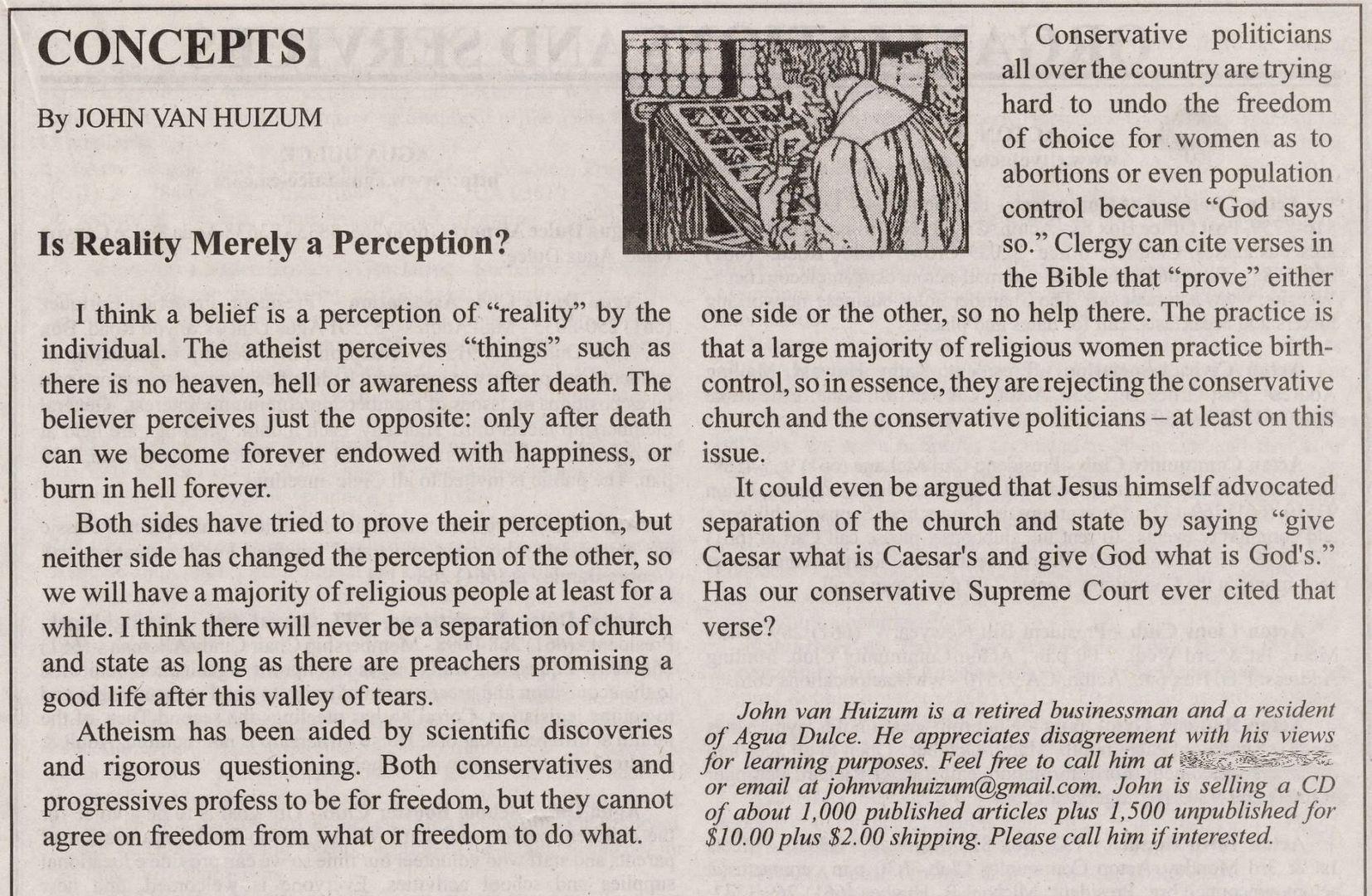
(You can click top enlarge)
Here are just two (of the many examples I can provide) of an atheist and an agnostic commenting on the above evidence:
✪ “The essential element in the astronomical and biblical accounts of Genesis is the same; the chain of events leading to man commenced suddenly and sharply, at a definite moment in time, in a flash of light and energy…. The Hubble Law is one of the great discoveries in science; it is one of the main supports of the scientific story of Genesis.”
~ Robert Jastrow: American astronomer and physicist. Founding director of NASA’s Goddard Institute for Space Studies, he is the director of the Mount Wilson Institute and Hale Solar Laboratory. He is also the author of Red Giants and White Dwarfs (1967) and God and the Astronomers (2nd ed., 2000).
✪ “Certainly there was something that set it all off. Certainly, if you are religious, I can’t think of a better theory of the origin of the universe to match with Genesis.”
~ Robert Wilson: is an American astronomer, 1978 Nobel laureate in physics, who with Arno Allan Penzias discovered in 1964 the cosmic microwave background radiation (CMB)…. While working on a new type of antenna at Bell Labs in Holmdel Township, New Jersey, they found a source of noise in the atmosphere that they could not explain. After removing all potential sources of noise, including pigeon droppings on the antenna, the noise was finally identified as CMB, which served as important corroboration of the Big Bang theory.
- Stephen Joseph Willams, What Your Atheist Professor Doesn’t Know (But Should) — CreateSpace Independent Publishing Platform (May 23, 2013)
Dr. George Smoot, Particle Physicist, Nobel Prize winner, and team leader from the Lawrence-Berkeley Laboratory, regarding the 1992 observations from COBE (the NASA satellite Cosmic Background Explorer): “It’s like looking at God.”(8)
A somewhat more “sober” assessment of the findings was given by Frederick Burnham, a science-historian. He said, “These findings, now available, make the idea that God created the universe a more respectable hypothesis today than at any time in the last 100 years.”(9)
Dr. Stephen Hawking (Theoretical Physicist) described the big bang ripples observations as “the scientific discovery of the century, if not all time.”(10)
Dr. George Greenstein (Professor of Astronomy at Amherst.): “As we survey all the evidence, the thought insistently arises that some supernatural agency – or, rather, Agency – must be involved. Is it possible that suddenly, without intending to, we have stumbled upon scientific proof of the existence of a Supreme Being? Was it God who stepped in and so providentially crafted the cosmos for our benefit?”(11)
Sir Arthur Eddington (British Astrophysicist): “The idea of a universal mind or Logos would be, I think, a fairly plausible inference from the present state of scientific theory.”(12)
Dr. Arno Penzias (Nobel Prize winner in physics, co-discoverer of the microwave background radiation from the Big Bang): “Astronomy leads us to a unique event, a universe which was created out of nothing, one with the very delicate balance needed to provide exactly the conditions required to permit life, and one which has an underlying (one might say ‘supernatural’) plan.”(13)
Sir Roger Penrose (Physicist, Emeritus Rouse Ball Professor of Mathematics at the Mathematical Institute, University of Oxford, and joint developer of the Hawking-Penrose Theorems): “I would say the universe has a purpose. It’s not there just somehow by chance.”(14)
Dr. Robert Jastrow (Founding director of NASA’s Goddard Institute for Space Studies): “For the scientist who has lived by his faith in the power of reason, the story ends like a bad dream. He has scaled the mountains of ignorance; he is about to conquer the highest peak; as he pulls himself over the final rock, he is greeted by a band of theologians who have been sitting there for centuries.”(15)
Dr. Frank Tipler (Professor of Math and Physics at Tulane University): “When I began my career as a cosmologist some twenty years ago, I was a convinced atheist. I never in my wildest dreams imagined that one day I would be writing a book purporting to show that the central claims of Judeo-Christian theology are in fact true, that these claims are straightforward deductions of the laws of physics as we now understand them. I have been forced into these conclusions by the inexorable logic of my own special branch of physics.”(16) Tipler since has actually converted to Christianity, resulting in his latest book, The Physics Of Christianity.
Dr. Alexander Polyakov (String Theorist, Princeton): “We know that nature is described by the best of all possible mathematics because God created it.”(17)
Dr. Edward Milne (British Astrophysicist, former Rouse Ball Professor of Mathematics, Oxford): “As to the cause of the Universe, in context of expansion, that is left for the reader to insert, but our picture is incomplete without Him [God].”(18)
Dr. Arthur L. Schawlow (Professor of Physics at Stanford University, 1981 Nobel Prize in physics): “It seems to me that when confronted with the marvels of life and the universe, one must ask why and not just how. The only possible answers are religious…. I find a need for God in the universe and in my own life.”(19)
Dr. Wernher von Braun (German-American Pioneer Rocket Scientist) “I find it as difficult to understand a scientist who does not acknowledge the presence of a superior rationality behind the existence of the universe as it is to comprehend a theologian who would deny the advances of science.”(20)
Dr. Frank Tipler (Professor of Math and Physics at Tulane University): “From the perspective of the latest physical theories, Christianity is not a mere religion, but an experimentally testable science.”(21)
Footnotes for these quotes
8) Thomas H. Maugh, II (April 24, 1992). “Relics of Big Bang, Seen for First Time”. Los Angeles Times: pp. Al, A30.
9) The Los Angeles Times, Saturday 2nd May 1992.
10) Smoot, George, Wrinkles in Time, 2007 edition , cover.
11) Greenstein, G. 1988. The Symbiotic Universe. New York: William Morrow, p.27.
12) Heeren, F. 1995. Show Me God. Wheeling, IL, Searchlight Publications, p. 233.
13) Margenau, H and R.A. Varghese, ed. 1992. Cosmos, Bios, and Theos. La Salle, IL, Open Court, p. 83.
14) Penrose, R. 1992. A Brief History of Time (movie). Burbank, CA, Paramount Pictures, Inc.
15) Jastrow, R. 1978. God and the Astronomers. New York, W.W. Norton, p. 116.
16) Tipler, F.J. 1994. The Physics Of Immortality. New York, Doubleday, Preface.
17) Gannes, S. October 13, 1986. Fortune. p. 57
18) Heeren, F. 1995. Show Me God. Wheeling, IL, Searchlight Publications, p. 166-167.
19) Margenau, H. and R. A. Varghese, eds. Cosmos, Bios, Theos: Scientists Reflect on Science, God, and the Origins of the Universe, Life, and Homo Sapiens (Open Court Pub. Co., La Salle, IL, 1992).
20) McIver, T. 1986. Ancient Tales and Space-Age Myths of Creationist Evangelism. The Skeptical Inquirer 10:258-276.
21) McIver, T. 1986. Ancient Tales and Space-Age Myths of Creationist Evangelism. The Skeptical Inquirer 10:258-276.
So, far from atheism being supported by science, the theistic worldview has been exemplified above all other models of interpretation (perceptions) of reality. Mind you this isn’t “proof” how the naturalist wrongly interprets the empirical method (scientific positivism), but it is a probability that exceeds others. (I suggest taking time, about an hour, and listen to this presentation by William Lane Craig on the evidences for theism over other worldviews.) Here John makes one of his signature jumps from one topic to a completely different one. I sometimes feel — shot in the dark again — he does this with the idea that he is saying something “scientific” and that everyone should credit his knowledge in on this particular topic (which is not the case), and then he brings that “trust” into a completely different topic.
I hope this helps a little bit to those searching for answers.
YEC View of the beginning (Big-Bang)



Alan Keyes (Natural Law) Debates Alan Dershowitz (Legal Positivism)
Alan Keyes defends the Natural Law position while Alan Dershowitz defends the legal positivism side of the philosophy of law. This debate is long… so you really must love the intricacies of legal philosophy and Natural Law. This is Alan Keyes at his best.
Does God Exist? William Lane Craig debates Professor Peter Millican
http://reasonablefaith.org – This debate on “Does God Exist?” took place in front of a capacity audience at the Great Hall, University of Birmingham. It was recorded on Friday 21st October 2011 as part of the UK Reasonable Faith Tour with William Lane Craig.
William Lane Craig is Research Professor of Philosophy at Talbot School of Theology, La Mirada, California and a leading philosopher of religion. Peter Millican is Gilbert Ryle Professor of Philosophy at Hertford College, University of Oxford and a noted scholar in studies of Hume.
The debate was hosted by the University of Birmingham Student Philosophy Society, and the debate was moderated by Professor Carl Chinn.
For more information on the Reasonable Faith Tour see http://www.bethinking.org/craig
Unioner To Tea-Partier: Why Do You Have a Right to Your Money?

Reagan and History versus the Left (A Conversation Imported from the www)
This was a conversation I was invited to. I think maybe because the person doing the inviting might have thought he had a slam-dunk on my political viewpoint and a hero of the conservative movement. He could have wanted — as well — an alternative viewpoint. Mind you, the young man is a great kid and an acquaintance of my son, so thinking this was a slam-dunk isn’t that far fetched considering age and early biases accepted. During the exchange one of the people involved in the conversation started to ask honest questions and opened his previous viewpoints to scrutiny. A sign of maturity. Everyone should allow their viewpoint to be placed in the arena of ideas and to be challenged in light of history and philosophy. Which is why I blog. Dennis Prager mentions this tendency to NOT want to open one’s beliefs to scrutiny in a recent radio broadcast that is worth listening to. I will change the names to afford Anonymity in the following conversation. Enjoy.
To set up — this is from FaceBook and the picture was put up in the photo section and people started to converse about it in the comments section. I will add some info for clarity and commentary:

Antony: failed foreign policy means today’s buddies are tomorrows boogiemen.
Hunlsy: I just love the fact they’re fighting us with the weapons and training that we gave them.
Antony: Oh where oh where did Iran get those P3s and F-14 Tomcats?
Antony: it was the US – we used to be buddies with Iranians too. We played both sides of the Iran/Iraq war, which predicated Gulf I.
Hunsly: Likely from the Russians. Regardless, we’re fighting a group, not a country. This group makes all of its IEDs & buys all of their weapons with the money that we gave them.
[Here’s where I hop in on this love fest]
Papa Giorgio: A few things.
Click to Enlarge
 A list of countries thar sold weapons to Iraq from 1973-to-1990
(Weapons) This is somewhat of a myth — that we sold the majority of weapons to the Taliban, to Iraq, and the like. For instance, in the following graph you can see that (in the instance of Iraq, which I was told over-and-over-again was weaponized by the U.S.) you have to combine the U.K. and the U.S. to equal 1%.
(Moral Position) Much like us supporting Stalin in defeating Hitler, we were aligned with people whom we didn’t see eye-to-eye with in order to beat the USSR during the Cold War (WWIII)… a war that was fought from 1947–1991.
(History) And thirdly, the Taliban didn’t exist when Reagan said this:
He didn’t say that about the Taliban because the Taliban didn’t exist yet. He said that of the Mujahedin, the same men who would later go on to fight the Taliban under the name “Northern Alliance”
http://en.wikipedia.org/wiki/Northern_Alliance
The mujaheddin fighters who had previously defeated the communist government and formed the Islamic State of Afghanistan (ISA) came under attack and in 1996 lost the capital to the Taliban. At this juncture the Mujahedin resorted to the creation of UIF because Rashid Dostum and other warlords who belonged to various tribes but to no specific political party did not want to recognize the ISA as a legal entity, so the defeated government devised a military strategy to utilize these forces while not offending their political sensibilities.
In October 1996 in Khinjan, Ahmed Shah Massoud and Dostum came to an agreement to form the anti-Taliban coalition that outside Afghanistan became known as the Northern Alliance.
Dein: The comment about Iran we have tried to avoid messing with their interal affers after the Revolution in 1979 when we kinda did something that the people of the country didn’t like. However the way we acted in regards to the “Green Revolution”/Neda Sultan [see linked picture below] thing we may actually end up holding favor with the people in that country.
Papa Giorgio: Dein, I may be misunderstanding your last portion about the “Green Revolution.” The people were begging America to become more involved, we didn’t… which has distanced the almost 65% 35-year old and younger (many of whom embrace Western culture). Obama dropped the ball… You may have misstated the idea you were trying to get across? But this is one of the many cases where the Obama administration has sided with the radical leaders in that country by not doing anything but delaying an upgrade to twitter for a few hours.
Dein: actually the point I was making was when the US stays out of the turmoral in Iran we end up having a better relationship with the country. although I could have misremembered the Rachel Maddow Show segemant about that.
Hunsly: Dein, don’t watch Rachel, regardless of how charming she is, its all the same as fox. Rachel is way better than any Fox show btw.
Papa Giorgio: Ahhh, Maddow. That explains a lot. Dein, we should have gotten involved in the green revolution. Even if it were a public declaration of support for the uprising — and maybe some CIA funding. the demographic is amazing over there. Like I said…… about 65% are MTV influenced, many are American educated, and want to dress how they want to dress, listen to music, and many want to be out from under the control of the Islamo-Nazi dictators that want the messiah to come out from the well because of WWIV. (This well has a super-highway built from it to the capital of Iran with waiting cars to rush this messiah to the palace… but he can only come with the destruction of Israel.) Should we have better relations with this type of government that wants nuclear war, hangs homosexuals, beat and rape women who do not conform to the stricter rules of wearing clothes? No really, I am asking you. Should we support the people who may be a bit more liberal (but maybe not democratic as we think of) over the current regime… even if by word from our Commander in Chief?
Papa Giorgio: … and Hunsly proves his premise [Rachel is way better than any Fox show btw] by ad hominem attacks against Glenn Beck and others.
Dein: and you know that if we had gotten involved their (barely stable) leader would have loved that. It would have made his case so much easier, remember he thinks everyone is out to get him. Do you want to give someone like that even more reason to fear? Although that is what I am thinking about that. The Iranian people know that their leader is crazy and the government is croupt. So give the crazy guy proof that he has ever reason to fear and we loose long term. We (the President) stay out of the way, we win.
I think that we should have gotten involved but after some meditation, I think we made right choice.
Dein: @hunsly TRMS [The Rachel Maddow Show] deals in facts, many of those on fox don’t. you should know that
Hunsly: What are you talking about Papa Giorgio? I just advocated not watching any opinion based “news” I can attack who ever I choose for being the craziest, which is at the moment is Glen Beck.
[….]
Papa Giorgio: If Maddow dealt in facts Dein, why does she not allow (typically) the other side or viewpoint on. She told us why here (News Busters Ponders Maddow’s No Republican Guests). If MSNBC hosts deal in “facts,” then why did the Times blog, Politico, NPR, US News & World Report, the Washington Post, the Baltimore Sun (just to name a few center-left news organizations) say FOX News was the most balanced and had the widest array of pundits [from both ends of the spectrum]? MSNBC was said to be the worst and most biased. Facts are funny things when seen through rose colored glasses.
=====added for this post=====
- Rachel Maddow Nickles and Dimes;
- FOX News Does Better Even Among Democrats;
- A Math Break-Maddow Mocks Christie About His Math Skills Then Makes Same Math Error (Funny!)… I Blame Obama;
- Rachel Maddow Caught Again;
- Rachel Maddow’s Crazy Rants Refuted;
- Maddow vs. The Constitution.
Papa Giorgio: Antony, quickly. You said: “failed foreign policy means today’s buddies are tomorrows boogiemen.” I wanted to use this to make my points I already made made again for clarity. This isn’t directed at you specifically, but an example for all who read here. I would reword this as:
“successful foreign policy means today’s buddies are tomorrows boogiemen.”
In other words, Stalin was America’s enemy, but we joined forces with him (we sent weapons, oil, money, etc) to beat Hitler. The Communists — who previously split up Poland with the Nazis — became our allies then they became our enemy. One of the biggest mistakes I can remember is Carter’s overthrowing the Shah. Much like Obama supports Venezuela over Columbia today. That move by Carter has been one of the most powerful radicalizing event of the Middle-East (which probably would have happened anyway?). Much thought.
Papa Giorgio: Another point [from near the beginning of the conversation], the F-14s — for example — were pre-revolution. In fact:
The Iranian air force never fully recovered from the effects of the 1979 revolution. At the beginning of the war, pilots were in short supply and flying proficiency was markedly lower than before the revolution. U.S. technicians who left Iran during the days preceding the fall of the Shah succeeded in erasing inventory records, ripping avionics packages out of F-14 aircraft, and destroying caches of repair parts at bases around Iran.
The clerics purged a large part of the conventional military structure after the 1979 revolution leaving the military broken and barely able to defend Iran from the initial Iraqi ground invasion in 1980. After Khomeini seized power on 11 February 1979, the revolutionary regime regarded the Air Force as a waste of money that rightfully belonged to the mostazafin (poor oppressed masses). One of the new government’s first acts was a purge of the armed forces, particularly the officer corps, which was (probably correctly) thought to be a hotbed of monarchist sentiment. The Air Force, where virtually the entire fighting element — the combat pilots — was composed of officers, was especially hard hit. To make matters worse, Iran’s best combat pilots had been trained in the United States and Israel, making them particularly suspect.
The senior command echelon of the IIAF had been decapitated in 1979 and early 1980 by arrests, imprisonments, executions, purges, and forced exiles. A failed coup that originated on Shahrokhi Air Base in Hamadan in June 1980 brought about another sweeping purge. Many IIAF personnel were shot or jailed for suspected or real complicity in the coup attempt, and the purge of personnel whose ultimate loyalty was suspect continued at a faster pace.
[….]
By 1987, the Air Force faced a new problem, one of an acute shortage of spare parts and replacement equipment. Perhaps 35 of the 190 Phantoms were serviceable in 1986. One F-4 had been shot down by Saudi F-15s, and two pilots had defected to Iraq with their F-4s in 1984. The number of F-5s dwindled from 166 to perhaps 45, and the F-14 Tomcats from 77 to perhaps 10. The latter were hardest hit because maintenance posed special difficulties after the United States embargo on military sales.
http://www.globalsecurity.org/military/world/iran/airforce.htm
Papa Giorgio: Its alright, you guys are young. You have some growing to do in regards to history, philosophy, and where you get your news. As a great example ~~~
I own (and have watched):
Bowling for Columbine, Roger and Me, Fahrenheit 9/11, Wal-Mart: The …high Cost of Low Price, Sicko, An Inconvenient Truth, Loose Change (I have seen all three versions), Zeitgeist, Religulouse, The God Who Wasn’t There
But rarely do I meet someone of the opposite persuasion that has watches:
Celsius 41.11: The Temperature at Which the Brain Dies, FahrenHYPE 9/11, Michael & Me, Michael Moore Hates America, Bullshit! Fifth Season… Read More (where they tear apart the Wal-Mart documentary), Indoctrinate U, Mine Your Own Business, Screw Loose Change, 3-part response to Zeitgeist.
~~~ I do this with all my topics of study: philosophy, religion, science, history, and the like. I hope that this exchange [at the least] makes you youngen’s search out information that will challenge your worldview (political, religious, or non-religious). I have recommended reading that will start you out.
For you guys, I suggest Intellectual Morons: How Ideology Makes Smart People Fall for Stupid Ideas. (Used hard-cover copies sell for 1-penny.) After reading it, I am more than open to discussing some of the issues therein. If you do read it and want to talk over some of the topics, my email is on my bio page:
Antony: all good – but didn’t we create Bin Laden because they were fighting a war we were unwilling to?…. vis a vi the mujahadeen.
Papa Giorgio: Hunsly, you are free to say someone is crazy. Fine. You have yet — in all our talks about Beck — yet to prove it. This is called in philosophy, “to the man.” Which is known in Latin as “ad hominem.” It means someone attacks the person and… doesn’t deal with the arguments put forth by the man.
Also, all news is opinion based. BBC, NPR, ABC, CBS, etc, are all opinion in some sense of the word. For instance, between ABC, CBS, and NBC nightly news and morning news shows there were (this is an old stat, but makes my point) 157 pro-gun control stories, 77 neutral, and 10 for the 2nd Amendment (http://religiopoliticaltalk.blogspot.com/2008/08/media-bias-update.html). Another example comes from NPR. in their stories of the Israeli/Palestinian conflict, they used 18,321 words in pro-Arab only segments, 4,934 words in pro-Israel segments. Bias in number of Arab-only vs Israeli-only segments: 63-percent Palestinian/pro-Arab only segments, 37-percent Israel/pro-Israel segments (What Is Fascism). Another example deals with the 2008 election cycle. MSNBC stories that were negative of McCain were 73%, and 14% negative on Obama. FoxNews was 40% negative of McCain, and 40% negative of Obama (https://religiopoliticaltalk.com/2010/11/foxnews-election-coverage-more-fair-and-watched-than-msnbc-and-cnn/).
So it isn’t who is biased, it is who is less biased.
Papa Giorgio: Antony, great question (“…but didn’t we create Bin Laden because they were fighting a war we were unwilling to?”). I have referenced this in some posts on my blog. It is well worth the read [I will merely include the summary here]:
In summary:
- U.S. covert aid went to the Afghans, not to the “Afghan Arabs”
- The “Afghan Arabs” were funded by Arab sources, not by the United States
- The United States never had “any relationship whatsoever” with Osama bin Laden
- The Soviet invasion of Afghanistan, Arab backing for the “Afghan Arabs,” and bin Laden’s own decisions “created” Osama bin Laden and al Qaida, not the United States.
http://www.america.gov/st/webchat-englis…h/2009/May/20090505134735atlahtnevel0.5280725.html
Antony: good stuff – I stand corrected.
=========================
Let Me Break Here For Some Commentary
=========================
What Antony just said is rare. He saw new information and put it up against what his previous sphere of knowledge included. Since his previous knowledge base didn’t include this new information, and his old thoughts on the matter didn’t stand up to the new input of information, he changed his previous thoughts on the matter to include the new information. I found out later that Antony is a Christian. This has a lot to do with it. I want to point out why Christians can sit down and have a more truth oriented conversation that those of other worldviews — secular progressives for instance:
…fundamentally, the way we know Christianity to be true is by the self-authenticating witness of God’s Holy Spirit. Now what do I mean by that? I mean that the experience of the Holy Spirit is vertical and unmistakable (though not necessarily irresistible or indubitable) for him who has it; that such a person does not need supplementary arguments or evidence in order to know and to know with confidence that he is in fact experiencing the Spirit of God; that such experience does not function in this case as a premise in any argument from religious experience to God, but rather is the immediate experiencing of God himself; that in certain contexts the experience of the Holy Spirit will imply the apprehension of certain truths of the Christian religion, such as “God exists,” “I am condemned by God,” “I am reconciled to God,” “Christ lives in me,” and so forth; that such an experience Provides one not only with a subjective assurance of Christianity’s truth, but with objective knowledge of that truth; and that arguments and evidence incompatible with that truth are overwhelmed by the experience of the Holy Spirit for him who attends fully to it. (William Lane Craig, Reasonable Faith: Christian Truth and Apologetics, 3rd ed. [Wheaton, IL: Crossway Books, 2008], 43)
To apply it to this conversation, being a Christian and knowing truth and being set free by it, we [Christians] have a duty to truth and not to dogma outside our faith. Secular progressives replace what the conservative Jew or conservative Christian have in their faith with a religious political worldview.
Judgment is more whole in the Judeo-Christian ethic — still fallen however. A Feynman quote I like sums up mu thinking on this: “Keep an open mind – but not so open that your brain falls out”
=========================
Continuing
=========================
Antony: What of the long standing relationship between the Bush family and high Saud officials (perhaps even including the Bin Laden family)…?
Papa Giorgio: That myth is a long standing one misrepresented by Michael Moore. It is dealt with in the book “Michael Moore Is A Big Fat Stupid White Man” pretty well, but there is this article over at Sinsanity:
“Finally, Moore drops a big number – $1.4 billion – claiming “That’s how much the Saudi royals and their associates have given the Bush family, their friends and their related businesses in the past three decades,” adding that “$1.4 billion doesn’t just buy a lot of flights out of the country. It buys a lot of love.” But Isikoff and Hosenball show that nearly 90% of that total comes from contracts awarded by the Saudi government to BDM, a defense contractor owned by Carlyle. But when the contracts were awarded and BDM received the Saudi funds, Bush Sr. had no official involvement with the firm, though he made one paid speech and took an overseas trip on its behalf. He didn’t actually join Carlyle’s Asian advisory board until after the firm had sold BDM. And though George W. Bush had previously served on the board of another Carlyle company, he left it before BDM received the first Saudi contract. As usual, the connections are loose and circumstantial at best.”
http://www.spinsanity.org/columns/20040702.html
Great article, well worth reading. Spinsanity was a great site… no longer current but their old articles are still up.
Papa Giorgio: Off to work…. OH, P.S., this is one of my favorite all time “Moore’ism” is this:
According to Moore in his book Stupid White Men, “the entire nation is composed of morons”. He writes: “There are forty-four million Americans who cannot read and write above a fourth-grade level – in other words, who are functional illiterates. How did I learn this statistic? Well, I read it.”
Moore should have read better. His endnotes attribute the figure to the U.S. Deptpartment of Education’s national Adult Literacy Survey. Yes, that survey found that 40-44 million Americans performed in the lowest level of literacy. But the survey doesn’t end there. In the next paragraph, it goes on to note that 25% of the people who scored in the lowest literacy category were immigrants who have learned little or no English. And in classic Moore fashion, he also fails to disclose that nearly 19% of the group he includes in the uneducated masses are actually people who have “visual difficulties that affect their ability to read print.”
Surprise: Functional English literacy is not high among the blind, and people learning to speak English may be highly educated, but only able to read their native klanguage. This hardly makes the United States a nation that, writes Moore, “GOES OUT OF ITS WAY TO REMAIN IGNORANT AND STUPID” (capitalization in the original).

POSTSCRIPT
In an excellent response to the issue, Outside the Beltway, puts to rest this issue for thinking person:
…CNN’s Peter Bergen who conducted the first television interview of bin Laden in 1997:
The story about bin Laden and the CIA — that the CIA funded bin Laden or trained bin Laden — is simply a folk myth. There’s no evidence of this. In fact, there are very few things that bin Laden, Ayman al-Zawahiri and the U.S. government agree on. They all agree that they didn’t have a relationship in the 1980s. And they wouldn’t have needed to. Bin Laden had his own money, he was anti-American and he was operating secretly and independently.
The evidence, in fact, is fairly clear that the “Afghan Arabs” like bin Laden didn’t interact with the Americans at all. The allegations, on the other hand are based on little more than circumstantial evidence and exaggerations. This idea that the CIA trained Osama bin Laden back in 1980 is simply a myth that needs to die along with bin Laden himself. Moore was wrong, and Sullivan was, it seems to me, entirely correct to call him out for it. This is a myth that has taken hold on both the far left and the far right and it’s time that people stopped lying.
UPDATE (James Joyner): I wouldn’t go so far as to call it “lying,” since people are just repeating what they’ve heard. The confusion comes from the Western conflation of the generic “mujahadeen” into a coherent Mujahadeen, much as we’ve done with the various Taliban groups in Afghanistan and Pakistan.
But, yes, it’s completely wrong. See my March 31 post “Taliban History Lesson: Not Our Boys From the 80-s.” It cites Pat Lang:
The groups we supported were defeated by the Taliban in the civil war that followed Soviet withdrawal. The Taliban and Usama bin Laden were supported by the separate “Sayyaf” group of Mujahideen supported by Saudi Arabia and Deobandi fanatics in Pakistan.
The confusion has been cleared up often enough that knowledgeable people should know better.
Take note another internet commentator opined well:
Many erroneously people believe the CIA trained bin laden and created Al-Qaida. They do this by conflating all the mujihadeen groups as though they were one. They were not. First there was no al-qaida during the soviet afghan war, bin laden created it AFTER the war. Bin Laden came to Afghanistan as a member(not the leader of) an Arab group whose mission was to try and promote Wahabiism and steer the jihad ideologically, which they failed at. This group came on its own money and agenda and received no US support. Further, the CIA didn’t train anyone as their involvement was restricted per the agreement with Pakistan. Pakistan’s ISI handled training and delivery of funds and weapons and controlled who received any, not the CIA. And finally US funding amounted to about 20% of the Mujhiadeen’s coffers. Another 20% was from the Saudi government and the remaining 60% came from private islamic charities. So with the facts out there, why do so many still live in ignorance?
Additional Details:
Also Pakistan’s ISI created the Taliban in mid 90’s to control Afghanistan. The Taliban was not a direct product of the Soviet Afghan War of Operation Cyclone.
Some Black Conservatives Mixing It Up With Some Sharpton Liberals-AWESOME! (Cons 2-Libs 0)
The Runaway Slave movie crews were at Glenn Beck’s “Restoring Honor Rally” and at Al Sharpton’s “Reclaiming the Dream March” on Aug 28th. As the two ideologies clashed in DC, our movie crews were on the scene. In this raw footage, shot near the future MLK memorial site, Black Conservatives leaving the “Restoring Honor” rally encounter Sharpton’s protestors who were holding signs claiming “Tea Party Racism.” This is just one of debates that we captured after the rally had ended.
- To follow my scoring, see: Black Conservatives vs Black Liberals (Cons 1-Libs 0)
- One may also want to read my in-depth post on what this young lady was speaking to at the beginning: Margaret Sanger and the Racist History of Planned Parenthood (Black Genocide)
- And for an in-depth history lesson: America’s Racial History – In Black & White (David Barton)
The above is a short scene from the documentary MAAFA21

Conversation Series: Defending the Faith Over a Syrah
[Edited for ease of use and “jump to” topics and footnotes – 12-25-18 – TIP: when you jump, just hit the back button to come back to the text]

This post is one of my oldest “Conversation Series“/ “Best of Papa Giorgio” It first made its appearance on my OLD BLOG November 26, 2006, and was really my first real wine tasting experience. It was a great time for a variety of reasons: wine, my wife, friends and family, and political/religious discussion. Mind you, I didn’t initaite the conversation, but I love the topics! As G.K. Chesterton says it best, “I never discuss anything except politics and religion. There is nothing else to discuss.” Well, there was a friend of a friend whom I didn’t know too well at the time. And this person liked to talk… about things she thought she knew a lot about: Politics, Religion, and US History. IN fact, what became apparent is that she was really (at least at the time, and I suspect now) a THEOPHOBE, which is a fear of “the belief in one God as the creator and ruler of the universe” [e.g., God in the theistic understanding – Judeo/Christian]. Likewise, she could also be categorized as a CHRISTOPHOBE – a fear of anything related to Christianity/Christ, A bias against one “particular” religious expression. She seemed to have an aversion directly related to the above. She was also a history teacher for a high school and the way she talked about history I fished out of her she like the Marxist historian, Howard Zinn. Here are some updated links to “Zinn related topics” on my site:
- Howard Zinn (1922-2010) Passing From This Hell To The Next
- Native American History In Public School (Howard Zinn Refuted)
- Chomsky and Zinn vs. America
The wine was flowing and I was on the top of my game… for those who were wondering.
Late September turned into an opportunity for my wife and me to visit some wineries in the Santa Ynez Valley. We met up with some friends and family members, as well as some of their friends/co-workers. These family member’s/friend’s co-workers I speak of all work at a public school. So the direction of the conversation didn’t necessarily surprise me, but it sure did dishearten me. What disheartened me was that this teacher wasn’t just arguing a model or philosophy of history that didn’t exist until Marx and Engels interpreted history with their worldview[1] (that all of history is a class struggle), it was that they were putting forth arguments that my oldest son could probably tear down. I say tear down because most of the arguments put forth were what is called straw-man arguments, or just plain wrong. Below I will put into a Context what will follow:
- First Contact
- Conversation Starter
- “Theophobia” — A Psychosis?
- Rhetoric vs. Argument
- Non-Religious Movements vs. Religious
- What is Fascism?
- Ethics Without God!
- Hitler: Christian or Philosophical Naturalist? | Hitler’s Occultism
- Buddhism — Self-Refuting
- Buddhism & Evil
- Eastern Charity
- Scientists Praying
- Genesis Proved Right
a) First Contact
Conversation started at the first winery about a topic that caused me to mention a letter I wrote to my son’s sixth-grade classmate’s parents. It was on Native American and Settler relations. As the conversation skimmed along I portrayed the teacher as explaining history in a similar fashion to Howard Zinn. This teacher mentioned that Howard Zinn’s view of history was good; I, then, pointed out that this view did not exist until Marx and Engels — sort of hoping this would spark said person to understand that this outlook on history, viewed through a lens of political opinion (e.g., Communism, Socialism), was not true history, rather, skewed history. This first contact at least allowed me to know with whom I was dealing.
b) Conversation Starter
The day went on; it was the usual fun, talking, learning, and laughing. At the last winery we were about halfway into our flight of wines when I hear this teacher and my wife discussing organized religion. As I am a student of comparative religion[2], philosophy[3], politics[4], and some history, I naturally gravitated over to where the real conversation was. You see, I say real because too many people believe it to be a bad thing to discuss weightier issues that include religion or politics. I think just the opposite. These items should be discussed vigorously and judicially, with a firm but kind heart. I say firm because I have found that in my many debates on-line and in person for the past decade the other party is ignorant that what they are saying is either a straw man[5] or the premise can be turned on them, and sometimes it takes persistence (being firm) to point this their dilemma out.
Now that the groundwork has been laid somewhat, lets delve into some of the conversation.
c) “Theophobia” — A Psychosis?
When I came into the conversation this person, whom I will call Felicia in honor of their fallacious arguments, was saying they are against organized religion. Which is usually code for “they cannot stand Christianity?” So to set the record straight, I said that she must also be against Buddhism, Hinduism, Taoism, Confucism, Sikhism, and the like. Realizing the premise she laid out, she quickly admitted to the fact that she is indeed against such religious people organizing into small communities of like minded people. The presumption was that she was arguing for un-organized religion? Whatever that is!? I would hate to see what religion looks like if guided by anarchy. So I wanted to point out the biased view she held by presenting this person with a label that she probably hadn’t heard until now. I made the statement that she was Theophobic. She asked for clarification, I said much like a person can be homophobic, so to can a person be Theo(God)phobic. Obviously in our day and age of political correctness one does not wish top be labeled with a phobia, especially a teacher, this implies intolerance when the buzz-word of our day is tolerance. This clearly caught her off guard.
After thinking over what I had charged her with and the previous conversation she finally admitted to it wholly at first but after put a vague stipulation on it. This stipulation didn’t help her recover from her admitted theophobia and dogmatic biasness on stark display. You see, she has probably portrayed religious people as bias and phobic, arguing for things dogmatically, however, I wanted to point out in conversation by explicitly and implicitly pointing out in this case it was on display by her, and not I (a religious person). Even if I didn’t point this out as much as I could have, I am hopeful that in private reflection this person will reflect on how she came across.
d) Rhetoric vs. Argument
At this point the usual litany of “straw man” arguments proceeded to spill forth as they normally do when ones precious bumper-sticker beliefs are challenged and shown to be vacuous. The next thing out of Felicia’s mouth was that organized religion has killed more people and started more wars than any other reason in history. This is where I cringed — a teacher that is charged with children who makes such false claims is a red-flag to me. These types of people repeat such lines not because they have studied history or religion in-depth, but because a politically motivated historian like Howard Zinn or Noam Chomskey said such a thing, or they simply picked up the saying from another friend (who themselves had heard it from another) and it fit so well in their theophobia framework to make the rejection of religion an easy thing in their mind’s eye. This is more of a commentary on said person’s psychosis than making any sort of valid argument. This being said let us deal with this charge:
e) Non-Religious Movements vs. Religious
The Bible does not teach the horrible practices that some have committed in its name. It is true that it’s possible that religion can produce evil, and generally when we look closer at the details it produces evil because the individual people [Christians] are actually living in rejection of the tenets of Christianity and a rejection of the God that they are supposed to be following. So it [religion] can produce evil, but the historical fact is that outright rejection of God and institutionalizing of atheism (non-religious practices) actually does produce evil on incredible levels. We’re talking about tens of millions of people as a result of the rejection of God. For example: the Inquisitions, Crusades, Salem Witch Trials killed about anywhere from 40,000 to 80,000 persons combined (World Book Encyclopedia and Encyclopedia Americana), and the church is liable for the unjustified murder of about (taking the high number here) 300,000-women over about a 300 year period. A blight on Christianity? Certainty. Something wrong? Dismally wrong. A tragedy? Of course. Millions and millions of people killed? No. The numbers are tragic, but pale in comparison to the statistics of what non-religious criminals have committed); the Chinese regime of Mao Tse Tung, 60 million [+] dead (1945-1965), Stalin and Khrushchev, 66 million dead (USSR 1917-1959), Khmer Rouge (Cambodia 1975-1979) and Pol Pot, one-third of the populations dead, etc, etc. The difference here is that these non-God movements are merely living out their worldview, the struggle for power, survival of the fittest and all that, no evolutionary/naturalistic natural law is being violated in other words (as non-theists reduce everything to natural law — materialism). However, and this is key, when people have misused the Christian religion for personal gain, they are in direct violation to what Christ taught, as well as Natural Law.[6]
So the historical reality that this teacher of history seemed to ignore is that non-religious movements have killed more people in the Twentieth-Century than religion has in the previous nineteen (or for that matter, all of mankind’s history). I also pointed out to Felicia during our conversation that the non-religious view of origins has no moral law to point to any of the above acts as morally wrong or un-ethical. They are merely currently taboo. For someone to say the Nazis were morally wrong they have to borrow from the theistic worldview that posits a universal moral code. If there is no Divine moral law, then as Fyodor Dostoyevsky’s maxim makes the point, “If there is no God, all things are permissible.” Without an absolute ethical norm, morality is reduced to mere preference and the world is a jungle where might makes right.
f) What is Fascism?
This same strain of thought caused Mussolini to comment:
“Everything I have said and done in these last years is relativism by intuition…. If relativism signifies contempt for fixed categories and men who claim to be bearers of an objective, immortal truth… then there is nothing more relativistic than fascistic attitudes and activity…. From the fact that all ideologies are of equal value, that all ideologies are mere fictions, the modern relativist infers that everybody has the right to create for himself his own ideology and to attempt to enforce it with all the energy of which he is capable.”[7]
(Side note: the above definition by Mussolini [who was a philosophy major] of fascism, fits more closely with non-religious liberal democrats today than with religious conservative Republicans.)
As a way to update “F,” here are three posts to explain fascism:
g) Ethics Without God!
The only problem is that without God, man is the one who dies, quite literally. As Dr. Ravi Zacharias observes: “Conveniently forgotten by those antagonistic to spiritual issues are the far more devastating consequences that have entailed when antitheism is wedded to political theory and social engineering. There is nothing in history to match the dire ends to which humanity can be led by following a political and social philosophy that consciously and absolutely excludes God.“[8] And,
One of the great blind spots of a philosophy that attempts to disavow God is its unwillingness to look into the face of the monster it has begotten and own up to being its creator. It is here that living without God meets its first insurmountable obstacle, the inability to escape the infinite reach of a moral law. Across scores of campuses in our world I have seen outraged students or faculty members waiting with predatorial glee to pounce upon religion, eager to make the oft-repeated but ill-understood charge: What about the thousands who have been killed in the name of religion?
This emotion-laden question is not nearly as troublesome to answer if the questioner first explains all the killing that has resulted from those who have lived without God, such as Hitler, Stalin, Mussolini, Mao, et al… why is there not an equal enthusiasm to distribute blame for violence engendered by some of the irreligious? But the rub goes even deeper than that. The attackers of religion have forgotten that these large-scale slaughters at the hands of anti-theists were the logical outworking of their God-denying philosophy. Contrastingly, the violence spawned by those who killed in the name of Christ would never have been sanctioned by the Christ of the Scriptures. Those who kill in the name of God were clearly self-serving politicizers of religion, an amalgam Christ ever resisted in His life and teaching. Their means and their message were in contradiction to the gospel. Atheism, on the other hand, provides the logical basis for an autonomist, domineering will, expelling morality…. The Russian novelist Fyodor Dostoevski repeatedly wrote of the hell that is let loose when man comes adrift from his Creator’s moorings and himself becomes God — he understood the consequences. Now, as proof positive, we witness our culture as a whole in a mindless drift toward lawlessness — we live with the inexorable result of autonomies in collision.
[Zacharias cites Hitler, “I freed Germany from the stupid and degrading fallacies of conscience and morality… I want young people capable of violence — imperious, relentless and cruel.“][9]
h) Hitler: Christian or Philosophical Naturalist? | Hitler’s Occultism
After pointing out that non-God movements are much more murderous than God movements, Felicia mentioned that my lumping Hitler in my analogy was wrong, she said he was a Christian and that I was wrong.[10] I had never heard this before — just kidding, I have heard this brought up quite often and will deal with it in brief here (as I promised Felicia I would).[11] First off, all someone would have to do is read Mein Kampf to understand that Hitler himself stood in stark contrast to Christianity. In fact, Hitler admitted himself that he was a philosophical naturalist; I will quote from a larger essay I did on the subject some years back:
For instance, Adolf Hitler appealed to the people of his country to have a backbone to advance the logical outworking of their worldview. Now mind you, not all naturalists are racists or killers of the less fortunate… however, this is a logical outworking of philosophical [or, metaphysical] naturalism.
“The stronger must dominate and not mate with the weaker, which would signify the sacrifice of its own higher nature. Only the born weakling can look upon this principle as cruel, and if he does so it is merely because he is of a feebler nature and narrower mind; for if such a law [natural selection] did not direct the process of evolution then the higher development of organic life would not be conceivable at all…. If Nature does not wish that weaker individuals should mate with the stronger, she wishes even less that a superior race should intermingle with an inferior one; because in such a case all her efforts, throughout hundreds of thousands of years, to establish an evolutionary higher stage of being, may thus be rendered futile.”[12]
Hitler referred to this dispensation of nature as “quite logical.” In fact, it was so logical to the Nazis that they built concentration camps to carry out their convictions about the human race as being “nothing but the product of heredity and environment” or as the Nazis liked to say, “of blood and soil.“[13]
The teachings of… Hitler and others like them, however, are completely consistent with the teachings of Darwinian evolution. Indeed, social Darwinism has provided the scientific substructure for some of the most significant atrocities in human history. For evolution to succeed, it is as crucial that the unfit die as the fittest survive. Marvin Lubenow graphically portrays the ghastly consequences of such beliefs in his book Bones of Contention[14]:
“If the unfit survived indefinitely, they would continue to ‘infect’ the fit with their less fit genes. The result is that the more fit genes would be diluted and compromised by the less fit genes, and evolution could not take place. The concept of evolution demands death. Death is thus as natural to evolution as it is foreign to biblical creation. The Bible teaches that death is a ‘foreigner,’ a condition superimposed upon humans and nature after creation. Death is an enemy, Christ has conquered it, and he will eventually destroy it. Their respective attitudes toward death reveal how many light years separate the concept of evolution from Biblical creation.”[15]
Adolph Hitler’s philosophy that Jews were subhuman and that Aryans were supermen (mirroring the beliefs Margaret Sanger, founder of Planned Parenthood) led to the extermination of about six million Jews. In the words of Sir Arthur Keith, a militant anti-Christian physical anthropologist: “The German Fuhrer, as I have consistently maintained, is an evolutionist; he has consistently sought to make the practices of Germany conform to the theory of evolution.“[16]
Karl Marx, the father of communism, saw in Darwinism the scientific and sociological support for an economic experiment that eclipsed even the carnage of Hitler’s Germany. His hatred of Christ and Christianity led to the mass murder of multiplied millions worldwide. Karl Marx so revered Darwin that his desire was to dedicate a portion of Das Kapital to him.
While not having the time to mention some of what is above as well as below, I promised Felicia that I would show her some evidence that Hitler was not a Christian. Many of the Nazi emblems, such as the swastika, the double lightning bolt “SS” symbol, and even the inverted triangle symbol used to identify classes of prisoners in the concentration camps, originated among homosexual occultists in Germany (some, such as the swastika, are actually quite ancient symbols which were merely revived by these homosexual groups). In 1907, Jorg Lanz Von Liebenfels (Lanz), a former Cistercian monk whom the church excommunicated because of his homosexual activities,[17] flew the swastika flag above his castle in Austria.[18] After his expulsion from the church, Lanz founded the Ordo Novi Templi (“Order of the New Temple“), which merged occultism with violent anti-Semitism. A 1958 study of Lanz called, “Der Mann der Hitler die Ideen gab” — or, “The Man Who Gave Hitler His Ideas” — by Austrian psychologist Wilhelm Daim, called Lanz the true “father” of National Socialism.
List, a close associate of Lanz, formed the Guido Von List Society in Vienna in 1904. The Guido Von List Society was accused of practicing a form of Hindu Tantrism, which featured sexual perversions in its rituals (the swastika is originally from India). A man named Aleister Crowley, who, according to Hitler biographer J. Sydney Jones, enjoyed “playing with black magic and little boys,” popularized this form of sexual perversion in occult circles.[19] List was “accused of being the Aleister Crowley of Vienna“.[20] Like Lanz, List was an occultist; he wrote several books on the magic principles of rune letters (from which he chose the “SS” symbol). In 1908, List “was unmasked as the leader of a blood brotherhood which went in for sexual perversion and substituted the swastika for the cross“.[21] The Nazis borrowed heavily from Lis’s occult theories and research. List also formed an elitist occult priesthood called the Armanen Order, to which Hitler himself may have belonged.[22]

What you have here is the first known example of a Swastika in Germany. It is a political poster from 1919 published by the Thule Society. The Thule Society was an occultic group with ties to Hitler and others that I have mentioned herein. Their belief structure is similar to the New Age movement of today.
The Nazi dream of an Aryan super-race was adopted from an occult group called the Thule Society, founded in 1917 by followers of Lanz and List. The occult doctrine of the Thule Society held that the survivors of an ancient and highly developed lost civilization could endow Thule initiates with esoteric powers and wisdom. The initiates would use these powers to create a new race of Aryan supermen who would eliminate all “inferior” races.
Hitler dedicated his book, Mein Kampf, to Dietrich Eckart, one of the Thule Society’s inner circle and a former leading figure in the German Worker’s Party (when they met at the gay bar mentioned earlier).[23] “…And among them I want also to count that man, one of the best, who devoted his life to the awakening of his, our people, in his writings and his thoughts…“[24] Hitler was definitely not a Christian.
i) Buddhism, Self-Refuting
Felicia then mentioned that Christianity is refuted by science and that most of our smartest, brightest scientists are accepting Buddhism. So I broke this statement up into two parts, that is: are scientists converting to the pantheistic worldview?[25] And, does Buddhism comport with reality/science? I will deal with the latter first. Although not the time nor place to explain the Law of non-contradiction, for those who don’t know, I will briefly explain. The law of non-contradiction is simply this: “‘A‘ cannot be both ‘non-A‘ and ‘A‘ at the same time.” In the words of professor J. P. Moreland (Ph.D., University of Southern California):
“When a statement fails to satisfy itself (i.e., to conform to its own criteria of validity or acceptability), it is self-refuting…. Consider some examples. ‘I cannot say a word in English’ is self-refuting when uttered in English. ‘I do not exist’ is self-refuting, for one must exist to utter it. The claim ‘there are no truths’ is self-refuting. If it is false, then it is false. But is it is true, then it is false as well, for in that case there would be no truths, including the statement itself.”[26]
I brought up Aristotle and his discovering and codifying many of the Laws of Logic, the most important being the Law of non-contradiction, one of the most important laws of logical thought.[27] Another major problem that faces the pantheist is that there is no reality except the all-encompassing God. Everything else is illusion, or maya. But again, this is a nonsensical statement that is logically self-refuting. If everything is illusion, then those making that statement are themselves illusions. There’s a real problem here. As Norman Geisler (Ph.D., Loyola University of Chicago) pointed out, “One must exist in order to affirm that he does not exist.“[28] When we claim that there is no reality except the all-encompassing God, we are proving just the opposite. The fact that we exist to make the claim demonstrates that there is a reality distinct from God, which makes this key doctrine of pantheism a self-defeating proposition. It is an untruth — by definition.
j) Buddhism & Evil
I then mentioned that Buddhism cannot answer the problem of evil and I provided her with an easily understood example that I often use, it is the example real evil.
Let’s say I am home with my 10-year-old son. My work calls me into work on an emergency so I call my uncle Bo to come over and watch him so I can go in. While I am at work my Uncle Bo rapes and sodomizes my son. Well, eastern philosophies that use the karmic understanding of reincarnation posit that something my son did in a previous lifetime demanded that this happen to him in this lifetime.
Felicia didn’t like this much. She defended reincarnation as if I was being bigoted and intolerant (like she was really being towards Christianity). So I gave some more examples dealing with how holy men in India walk by the needy. In India and Tibet and other areas that hold to reincarnation as the predominate philosophy; in other words, one is in his or her predicament, for the most part, because of a previous life. For the Dalai Lama and other “Holy Men” to help these poor unfortunates is to tamper with their karma. These before mentioned men will literally walk right past the poor, invalid, maimed, un-educated, starving, mentally ill people and completely ignore their pleas for help and assistance. All because of their caste or karmic past! It takes a person who a priori accepts (presupposes) the theistic worldview, specifically the Judeo-Christian worldview, like Mother Theresa who went to India and adopted the city of Calcutta, doing what these holy men didn’t. And may I be so bold as to posit that if a Buddhist or Hindu actually helps the needy, they do so out of compassion which is consistent with theism, not pantheism.
k) Eastern Charity
Another example I gave which wasn’t allowed to go to its fruition, because those who have tough challenges refuse to hear the tough answers: While speaking in Thailand, Ron Carlson was invited to visit some refugee camps along the Cambodian border. Over 300,000 refugees were caught in a no-man’s-land along the border. This resulted from the Cambodian massacre under Pol Pot and the Khmer Rouge in the mid-70’s (which is known as the “killing fields“) and then subsequently by the invasion of the Vietnamese at the end of the 70’s. One of the most fascinating things about these refugee camps was the realization of who was caring for the refugees. Here, in this Buddhist country of Thailand, with Buddhist refugees coming from Cambodia and Laos, there were no Buddhists taking care of their Buddhist brothers. There were also no Atheists, Hindus, or Muslims taking care of those people. The only people there, taking care of these 300,000[+] people, were Christians from Christian mission organizations and Christian relief organizations. One of the men Ron was with had lived in Thailand for over twenty-years and was heading up a major portion of the relief effort for one of these organizations. Ron asked him: “Why, in a Buddhist country, with Buddhist refugees, are there no Buddhists here taking care of their Buddhist brothers?” Ron will never forget his answer:
Ron, have you ever seen what Buddhism does to a nation or a people? Buddha taught that each man is an island unto himself. Buddha said, ‘if someone is suffering, that is his karma.’ You are not to interfere with another person’s karma because he is purging himself through suffering and reincarnation! Buddha said, ‘You are to be an island unto yourself.‘” — “Ron, the only people that have a reason to be here today taking care of these 300,000 refugees are Christians. It is only Christianity that people have a basis for human value that people are important enough to educate and to care for. For Christians, these people are of ultimate value, created in the image of God, so valuable that Jesus Christ died for each and every one of them. You find that value in no other religion, in no other philosophy, but in Jesus Christ.“[29]
Do you get it now? It takes a “Mother Teresa” to go into these embattled countries and bathe, feed, educate, care for these people — who otherwise are ignored due to harmful religious beliefs.
l) Scientists Praying
The August 22, 2005 New York Times had a fantastic article based on a Nature Journal report about religious belief among scientists: 40% of American scientists believe in God, specifically a God to whom they can pray and expect to receive an answer.[30] Pantheism (Buddhism, Hinduism, Taoism and the like) do not have a God to pray to. I also mentioned science has in fact backed the Hebrew/Christian account of creation, I used the following example (not quite word-for-word mind you):
m) Genesis Proved Right (updated 1-16-2016)
For almost 2,300 years, the universe was thought to be static, or, eternal — however, the Bible clearly states that it had a beginning[31]…
When Albert Einstein developed his general theory of relativity in 1915 and started applying it to the universe as a whole, he was shocked to discover it didn’t allow for a static universe. According to his equations, the universe should either be exploding or imploding. In order to make the universe static, he had to fudge his equations by putting in a factor that would hold the universe steady.
In the 1920’s, the Russian mathematician Alexander Friedman and the Belgium astronomer George Lemaitre were able to develop models based on Einstein’s theory. They predicted the universe was expanding. Of course, this meant that if you went backward in time, the universe would go back to a single origin before which it didn’t exist. Astronomer Fred Hoyle derisively called this the Big Bang — and the name stuck! [Later in his career, Fred Hoyle confirmed the expansion through work on the second most plentiful element in the universe, helium.]
Starting in the 1920’s, scientists began to find empirical evidence that supported these purely mathematical models.
LET US TAKE A QUICK BREAK from this excerpt to fill in some information from another excerpt, and then we will continue: As mathematicians explored the theoretical evidence, astronomers began to make observations confirming the expansion of the universe. Vesto Slipher, an American astronomer working at the Lowell Observatory. in Flagstaff, Arizona, spent nearly ten years perfecting his understanding of spectrograph readings. His observations revealed something remarkable. If a distant object was moving toward Earth, its observable spectrograph colors shifted toward the blue end of the spectrum. If a distant object was moving away from Earth, its colors shifted toward the red end of the spectrum. Slipher identified several nebulae and observed a redshift in their spectrographic colors. If these nebulae were moving away from our galaxy (and one another), as Slipher observed, they must have once been tightly clustered together. In 1914, he offered these findings at a meeting of the American Astronomical Society, proposing them as evidence the universe was expanding. A graduate student named Edwin Hubble seas in attendance and realized the implications of Slipher’s work. Hubble later began working at the Mount Wilson Observatory in Los Angeles. Using the Hooker telescope, he eventually proved Slipher’s nebulae were actually galaxies beyond the Milky Way composed of billions of stars. By 1929, Hubble published findings of his own, verifying Slipher’s observations and demonstrating the speed at which a star or galaxy moves away from us increases with its distance from Earth. This once again confirmed the expansion of the universe. …CONTINUING… For instance, in 1929, the American astronomer Edwin Hubble discovered that the light coming to us from distant galaxies appears redder than it should be, and this is a universal feature of galaxies in all parts of the sky. Hubble explained this red shift as being due to the fact that the galaxies are moving away from us. He concluded that the universe is literally flying apart at enormous velocities. Hubble’s astronomical observations were the first empirical confirmation of the predictions by Friedman and Lemaitre. Then in the 1940’s, George Gamow predicted that if the Big Bang really happened, then the background temperature of the universe should be just a few degrees above absolute zero. He said this would be a relic from a very early stage of the universe. Sure enough, in 1965, two scientists accidentally discovered the universe’s background radiation — and it was only about 3.7 degrees above absolute zero. There’s no explanation for this apart from the fact that it is a vestige of a very early and a very dense state of the universe, which was predicted by the Big Bang model. The third main piece of the evidence for the Big Bang is the origin of light elements. Heavy elements, like carbon and iron, are synthesized in the interior of stars and then exploded through supernova into space. But the very, very light elements, like deuterium and helium, cannot have been synthesized in the interior of the stars, because you would need an even more powerful furnace to create them. These elements must have been forged in the furnace of the Big Bang itself at temperatures that were billions of degrees. There’s no other explanation. So predictions about the Big Bang have been consistently verified by the scientific data. Moreover, they have been corroborated by the failure of every attempt to falsify them by alternative models. Unquestionably, the Big Bang model has impressive scientific credentials… Up to this time, it was taken for granted that the universe as a whole was a static, eternally existing object…. At the time an agnostic, American astronomer Robert Jastrow was forced to concede that although details may differ, “the essential element in the astronomical and Biblical accounts of Genesis is the same; the chain of events leading to man commenced suddenly and sharply, at a definite moment in time, in a flash of light and energy”…. Einstein admitted the idea of the expanding universe “irritates me”[32] (presumably, said one prominent scientist, “because of its theological implications”)[33]
This should be put in bullet points for easy memorization:
- Albert Einstein developed his general theory of relativity in 1915;
- Around the same time evidence of an expanding universe was being presented to the American Astronomical Society by Vesto Slipher;
- In the 1920s using Einstein’s theory, a Russian mathematician (Alexander Friedman) and the Belgium astronomer (George Lemaitre) predicted the universe was expanding;
- In 1929, Hubble discovered evidence confirming earlier work on the Red-Light shift showing that galaxies are moving away from us;
- In the 1940’s, George Gamow predicted a particular temperature to the universe if the Big Bang happened;
- In 1965, two scientists (Arno Penzias and Robert Woodrow Wilson) discovered the universe’s background radiation — and it was only about 3.7 degrees above absolute zero.
So the Bible has stood on one interpretation of the universe when the world was against it. And the Bible ended up being spot on. Not only that, but the Big Bang demonstrates that a Cause must have happened, and that this cause is outside the time-space dimension and would be an absolute Cause (this fits with the theistic model for God, not pantheistic).
That’s it. I hope you all enjoyed the journey down “Straw-Man Lane,” where the premisi are fallacious and the conclusions are wrong.
FOOTNOTES
[1] People have presuppositions, and they will live more consistently on the basis of these presuppositions than even they themselves may realize. By “presuppositions” we mean the basic way an individual looks at life, his basic worldview, the grid through which he sees the world. Presuppositions rest upon that which a person considers to be the truth of what exists. People’s presuppositions lay a grid for all they bring forth into the external world. Their presuppositions also provide the basis for their values and therefore the basis for their decisions. “As a man thinketh, so he is,” is really profound. An individual is not just the product of the forces around him. He has a mind, an inner world. Then, having thought, a person can bring forth actions into the external world and thus influence it. People are apt to look at the outer theater of action, forgetting the actor who “lives in the mind” and who therefore is the true actor in the external world. The inner thought world determines the outward action. Most people catch their presuppositions from their family and surrounding society the way a child catches measles. But people with more understanding realize that their presuppositions should be chosen after a careful consideration of what worldview is true. When all is done, when all the alternatives have been explored, “not many men are in the room” — that is, although worldviews have many variations, there are not many basic worldviews or presuppositions (Francis A. Schaeffer, How Should We Then Live? The Rise and Decline of Western Thought and Culture, Crossway Books, Wheaton [1976], pp. 19-20.).
[2] world religions, as well as cults and the occult;
[3] worldviews, philosophy of science, philosophy of history, philosophy of religious, philosophy of political, philosophy of law, etc;
[4] currant affairs — hot button issues, socio-economic/religio-political topics, left-right dichotomies, and the like;
[5] A straw man argument is a logical fallacy based on misrepresentation of an opponent’s position. To “set up a straw man” or “set up a straw-man argument” is to create a position that is easy to refute, then attribute that position to the opponent. A straw-man argument can be a successful rhetorical technique (that is, it may succeed in persuading people) but it is in fact misleading, because the opponent’s actual argument has not been refuted.Obviously red-herrings, non-sequiturs, and ahistorical beliefs/statements are all intertwined as well.
[6] “The real Murderers: Atheism or Christianity?“
[7] Mussolini, Diuturna pp. 374-77, quoted in A Refutation of Moral Relativism: Interviews with an Absolutist (Ignatius Press; 1999), by Peter Kreeft, p. 18.
[8] Ravi Zacharias, Can Man Live Without God?, (Dallas: Word, 1994), p. XVII.
[9] Ibid., pp. 22-23
[10] Two articles I recommend: “Was Adolf Hitler A Christian? A Common Objection to Creationism“, and, “Darwinism and the Nazi Race Holocaust.” The author’s bio follows for those who think that believers are un-educated:
EDUCATION
M.P.H., Northwest Ohio Consortium for Public Health (Medical College of Ohio, Toledo, Ohio; University of Toledo, Toledo, Ohio; Bowling Green State University, Bowling Green, Ohio), 2001; M.S. in biomedical science, Medical College of Ohio, Toledo, Ohio, 1999; Ph.D. in human biology, Columbia Pacific University, San Rafael, California, 1992; M.A. in social psychology, Bowling Green State University, Bowling Green, Ohio, 1986; Ph.D. in measurement and evaluation, minor in psychology, Wayne State University, Detroit, Michigan, 1976; M.Ed. in counseling and psychology, Wayne State University, Detroit, Michigan, 1971; B.S., Wayne State University, Detroit, Michigan, 1970. Major area of study was sociology, biology, and psychology; A.A. in Biology and Behavioral Science, Oakland Community College, Bloomfield Hills, Michigan, 1967.
HONORS/AWARDS/CERTIFICATIONS
Fellow of the American Scientific Affiliation, 1983; Who’s Who in America; MENSA; Ohio certification to teach both elementary and high school levels; Professional memberships.
DR BERGMAN IS OR WAS ACTIVE IN THE FOLLOWING ORGANIZATIONS
National Association for Gifted Children; American Educational Research Association; National Council on Measurement in Education; American Sociological Association; American Psychological Association; Ohio Psychological Association; Association for the Scientific Study of Religion; American Association of Suicidology; Institute of Religion and Health; American Society of Corrections.
THE PROFESSIONAL ORGANIZATIONS THAT DR BERGMAN IS NOW A MEMBER OF AND/OR INVOLVED IN, INCLUDE
Ohio Science Teachers Association; American Biology Teachers Association; The American Scientific Affiliation; The American Association for the Advancement of Science; The American Association for the History of Science; American Chemical Society; American Institute of Biological Sciences; Ohio Academy of Science; American Institute of Chemists; New York Academy of Sciences; The New York Museum of Natural History; Other professional memberships; Society for the Scientific Study of Male Psychology and Physiology, President & Founder.
RADIO, VIDEO TAPES, AND TELEVISION SHOWS
Dr Bergman has appeared on approximately 200 radio shows and 14 television shows for various Public Television and other stations. His research has been featured several times on the Paul Harvey Show, and once by David Brinkley.
[11] Another myth is that the Pope helped or supported Hitler. A good book by Rabbi David G. Dalin and is entitled The Myth of Hitler’s Pope: How Pope Pius Rescued Jews from the Nazis.
[12] Adolf Hitler, Mein Kampf, translator/annotator, James Murphy (New York: Hurst and Blackett, 1942), pp. 161-162.
[13] “The SS Blood and Soul,” one of four videos in a video series entitled, The Occult History of the Third Reich (St. Lauret, Quebec: Madacy Entertainment Group, 1998); Now in DVD – ISBN: 0974319465). See also: NAZI Occultism | God vs. Hitler
[14] see chapter 15, “The Elephant in the Living Room.“
[15] Marvin L. Lubenow, Bones of Contention: A Creationist Assessment of Human Fossils (Grand Rapids, Michigan: Baker Book House, 1992), p. 47.
[16] Sir Arthur Keith, Evolution and Ethics (New York: G. P. Putnam’s Sons, 1947), p. 230.
[17] Dusty Sklar, The Nazis and the Occult, Dorset Press; New York [1989], p. 19
[18] Nicholas Goodrick-Clarke, The Occult Roots of Nazism: Secret Aryan Cults and their Influence on Nazi Ideology, New York University Press; New York [1985] p. 109
[19] J. Sydney Jones Hitler in Vienna 1907-1913, Stein & Day; New York [1983], p. 123
[20] ibid., p. 123
[21] Dusty Sklar, The Nazis and the Occult, Dorset Press; New York [1989], p. 23
[22] Robert G. L. Waite, The Psychopathic God Adolf Hitler, Signet Books; New York [1977], p. 91
[23] Wulf Schwarzwaller, The Unknown Hitler: His Private Life and Fortune, National Press Book; Washington D. C. [1989], p. 67
[24] Adolf Hitler, Mein Kampf, translated by Ralph Manheim: Houghton Mifflin; New York [1971], p.687
[25] A Scientific Dissent from Darwinism – PDF List of over 600 Scientists, and Professors who Disagree with Darwinism, pantheists (Buddhists, Hindus, and the like) support Darwinism, broadly.
[26] J. P. Moreland, Scaling the Secular City: A Defense of Christianity. (Grand Rapids, Michigan: Baker Books, 1987), p. 92. I recommend Francis Beckwith (Ph.D., Fordham University) & Gregory Koukl’s (M. A. Trinity Law School) book, Relativism: Feet Planted Firmly In Mid-Air. (Grand Rapids, Michigan: Baker Books, 1998).
[27] “…is considered the foundation of logical reasoning,” Manuel Velasquez, Philosophy: A Text with Readings (Wadsworth; 2001), p. 51. “A theory in which this law fails… is an inconsistent theory”, edited by Ted Honderich, The Oxford Companion to Philosophy, (Oxford Univ; 1995), p. 625.
[28] Norman Geisler, Christian Apologetics. (Grand Rapids, Michigan: Baker Books, 1976), p. 187.
[29] Ron Carlson & Ed Decker, Fast Facts on False Teachings. (Eugene, Oregon: Harvest House, 1994), pp. 28-29.
[30] Also see: Newsweek (7/20/98), Society/Science, “Can Science & Faith Be Reconciled?”
[31] “The Evidence of Cosmology: Beginning with a Bang,” in, The Case for a Creator, by Lee Strobel
[32] Robert Jastrow, God and the Astronomers, p. 21. Said Jastrow of Einstein: “We know he had well-defined feelings about God, but not as the Creator or the Prime Mover. For Einstein, the existence of God was proven by the laws of nature; that is, the fact that there was order in the Universe and man could discover it.” This is the basis for Natural Law, which is the foundation for the ethics found in our Declaration of Independence and Constitution. Not to mention why science boomed in the West and why the East lagged behind, because the universe isn’t real in eastern thinking. Why study and dissect an illusion? A Hindu scientist must first reject his religions presuppositions and then borrow the presuppositions of the Judeo-Christian worldview, which is that a) the universe exists, and b) men can discover truths about it.
[33] Ibid., p. 104

Conversation Series: Cantankerous Old Atheist @ Starbucks
I was at Starbucks and overheard a conversation (more like a monologue) between an elderly gentlemen, 55[+], and a kid about 19-years old. The 19-year old was sitting in Starbucks reading his Bible when an older man sat next to him and almost “strategically” started conversation with him. As I eavesdropped after hearing key words that sparked the historian & philosophy guy in me (WWI, WWII, Germany, creation, evolution, Bible, God, Christopher Hitchens, and the like). What finally drew me into the conversation after listening to it for about 10-minutes off to one side while I was studying on the other-side (multi-tasking) was when the old guy, whom I had already realized was an atheist making a “coffee career” out of shaking 19-year olds faith, said:
- “I don’t know how anybody today can believe in the Bible.”
At this point I asked if I could join the conversation, the answer was an emphatic “yes” from the youngster. After some feeling each other out in conversation… for instance, he liked Christopher Hitchens work on atheism but not on the stance against Islamo-Fascism, I liked Hitchens on his war stance but not on his atheism. I probed a bit to see if this “scientific” (his words) gentlemen looked at any other issue but his own, so I asked since he enjoys Christopher Hitchens so, I wondered if he listened to any of the debats he had with persons on the topic of his atheism? The answer was “No.” I asked if he had read any defense of the Judeo-Christian faith since he so vehemently opposed it – to the point of railroading youngsters in a coffee shop, the answer, “No” of course. I am sorry, but I make it a point to know and understand someone else’s position before I assail it. This “straw-man” approach will come up later.
I knew he had views on Germany, Christianity, and the like… so I had prepared some integrations of it in what I knew would be discussed. After a rough start on my part I fell into my groove. The old-cantankerous-atheist mentioned that he is a firm believer in separation of Church and State. I asked him where that phrase was found, he responded with that “it didn’t matter where it was, what do I think.” Anyone who knows me knows that this is an invitation I love to hear – like a vampire waiting to be invited into the house. (I should add an aside here: after I quoted a few thinkers on the subject he gruffed that this is why he doesn’t like talking to people like me. Because, he said, I talk of what others say and this makes me look like an idiot! This will come up later.)
I responded with that the Declaration smacks of religious philosophy, the Constitution was written with Natural Law in mind, Natural Law from the Judeo-Christian standpoint, and that I was religious and I vote, so there isn’t separation of church and state! There just isn’t a Federal Church. I challenged him to look into what many signers of the Bill of Rights (and the author of the First Amendment) and the Constitution did after that fateful meeting in Philadelphia and the signing of the Declaration later wrote in regards to their state constitutions. This was after he said the Founders were not religious at all and held contempt for religion. (I want to make an aside here, when people like this guy say “religion,” what he really means is Christianity.)
I merely challenged him to read the original state constitutions of the thirteen colonies and then say what he said (I didn’t inform him what those state constitutions said, but I will here for the reader):
On the day the Founding Fathers signed the Declaration of Independence, they underwent an immediate transformation. The day before, each of them had been a British citizen, living in a British colony, with thirteen crown-appointed British state governments. However, when they signed that document and separated from Greta Britain, they lost all of their State governments.
Consequently, they returned home from Philadelphia to their own States and began to create new State constitutions. Samuel Adams and John Adams helped write the Massachusetts constitution; Benjamin Rush and James Wilson helped write Pennsylvania’s constitution; George Read and Thomas McKean helped write Delaware’s constitution; the same is true in other States as well. The Supreme Court in Church of Holy Trinity v. United States (1892) pointed to these State constitutions as precedents to demonstrate the Founders’ intent.
Notice, for example, what Thomas McKean and George Read placed in the Delaware constitution:
“Every person, who shall be chosen a member of either house, or appointed to any office or place of trust… shall… make and subscribe the following declaration, to wit: ‘I do profess faith in God the Father, and in Jesus Christ, his only Son, and in the Holy Ghost, one God, blessed forever more, and I acknowledge the Holy Scripture of the Old and New Testament to be given by divine inspiration.’”
Take note of some other State constitutions. The Pennsylvania constitution authored by Benjamin Rush and James Wilson declared:
“And each member [of the legislature], before he takes his seat, shall make and subscribe the following declaration, viz: ‘I do believe in one God, the Creator and Governor of the Universe, the rewarded of the good and the punisher of the wicked, and I do acknowledge the Scriptures of the Old and New Testament to be given by Divine Inspiration.’”
The Massachusetts constitution, authored by Samuel Adams – the Father of the American Revolution – and John Adams, stated:
“All persons elected must make and subscribe the following declaration, viz. ‘I do declare that I believe the Christian religion and have firm persuasions of its truth.’”
North Carolina’s constitution required that:
“No person, who shall deny the being of God, or the truth of the [Christian] religion, or the Divine authority either of the Old or New Testaments, or who shall hold religious principles incompatible with the freedom and safety of the State, shall be capable of holding any office, or place of trust or profit in the civil department, within this State.”
You had to apply God’s principles to public service, otherwise you were not allowed to be a part of the civil government. In 1892, the Supreme Court (Church of Holy Trinity v. United States) pointed out that of the forty-four States that were then in the Union, each had some type of God-centered declaration in its constitution. Not just any God, or a general God, say a “higher power,” but thee Christian God as understood in the Judeo-Christian principles and Scriptures. This same Supreme Court was driven to explain the following:
“This is a religious people. This is historically true. From the discovery of this continent to the present hour, there is a single voice making this affirmation…. These are not individual sayings, declarations of private persons: they are organic utterances; they speak the voice of the entire people…. These and many other matters which might be noticed, add a volume of unofficial declarations to the mass of organic utterances that this is a Christian nation.”
From a larger blog I did on the subject: Separation of Church and State
Usually my main point by showing this is that in the least there is a disconnect with what the authors of the Bill of Rights thought was the separation of church and state versus say, silver haired atheist guy sitting in Starbucks. But in his case my point is also that the founders didn’t abhor religious ideology nor philosophy (see another blog on this topic: Who Did the Founders Quote Most?).
The old-man spoke of there not being absolute truth (a self-defeating statement), and if there were… who’s truth would it be, he challenged. I asked the young Christian kid if his laptop was on-line, so I pulled up a quote and read it aloud to the old-man after introducing the fact that Fascism never “lived” in Germany but only in Italy. In fact, Mussolini had a master’s degree in philosophy and even wrote a book in regards to some of his philosophy. In this book Mussolini defined what fascism is, he said:
“Everything I have said and done in these last years is relativism by intuition. If relativism signifies contempt for fixed categories and men who claim to be bearers of an objective, immortal truth then there is nothing more relativistic than fascistic attitudes and activity. From the fact that all ideologies are of equal value, that all ideologies are mere fictions, the modern relativist infers that everybody has the right to create for himself his own ideology and to attempt to enforce it with all the energy of which he is capable.”
Mussolini, Diuturna pp. 374-77, quoted in A Refutation of Moral Relativism: Interviews with an Absolutist (Ignatius Press; 1999) by Peter Kreeft, 18.
Taken from: Mussolini Defines Fascism
I pointed out that his view on truth fits better with Mussolini’s vision rather than the Christian’s vision.
Right around this junction is when he got a little miffed and threw out the most common objection I come across, one that is almost childlike in its emoting factor. You see, people rarely ever really think about what they say, nor do they follow what they say to their logical conclusion. He said he “Doesn’t like religion because it has killed more people than any other ideology.” I interjected that another way of putting this statement is that he “rejects the Christian faith and chooses his non-belief because of all the death Christianity has caused.” He didn’t object.
I responded.
- You are wrong. And if I may show you how, if you take, for example, the 7 Crusades, the 3 Inquisitions, and the Salem Witch Trials, and ad all the people killed in the name of religion during those endeavors, the World Book Encyclopedia puts the number at a high of about 100,000 people killed. Since he is an atheist, I am sure he knows what the “father of the ‘God-is-dead’ movement” said on this matter? Nietzsche said that because God has died that the Twentieth-Century was going to be the bloodiest in mankind’s history. This nineteenth-century “prophet” was right. Just in the twentieth-century alone, non-God/secular movements have killed over 100,000,000 people. Some say 166,000,000 or so (see figure 1.2).

My point here is two-fold. If you want to throw around numbers in some kind of blame game, lets do it, because the deaths caused by people who misuse their position in no way deals with whether or not that position is true or false. Secondly, if one rejects religious philosophy because of the deaths it has caused, how much more must one reject non-faith — realizing that non-faith has killed more people in 100-years than all religions did in the 1900-years preceding it.
He then mentioned that Christianity was acting against their stated goals in killing people. I agreed! Only in the Bible do you have an example of a person who lived a life that the Christian can use as a reference point to re-align himself morally to. I mentioned that a major museum had to cancel a speech by Nobel Prize winning co-founder of the Double-Helix in DNA (one of the most important scientific discoveries ever) Dr. Watson. Why? I asked him, he didn’t know. I told him that it was canceled because Dr. Watson believes the Black people have evolved from a separate branch on our evolutionary tree and are less intelligent/evolved than the Caucasian races.
I continued. This is what Hitler wrote about in Mein Kampf, that using Darwin’s thesis about the survival of the fittest and our evolutionary past, it is logical to rid (in this rat race evolutionists’ call “survival of the fittest”) the planet of such lesser animals or to view other people with such racist tendencies. Racist thinking is endemic to the theory of evolution. It is a logical outworking of it. In Christianity we have Acts saying we all came from one-man, we are all from “one-blood.” We sing, “Red, Yellow, Black and White, we are all precious in His sight!” We have a focus point to re-align ourselves with (the Bible) that the atheist doesn’t. We have an example in the life of Christ that evolution does not provide; evolution is in fact “red in tooth and claw.” Or as the quote I was referencing from Mein Kampf:
“The stronger must dominate and not mate with the weaker, which would signify the sacrifice of its own higher nature. Only the born weakling can look upon this principle as cruel, and if he does so it is merely because he is of a feebler nature and narrower mind; for if such a law [natural selection] did not direct the process of evolution then the higher development of organic life would not be conceivable at all…. If Nature does not wish that weaker individuals should mate with the stronger, she wishes even less that a superior race should intermingle with an inferior one; because in such a case all her efforts, throughout hundreds of thousands of years, to establish an evolutionary higher stage of being, may thus be rendered futile.”
(Adolf Hitler, Mein Kampf, translator/annotator, James Murphy [New York: Hurst and Blackett, 1942], pp. 161-162.)
From a blog I did on the matter: Evolution’s Systematic Racism
The conversation wagged on for a bit more. I defended theistic thought at times – not wanting to inundate this angry man with “Biblical thinking” as much as I wanted to challenge his foundational thinking on certain topics. Hitchens came up again as did the Iraq war. So the old-man switched gears and quoted the commandment about “Thou shall not kill.” The young Christian kid quickly showed him that the Bible actually reads “Thou shall not murder.” Which was the crux of the reason he brought it up – his misunderstanding of it, applied.
He asked, with this commandment wrongly understood in mind, if I condoned the killing in Iraq. I simply responded that he was first arguing for a secular, non-religious government, and now he was trying to put religion into government actions. Which was he arguing for? That aside, I said he was committing a fallacy in his understanding about the Ten Commandments and the cultural, historical, theological context that they should be studied. I mentioned he should read some Dennis Prager writings on the Ten Commandments so he can better understand the Hebrew thinking behind such Scripture before he builds a “straw-man,” a false premise, and then attack something (the false premise) that no Christian or Jewish person believes… outside of his mind that is.
I mentioned that I have read Hitchens’ book God is Not Great, and almost every other atheist/naturalistic epitome written from ancient Greece up to the present, has he (I asked again) read any one good defense of the Christian Faith? Like, Unshakeable Foundations by Norman Geisler? He responded that he didn’t have the time nor will to read such stuff. (In other words, he was a closed minded bigot who went around arguing his point of view to the exclusion of all other points of view.)
I said “such thinking on your part would… well… make me think you were an idiot.” And on that note I left for work.
- If you enjoyed this, you may enjoy me Defending the Faith Over a Syrah. I had a few glasses of wine in my and I had close to total recall. That was fun!
- “Everything I have said and done in these last years is relativism by intuition. If relativism signifies contempt for fixed categories and men who claim to be bearers of an objective, immortal truth then there is nothing more relativistic than fascistic attitudes and activity. From the fact that all ideologies are of equal value, that all ideologies are mere fictions, the modern relativist infers that everybody has the right to create for himself his own ideology and to attempt to enforce it with all the energy of which he is capable.” (Mussolini, Diuturna pp. 374-77, quoted in A Refutation of Moral Relativism: Interviews with an Absolutist. Ignatius Press; 1999, by Peter Kreeft, p. 18.)
- Taken from my blog: Mussolini Defines Fascism
My son boogied next door to the Starbuck’s where where he was getting a footlong sub-sandwich from Subway… you know those 16-year-olds will eat you out of house and home. Me, I had to have a “cup-o-joe.” As I was waiting for my venti java-chip frappachino with two add shots and caramel drizzled on the inside of the cup (yes, I am trying to beat the rapture), I noticed a guy reading a book. Being the bibliophile I am – (and Masters College being so close… brothers in the Lord and all that) – I accosted the guy and asked what he was reading. I was somewhat surprised to see he was reading the Urantia book. So my mind did a switch from a planned friendly conversation with a fellow seminary student to that of evangelism.
For those who do not know what the Urantia book is, I suggest a few stops online, as well as reading my intro to the new age:
- Watchman Expositor Profile: The Urantia Book;
- Apologetic Index: Urantia;
- A Crash Course in the New Age (me, so its long).
The year 1989 saw an end to the URANTIA Brotherhood and a beginning for the Fifth Epochal Fellowship. In a letter dated 9 November 1989 all members of the Brotherhood were notified that a shake-up at headquarters had taken place and things, including the name, had changed. While the group has a new name, its doctrines and purposes remain as they were “originally established,” (p. 3).
Of all the cultic systems in all the world, none is more intricate than that of URANTIA! This organization has Orders of Trinity Beings, Supreme Beings, Ascending Beings, Sons of God, Universe Power Directors, Michael class (a very important group) and nearly ad infinitum. Within each Order there may be anywhere from a few thousand to many million beings (The URANTIA Book, pp. 330-344). Various sections of this 2,097 page book were sent to earth by the “Orvonton administrators” (p. 354), and the “…Nebadon commission of twelve acting under the direction of Mantutia Melchizedek,” (p. 1319).
The doctrines are nearly as hard to understand as the source from whence they came. As with many groups which do not appreciate the thought of Jesus being the Only Begotten Son of God, URANTIA has an interesting solution to this problem. They teach, prior to His Earthly life, Jesus’ real name was Michael of Nebadon. They state, “Our Creator Son (another Order of beings) is the personification of the 611,121st original concept of infinite identity of simultaneous origin in the Universal Father and the Eternal Son.”The Michael of Nebadon is the `only-begotten Son’ personalizing this 611,121st universal concept of divinity and infinity,” (Ibid, p.366; parenthesis added). In other words, Jesus (Michael) is the Son of the Son of God and the Father in the sense that when these two beings had a simultaneous original thought for the 611,121st time, Jesus (Michael) was begotten.
The Brotherhood does have a similarity to other groups in that they teach, “There dwells within you a fragment of the Universal Father, and you are thus directly related to the divine Father and all the Sons of God,” (Ibid, p. 448). However, unlike many other cults which teach they are the only true church, the URANTIA teach, “We believe in every church and in all forms of worship,” (URANTIA Brotherhood Bulletin, Vol. 6, No. 1, p. 4). With this attitude in mind, and in their own peculiar way, they hope to unite “…all world religions and all world religionists,” (Bulletin, Supplement, p. 1).
Now that you are caught up, I will continue. I sat beside the guy and mentioned that the Urantia book was an interesting read. He asked if I had read it, I mentioned that I had read large swaths of it. Naturally he asked what I thought of it, I said my feelings were mixed. I then asked him if he believed in reincarnation of the soul, he eventually answered yes.
This is important, almost any new age religion or Eastern religion adherent you meet you can break their religious view down into the lowest possible denominator, which in this case is pantheism. Almost all pantheists believe in reincarnation, here in the West they would believe in classical reincarnation: souls that revisit the earth and are punished according to their built up karma. You do not have to worry about side issue, you can have one line of attack for hundreds of religious views, and it will work.
I made mention of the Killing Fields and the fact that during the mass slaughter of people in Cambodia, people were fleeing (these people being Buddhists) into neighboring Buddhist nations. This influx of people created refugee camps. You would think that fellow Buddhists would be concerned about their own, but they were not. Because the Buddha taught that you are your own island, and you must work out your own karma. So these fellow Buddhists viewed these refugees plight through the lens of Eastern ideology. In other words, these people were starving and being killed and dying because of something they did in a previous life. It took many Christian organizations to come in and feed, clothe, and provide shelter to these Buddhists.
I then mentioned that this is why the holy men in India can walk by those who are maimed, starving, uneducated, and the like, and walk right by them. Why? Because they are in that predicament because of some built up karma. This is why it takes a Mother Theresa to literally adopt the city of Calcutta. As he was ingesting this, I continued my challenge:
I mentioned that the Urantia book was a message given to the author by an alien civilization through the means of automatic writing (where the author allows a spirit or some being to write through them while they are in an altered state of consciousness). I politely engaged him in conversation, challenging him at one point with this:
“The Urantia book was given through automatic writing, so too was The Book of Laws by Alistair Crowley (Alistair saying a spirit at the Great Pyramid gave this writing to him), as well as some of the writings of Carl Jung. However, even though these books/messages were given by ‘spiritual’ means as a way to properly view reality, they contradict each other… how do you delineate what is true, in other words, do you have a way to judge which of these books/messages is true and which are false.”
He was caught off guard I am sure because this is a poignant question that 1) has never been asked of him, 2) gets him to think internally about whether he has ever questioned his own thinking on the acceptance of such an occult text, and 3), how does he judge truth. This is the answer I got:
“There have been studies where people are hooked up to machines and when presented with truth they somehow know it to be true, likewise, I just know the Urantia book to be true.”
This answer is similar to those adherents of Scientology and also the “burning in the bosom” that Mormons experience. It is just that, experience, which are subjective at best. I then asked the gentlemen if he bases truth on his feelings, to which he responded positively to. I didn’t press the issue as I had already challenged his thinking on other issues (I used some examples from a paper I did – I attached it if you are curious), but I could have continued with this line of thinking by comparing Hitler’s feelings on truth as compared to those of Mother Theresa.
I hope this short brush with this guy will help you formulate a response to a self-refuting worldview, here I will post the end of a paper I did for my world religions class, enjoy (references have been removed for ease of publishing):
~ Adapted from an online debate many years ago ~
The law of cause and effect to which on the “spiritual” plain is called Karma. One writer says of the law:
Karma simply means that there remains naught after each personality but the causes produced by it. No “personality” – a mere bunch of material atoms and of indistinctual mental characteristics – can of course continue as such, in the world of pure Spirit.
The fundamental idea behind karma is that of action followed by reaction. The Bhagavad-Gita, one of the best-known Hindu scriptures, defines it quite simply as “the name given to the creative force that brings beings into existence” (8:3). Thus, it may be viewed as the fundamental creative action that is perpetuated in each individual soul.
Practically, karma is somewhat like Isaac Newton’s law: “For every action there is an equal and opposite reaction.” Mark Albrecht continues:
It could be pictured as a set of moral scales; all the bad deeds piled up on one side must be balanced by good deeds on the other.
Yet it is more complicated than that. Perhaps the best way of picturing karma and its relationship to rebirth (reincarnation) is something like this: Each person is a sort of electronic sensor or microphone with a wire hooked up to a great computer in the heavens; the computer is ‘God’ Each thought, motive and act, as well as all the things that happen to us, are relayed back to the computer and filed away. Upon death the data bank in the computer is activated, and the ‘readout’ of our next life or lives, is cranked out and handed to us. If our negative karma (deeds, thoughts, motives, circumstances, and so on) outweighs our positive karmic pattern, we are assigned a more miserable existence in the next round, and vice versa. We have nothing to say about it. There is no mercy, forgiveness or court of appeals.
Earlier Albrecht made the point that:
Hinduism and Buddhism teach that humans can only achieve final liberation from the round of rebirths by this doctrine. Only through the pitfalls and travails of the human condition can a soul earn sufficient merit to warrant its release or liberation (Sanskrit: moksha or samadhi). Thus, a soul must evolve through various life forms to the human state, the evolutionary plateau where moral lessons are learned through multitudes of reincarnations.
If you are born into a family that is well off, and you have a good family relationship, then you are being rewarded for some good work[s] from a previous life. If you are born into a famine-ridden area, destitute, or mentally or physically incapable of caring for yourself, then you are in retribution for the “cause and effect” law of karma. This is the reason that there is no firm “right or wrong” in this life according to Eastern thought. All people who are treated unfairly or unjustly — like slaves were in America, racial wars, famine and disease in undeveloped nations — are merely reaping what they sowed in a previous incarnation. In addition, to interfere with this process — outlaw slavery, end racial strife, feed and heal the hungry and sick — is to interfere with a person’s karma, which is strictly forbidden in the eastern philosophies! (Alternatively, doing so has no intrinsic value – e.g., no real positive moral benefit.)
It is laughable that some defend this doctrine tooth and nail. However, if really believed, they would come to realize there is no real good or evil! The Inquisitions, the Mumbai terror killings at the hands of Muslims, as examples, were merely the outgrowth of the victim’s previous lives. Therefore, when those here defend karmic destiny in other posts speak of the horrible atrocities committed by “religion,” they are not consistently living out their philosophy of life and death, which are illusory. The innocent victims of the Inquisitions, terror attacks, tsunamis, or Crusades then are merely being “paid back” for something they themselves did in a previous life. It is the actions said persons did prior that creates much of the evil upon them now. So in the future when people who are believers in reincarnation say that Christianity isn’t what it purports to be because of the evil it has committed in the past, I will remind them that evil is merely an illusion (Maya – Hinduism; Sunyata – Buddhism) to be overcome, as karmic reincarnation demands.
An Old Debate On Which Came First: Animism or Monotheism
This is from a larger debate, so you are coming into the middle of a conversation, FYI. This is from about 10-years ago?
Jenny said:
The indigenous peoples in the South American rain forests, and the Aborigines of Australia (before the total infestation of the white man) are two examples. These peoples, who granted have a rudimentary religious standpoint, based not upon a supreme ruling god, but on many godlike entities or species, do not get their morals from a need to worship, or fear of reprisal, for their “gods” do not hold such power. And yet, murder and thievery is still considered as wrong to them as to us.
Two points that need to be made. First, if you read closely my original three posts, you will see that I use C. S. Lewis’s point that man cannot think of a new moral code. So yes, all men, whether in the rainforest to New York City (more of a jungle) know ultimately good from evil (for the most part). Secondly, you seem to be referring to a theory which has long been discredited but I may be wrong, please enlighten me some more if you do not mean the following. Most atheists seem to think that monotheism (belief in one God) is of recent refinement. In the nineteenth century, two anthropologists, Sir Edward Tyler and Sir James Frazer, popularized the notion that the first stage in the evolution of religion was animism (which involved the worship of spirits believed to inhabit natural phenomena), followed later by pantheism (the idea that everything is divine), then polytheism (a belief in a multitude of distinct and separate deities), and eventually monotheism.
However, recent studies in anthropology have turned this scenario on its head and show, for example, that the hundreds of contemporary tribal religions (including many which are animistic) are not primitive in the sense of being original. Writing from long time experience in India (one of the oldest religious peoples in the world), and after extended studies of ancient religions, the modern scholar Robert Brow states, The tribes have a memory of a High God, who is no longer worshipped because he is not feared. Instead of offering sacrifice to him, they concern themselves with the pressing problems of how to appease the vicious spirits of the jungle.
Still, other research suggests that tribes are not animistic because they have continued unchanged since the dawn of history and that The evidence indicates degeneration from the true knowledge of one God.
Another example is that of the mystery that confounded Confucius. One of the earliest a recordings of the worship of ShangTi is in Shu Ching (Book of History, compiled by Confucius), where it is recorded of Emperor Shun (c.2230 B. C.) as offering a sacrifice to this monotheistic God. This event (once a year) has happened for 40 centuries, until, that is, until the atheists took over when the dynasty was deposed in 1911. Chinese history and oracle bones speak of a tower where all the worlds people were once gathered, not to mention the flood and even eight people surviving on a chest full of animals. India has the same except for a few details lost in history.
All the world’s oldest religions remember a monotheistic God that they worshipped. I would study this a wee bit more to understand exactly where religion came from. Because the empirical evidence indicates that men didn’t create it, we just distorted it. That it didn’t evolve, but devolve.
What Do Global Warming and the BP Spill Have In Common…?…
Dinesh D’Souza Debates John Loftus (Apologetics 315)
Of course I would be remiss not to mention gratitude of the almost encyclopedic cataloging of debates over at Apologetics 315.
This debate is a great example of diarrhea (D’Souza’s words) from the skeptic, i.e., typical rejections of Christianity. But in all Loftus’s points (basically Christianity commits acts of evil or “evil” is commanded by God), he is missing the grand-point of how you say one act is immoral and the other is evil. This point is made by Ravi Zacharias during a Q&A by a student at Harvard, how do you decide what is evil and what is not?
Atheism cannot answer this, theism (especially the Judeo-Christian ethic) can. So Loftus is borrowing from the Christian worldview to disprove it. In other words, how does the atheist respond to rape in historical evolutionary thought? It is currently taboo, but what about our evolutionary history? What about our evolutionary future? In theism, rape is always morally wrong, at all times in history and at all places in the cosmos. Do you get it? John Loftus is calling God immoral or Christians immoral… is he saying there is a “Divine Law” that supersedes human thought so when he states such a position we intuitively know and are supposed to understand what he just said? IF this is the case, then he is proving the Judeo-Christian God, not disproving “Ego Eimi.“
Here is the debate between Dinesh D’Souza and John Loftus on the topic: Does the Christian God Exist? Debate video can be found here. D’Souza offers his follow-up thoughts on the Sound Rezn radio show here (mp3). Check out Dinesh’s newest book here. (original debate source here)
Full MP3 Audio here. (2 hours)
Enjoy this debate, it snuck in under my radar.
- 3 of 4
- « Previous
- 1
- 2
- 3
- 4
- Next »