CLICK TO ENLARGE

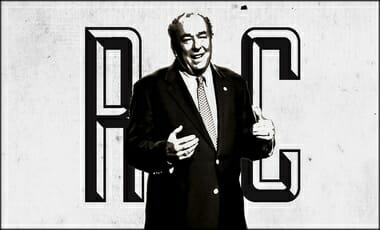
(Below Video Description) Dr. Leighton Flowers plays clips from Drs. James White, RC Sproul and John Piper on the question of the origin of moral evil so as to compare and contrast the various perspectives and the apparent inconsistencies of the Calvinistic worldview.
See my other posts on this topic:
- RC Sproul and Adams Fall | Calvinist Obfuscations
- Is God the “devil” Behind Satan? | Sovereign Puppeteer
- Does God Love All Persons? Or Does He Hate Most?
- James White and Jeff Durbin’s Horrendous 5-Point View of God
William Lane Craig discusses [below] being a “consistent Calvinist” vs. an “inconsistent Calvinism”
Is the Calvinist God the Author of Evil? w/ William Lane Craig Dr. William Lane Craig explains why he believes that Calvinism is forced to conclude that God is the author of evil.
The below is from my “Challenges To Strict 5-Point Calvinism | Tozer/Winger/Geisler/Lewis“
“Divine Goodness”
Any consideration of the goodness of God at once threatens us with the following dilemma.
On the one hand, if God is wiser than we His judgement must differ from ours on many things, and not least on good and evil. What seems to us good may therefore not be good in His eyes, and what seems to us evil may not be evil.
On the other hand, if God’s moral judgement differs from ours so that our ‘black’ may be His ‘white’, we can mean nothing by calling Him good; for to say ‘God is good’, while asserting that His goodness is wholly other than ours, is really only to say ‘God is we know not what’. And an utterly unknown quality in God cannot give us moral grounds for loving or obeying Him. If He is not (in our sense) ‘good’ we shall obey, if at all, only through fear—and should be equally ready to obey an omnipotent Fiend. The doctrine of Total Depravity— when the consequence is drawn that, since we are totally depraved, our idea of good is worth simply nothing— may thus turn Christianity into a form of devil-worship.
The escape from this dilemma depends on observing what happens, in human relations, when the man of inferior moral standards enters the society of those who are better and wiser than he and gradually learns to accept their standards—a process which, as it happens, I can describe fairly accurately, since I have undergone it. When I came first to the University I was as nearly without a moral conscience as a boy could be. Some faint distaste for cruelty and for meanness about money was my utmost reach—of chastity, truthfulness, and self-sacrifice I thought as a baboon thinks of classical music. By the mercy of God I fell among a set of young men (none of them, by the way, Christians) who were sufficiently close to me in intellect and imagination to secure immediate intimacy, but who knew, and tried to obey, the moral law. Thus their judgement of good and evil was very different from mine. Now what happens in such a case is not in the least like being asked to treat as ‘white’ what was hitherto called black. The new moral judgements never enter the mind as mere reversals (though they do reverse them) of previous judgements but ‘as lords that are certainly expected’. You can have no doubt in which direction you are moving: they are more like good than the little shreds of good you already had, but are, in a sense, continuous with them. But the great test is that the recognition of the new standards is accompanied with the sense of shame and guilt: one is conscious of having blundered into society that one is unfit for. It is in the light of such experiences that we must consider the goodness of God. Beyond all doubt, His idea of ‘goodness’ differs from ours; but you need have no fear that, as you approach it, you will be asked simply to reverse your moral standards. When the relevant difference between the Divine ethics and your own appears to you, you will not, in fact, be in any doubt that the change demanded of you is in the direction you already call ‘better’. The Divine ‘goodness’ differs from ours, but it is not sheerly different: it differs from ours not as white from black but as a perfect circle from a child’s first attempt to draw a wheel. But when the child has learned to draw, it will know that the circle it then makes is what it was trying to make from the very beginning.
This doctrine is presupposed in Scripture. Christ calls men to repent—a call which would be meaningless if God’s standards were sheerly different from that which they already knew and failed to practise. He appeals to our existing moral judgement—‘Why even of yourselves judge ye not what is right?’ (Luke 12:57) God in the Old Testament expostulates with men on the basis of their own conceptions of gratitude, fidelity, and fair play: and puts Himself, as it were, at the bar before His own creatures—‘What iniquity have your fathers found in me, that they are gone far from me?’ (Jeremiah 2:5.) …
CS Lewis | The Problem of Pain (Chapter 3)
“Human Wickedness”
…A recovery of the old sense of sin is essential to Christianity. Christ takes it for granted that men are bad. Until we really feel this assumption of His to be true, though we are part of the world He came to save, we are not part of the audience to whom His words are addressed. We lack the first condition for understanding what He is talking about. And when men attempt to be Christians without this preliminary consciousness of sin, the result is almost bound to be a certain resentment against God as to one always inexplicably angry. Most of us have at times felt a secret sympathy with the dying farmer who replied to the Vicar’s dissertation on repentance by asking ‘What harm have I ever done Him?’ There is the real rub. The worst we have done to God is to leave Him alone—why can’t He return the compliment? Why not live and let live? What call has He, of all beings, to be ‘angry’? It’s easy for Him to be good!
Now at the moment when a man feels real guilt— moments too rare in our lives—all these blasphemies vanish away. Much, we may feel, can be excused to human infirmities: but not this—this incredibly mean and ugly action which none of our friends would have done, which even such a thorough-going little rotter as X would have been ashamed of, which we would not for the world allow to be published. At such a moment we really do know that our character, as revealed in this action, is, and ought to be, hateful to all good men, and, if there are powers above man, to them. A God who did not regard this with unappeasable distaste would not be a good being. We cannot even wish for such a God—it is like wishing that every nose in the universe were abolished, that smell of hay or roses or the sea should never again delight any creature, because our own breath happens to stink.
When we merely say that we are bad, the ‘wrath’ of God seems a barbarous doctrine; as soon as we perceive our badness, it appears inevitable, a mere corollary from God’s goodness. To keep ever before us the insight derived from such a moment as I have been describing, to learn to detect the same real inexcusable corruption under more and more of its complex disguises, is therefore indispensable to a real understanding of the Christian faith. This is not, of course, a new doctrine. I am attempting nothing very splendid in this chapter. I am merely trying to get my reader (and, still more, myself) over a pons asi-norum—to take the first step out of fools’ paradise and utter illusion. But the illusion has grown, in modern times, so strong, that I must add a few considerations tending to make the reality less incredible.
- We are deceived by looking on the outside of things. We suppose ourselves to be roughly not much worse than Y, whom all acknowledge for a decent sort of person, and certainly (though we should not claim it out loud) better than the abominable X. Even on the superficial level we are probably deceived about this. Don’t be too sure that your friends think you as good as Y. The very fact that you selected him for the comparison is suspicious: he is probably head and shoulders above you and your circle. But let us suppose that Y and yourself both appear ‘not bad’. How far Y’s appearance is deceptive, is between Y and God. His may not be deceptive: you know that yours is.
Does this seem to you a mere trick, because I could say the same to Y and so to every man in turn? But that is just the point. Every man, not very holy or very arrogant, has to ‘live up to’ the outward appearance of other men: he knows there is that within him which falls far below even his most careless public behaviour, even his loosest talk. In an instant of time—while your friend hesitates for a word—what things pass through your mind? We have never told the whole truth. We may confess ugly facts— the meanest cowardice or the shabbiest and most prosaic impurity—but the tone is false. The very act of confess-ing—an infinitesimally hypocritical glance—a dash of humour—all this contrives to dissociate the facts from your very self. No one could guess how familiar and, in a sense, congenial to your soul these things were, how much of a piece with all the rest: down there, in the dreaming inner warmth, they struck no such discordant note, were not nearly so odd and detachable from the rest of you, as they seem when they are turned into words. We imply, and often believe, that habitual vices are exceptional single acts, and make the opposite mistake about our virtues—like the bad tennis player who calls his normal form his ‘bad days’ and mistakes his rare successes for his normal. I do not think it is our fault that we cannot tell the real truth about ourselves; the persistent, life-long, inner murmur of spite, jealousy, prurience, greed and self-complacence, simply will not go into words. But the important thing is that we should not mistake our inevitably limited utterances for a full account of the worst that is inside.
- A reaction—in itself wholesome—is now going on against purely private or domestic conceptions of morality, a reawakening of the social We feel ourselves to be involved in an iniquitous social system and to share a corporate guilt. This is very true: but the enemy can exploit even truths to our deception. Beware lest you are making use of the idea of corporate guilt to distract your attention from those humdrum, old-fashioned guilts of your own which have nothing to do with ‘the system’ and which can be dealt with without waiting for the millennium. For corporate guilt perhaps cannot be, and certainly is not, felt with the same force as personal guilt. For most of us, as we now are, this conception is a mere excuse for evading the real issue. When we have really learned to know our individual corruption, then indeed we can go on to think of the corporate guilt and can hardly think of it too much. But we must learn to walk before we run.
- We have a strange illusion that mere time cancels sin. I have heard others, and I have heard myself, recounting cruelties and falsehoods committed in boyhood as if they were no concern of the present speaker’s, and even with laughter. But mere time does nothing either to the fact or to the guilt of a sin. The guilt is washed out not by time but by repentance and the blood of Christ: if we have repented these early sins we should remember the price of our forgiveness and be humble. As for the fact of a sin, is it probable that anything cancels it? All times are eternally present to God. Is it not at least possible that along some one line of His multi-dimensional eternity He sees you forever in the nursery pulling the wings off a fly, forever toadying, lying, and lusting as a schoolboy, forever in that moment of cowardice or insolence as a subaltern? It may be that salvation consists not in the cancelling of these eternal moments but in the perfected humanity that bears the shame forever, rejoicing in the occasion which it furnished to God’s compassion and glad that it should be common knowledge to the universe. Perhaps in that eternal moment St Peter—he will forgive me if I am wrong— forever denies his Master. If so, it would indeed be true that the joys of Heaven are for most of us, in our present condition, ‘an acquired taste’—and certain ways of life may render the taste impossible of acquisition. Perhaps the lost are those who dare not go to such a public Of course I do not know that this is true; but I think the possibility is worth keeping in mind.
- We must guard against the feeling that there is ‘safety in numbers’. It is natural to feel that if all men are as bad as the Christians say, then badness must be very excusable. If all the boys plough in the examination, surely the papers must have been too hard? And so the masters at that school feel till they learn that there are other schools where ninety per cent of the boys passed on the same papers. Then they begin to suspect that the fault did not lie with the examiners. Again, many of us have had the experience of living in some local pocket of human soci-ety—some particular school, college, regiment or profession where the tone was bad. And inside that pocket certain actions were regarded as merely normal (‘Everyone does it’) and certain others as impracticably virtuous and Quixotic. But when we emerged from that bad society we made the horrible discovery that in the outer world our ‘normal’ was the kind of thing that no decent person ever dreamed of doing, and our ‘Quixotic’ was taken for granted as the minimum standard of decency. What had seemed to us morbid and fantastic scruples so long as we were in the ‘pocket’ now turned out to be the only moments of sanity we there enjoyed. It is wise to face the possibility that the whole human race (being a small thing in the universe) is, in fact, just such a local pocket of evil—an isolated bad school or regiment inside which minimum decency passes for heroic virtue and utter corruption for pardonable imperfection. But is there any evidence—except Christian doctrine itself—that this is so? I am afraid there is. In the first place, there are those odd people among us who do not accept the local standard, who demonstrate the alarming truth that a quite different behaviour is, in fact, possible. Worse still, there is the fact that these people, even when separated widely in space and time, have a suspicious knack of agreeing with one another in the main—almost as if they were in touch with some larger public opinion outside the pocket. What is common to Zarathustra, Jeremiah, Socrates, Gautama, Christ1 and Marcus Aurelius, is something pretty substantial. Thirdly, we find in ourselves even now a theoretical approval of this behaviour which no one practises. Even inside the pocket we do not say that justice, mercy, fortitude, and temperance are of no value, but only that the local custom is as just, brave, temperate and merciful as can reasonably be expected. It begins to look as if the neglected school rules even inside this bad school were connected with some larger world—and that when the term ends we might find ourselves facing the public opinion of that larger world. But the worst of all is this: we cannot help seeing that only the degree of virtue which we now regard as impracticable can possibly save our race from disaster even on this planet. The standard which seems to have come into the ‘pocket’ from outside, turns out to be terribly relevant to conditions inside the pocket—so relevant that a consistent practice of virtue by the human race even for ten years would fill the earth from pole to pole with peace, plenty, health, merriment, and heartsease, and that nothing else will. It may be the custom, down here, to treat the regimental rules as a dead letter or a counsel of perfection: but even now, everyone who stops to think can see that when we meet the enemy this neglect is going to cost every man of us his life. It is then that we shall envy the ‘morbid’ person, the ‘pedant’ or ‘enthusiast’ who really has taught his company to shoot and dig in and spare their water bottles.
[….]
This chapter will have been misunderstood if anyone describes it as a reinstatement of the doctrine of Total Depravity. I disbelieve that doctrine, partly on the logical ground that if our depravity were total we should not know ourselves to be depraved, and partly because experience shows us much goodness in human nature. Nor am I recommending universal gloom. The emotion of shame has been valued not as an emotion but because of the insight to which it leads. I think that insight should be permanent in each man’s mind: but whether the painful emotions that attend it should also be encouraged, is a technical problem of spiritual direction on which, as a layman, I have little call to speak. My own idea, for what it is worth, is that all sadness which is not either arising from the repentance of a concrete sin and hastening towards concrete amendment or restitution, or else arising from pity and hastening to active assistance, is simply bad; and I think we all sin by needlessly disobeying the apostolic injunction to ‘rejoice’ as much as by anything else. Humility, after the first shock, is a cheerful virtue: it is the high-minded unbeliever, desperately trying in the teeth of repeated disillusions to retain his ‘faith in human nature’, who is really sad. I have been aiming at an intellectual, not an emotional, effect: I have been trying to make the reader believe that we actually are, at present, creatures whose character must be, in some respects, a horror to God, as it is, when we really see it, a horror to ourselves. This I believe to be a fact: and I notice that the holier a man is, the more fully he is aware of that fact. Perhaps you have imagined that this humility in the saints is a pious illusion at which God smiles. That is a most dangerous error. It is theoretically dangerous, because it makes you identify a virtue (i.e., a perfection) with an illusion (i.e., an imperfection), which must be nonsense. It is practically dangerous because it encourages a man to mistake his first insights into his own corruption for the first beginnings of a halo round his own silly head. No, depend upon it; when the saints say that they—even they—are vile, they are recording truth with scientific accuracy.
CS Lewis | The Problem of Pain (Chapter 4)