50 Year Anniversary of the “War On Poverty” ~ Robert Rector

Larry Elder gets the Lo-Down of where we stand after we spent 22-trilion on fighting poverty from Robert Rector, a leading authority on poverty, welfare programs and immigration in America for three decades, is The Heritage Foundation’s senior research fellow in domestic policy. See his article: http://www.heritage.org/research/reports/2014/09/the-war-on-poverty-after-50-years

For more clear thinking like this from Larry Elder… I invite you to visit: http://www.larryelder.com/ ~AND~ http://www.elderstatement.com/

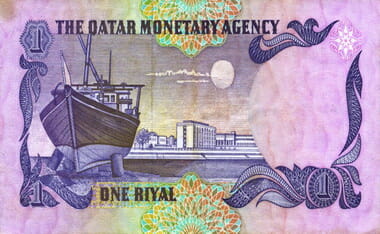
Qatar Gives 14.8 Million To The Brooking’s Institute (Dem Influence)

How Peace Negotiator Martin Indyk Cashed a Big, Fat $14.8 Million Check From Qatar:

The New York Times recently published a long investigative report by Eric Lipton, Brooke Williams, and Nicholas Confessore on how foreign countries buy political influence through Washington think tanks. Judging from Twitter and other leading journalistic indicators, the paper’s original reporting appears to have gone almost entirely unread by human beings anywhere on the planet. In part, that’s because the Times’ editors decided to gift their big investigative scoop with the dry-as-dust title “Foreign Powers Buy Influence at Think Tanks,” which sounds like the headline for an article in a D.C. version of The Onion. There is also the fact that the first 10 paragraphs of the Times piece are devoted to that highly controversial global actor, Norway, and its attempts to purchase the favors of The Center for Global Development, which I confess I’d never heard of before, although I live in Washington and attend think-tank events once or twice a week.

Except, buried deep in the Times’ epic snoozer was a world-class scoop related to one of the world’s biggest and most controversial stories—something so startling, and frankly so grotesque, that I have to bring it up again here: Martin Indyk, the man who ran John Kerry’s Israeli-Palestinian negotiations, whose failure in turn set off this summer’s bloody Gaza War, cashed a $14.8 million check from Qatar. Yes, you heard that right: In his capacity as vice president and director of the Foreign Policy Program at the prestigious Brookings Institution, Martin Indyk took an enormous sum of money from a foreign government that, in addition to its well-documented role as a funder of Sunni terror outfits throughout the Middle East, is the main patron of Hamas—which happens to be the mortal enemy of both the State of Israel and Mahmoud Abbas’ Fatah party.

But far from trumpeting its big scoop, the Times seems to have missed it entirely, even allowing Indyk to opine that the best way for foreign governments to shape policy is “scholarly, independent research, based on objective criteria.” Really? It is pretty hard to imagine what the words “independent” and “objective” mean coming from a man who while going from Brookings to public service and back to Brookings again pocketed $14.8 million in Qatari cash. At least the Times might have asked Indyk a few follow-up questions, like: Did he cash the check from Qatar before signing on to lead the peace negotiations between Israel and the Palestinians? Did the check clear while he was in Jerusalem, or Ramallah? Or did the Qatari money land in the Brookings account only after Indyk gave interviews and speeches blaming the Israelis for his failure? We’ll never know now. But whichever way it happened looks pretty awful.

Or maybe the editors decided that it was all on the level, and the money influenced neither Indyk’s government work on the peace process nor Brookings’ analysis of the Middle East. Or maybe journalists just don’t think it’s worth making a big fuss out of obvious conflicts of interest that may affect American foreign policy. Maybe Qatar’s $14.8 million doesn’t affect Brookings’ research projects or what the think tank’s scholars tell the media, including the New York Times, about subjects like Qatar, Hamas, Israel, Turkey, Saudi Arabia, and other related areas in which Qatar has key interests at stake. Maybe the think tank’s vaunted objectivity, and Indyk’s personal integrity and his pride in his career as a public servant, trump the large piles of vulgar Qatari natural gas money that keep the lights on and furnish the offices of Brookings scholars and pay their cell-phone bills and foreign travel.

But people in the Middle East may be a little less blasé about this kind of behavior than we are. Officials in the Netanyahu government, likely including the prime minister himself, say they’ll never trust Indyk again, in part due to the article by Israeli journalist Nahum Barnea in which an unnamed U.S. official with intimate knowledge of the talks, believed to be Indyk, blamed Israel for the failure of the peace talks….

…read it ALL…

Liberals Want Voting Age 16-and-Under To Ensure Liberalism

Scotland liberals lowered the age of voting to 16-years old, which increased their chance of seceding from the UK. Dennis Prager makes the point that liberals here (esp. California) want to do the same thing. Here is the article on California Democrats wanting to do the same thing, but younger:

SAN FRANCISCO (Reuters ~ 2004) – Four Democratic California lawmakers on Monday proposed giving teenagers as young as 14 the right to vote in a move that would make the often trailblazing state the first in the nation to do so.

Under the proposal, youths under the current legal voting age of 18 would be able to cast ballots in state and local elections only, although their vote would not have full weight that an adult vote would.

For example, a vote cast by a 14 or 15-year-old would be counted as a quarter of a vote, and a vote by a 16 or 17-year-old would be counted as half a vote.

Lawmakers say giving teenagers partial votes would get them interested in the election process and would not violate the U.S. Constitution as long as it only applied to state ballots.

“We believe it’s time to open up the franchise to young Californians at the age of 14, let them register and vote and be seriously included in the process,” said Democratic State Senator John Vasconcellos.

Sue North, chief of staff for Vasconcellos, said that if the proposal passes, it would be the first time any state would have amended its constitution to allow high school students to vote.

For more clear thinking like this from Dennis Prager… I invite you to visit: http://www.dennisprager.com/

An Older Archaeological Find Proving Biblical Events

(See the Poached Egg a year back)

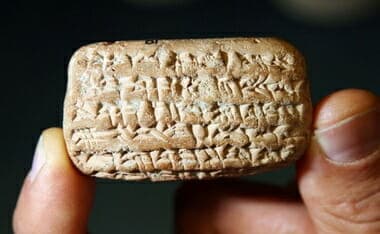
Existence of Babylonian official connected with the Fall of Jerusalem and mentioned in the book of Jeremiah confirmed in cuneiform tablet

Working at the British Museum, Assyriologist Michael Jursa has made a breakthrough discovery whilst examining a small clay tablet with a Babylonian cuneiform inscription. The document is dated to the 10th year of Nebuchadnezzar II (595 BC). It names a Babylonian officer, Nebo-Sarsekim, who according to chapter 39 of the Book of Jeremiah was present at the siege of Jerusalem in 587 BC with Nebuchadnezzar himself. The tablet thus confirms the historical existence of the Biblical figure. Evidence from non-Biblical sources for individuals named in the Bible other than kings is incredibly rare

Nebo-Sarsekim is described in the book of Jeremiah as ‘chief eunuch’ (as the title is now translated, rather than ‘chief officer’). The Babylonian tablet proves that his name was really pronounced as Nabu-sharrussu-ukin, and gives the same title, ‘chief eunuch,’ in cuneiform script, thereby confirming the accuracy of the Biblical account.

The discovery highlights the importance of the study of cuneiform. The British Museum’s collection contains well over one hundred thousand inscribed tablets which are examined by international scholars on a daily basis.  Reading and piecing together fragments is painstaking and slow work, but cuneiform tablets are our only chance of obtaining knowledge of this fateful period of human history. Other discoveries made whilst examining tablets include an Assyrian version of the Old Testament flood story, observations of Halley’s Comet and even rules for the world’s oldest board game.

Dr Jursa, Associate Professor of the University of Vienna, has been studying tablets at the British Museum since 1991. He says of this discovery:

“Reading Babylonian tablets is often laborious, but also very satisfying: there is so much new information yet to be discovered. But finding something like this tablet, where we see a person mentioned in the Bible making an everyday payment to the temple in Babylon and quoting the exact date is quite extraordinary.”

Irving Finkel, Assistant Keeper in the Department of the Middle East at the British Museum, commented: “Cuneiform tablets might all look the same, but sometimes they contain treasure.  Here a mundane commercial transaction takes its place as a primary witness to one of the turning points in Old Testament history.  This is a tablet that deserves to be famous.’

h/t to the members at The Christian Apologetics Alliance andQuite Time Thoughts