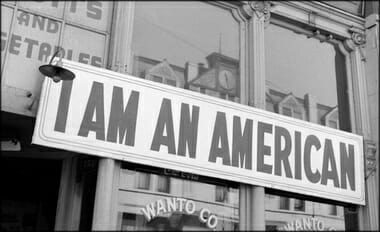
Michelle Malkin’s book In Defense of Internment had quite a few narratives and stories I had never considered or heard. Some good WWII history. Of course there were detractors of it, so here are the main articles responding to the critiques. Here is a quick catch up to her not being on the political scene for years:
Michelle Malkin largely ended her three-decade career as a nationally syndicated political columnist in October 2022, publishing a farewell column titled “-30-: An Ending, but Not the End.” She cited changes in the media environment, corporate influence, censorship, and conflicts within both the political left and right as reasons for stepping away.
Rather than retiring completely, Malkin began a new chapter. She enrolled in paralegal studies at Pikes Peak State College in Colorado Springs and shifted her attention toward criminal justice advocacy, particularly cases she believes involve wrongful convictions.
One of her primary causes has been the case of former Oklahoma City police officer Daniel Holtzclaw, convicted in 2015 of multiple sexual offenses. Malkin has publicly challenged the conviction and investigated alleged problems with the evidence and prosecution.
By late 2025 and into 2026, she began reemerging through independent media, launching Corruptahoma: Unlock the Truth, a podcast and investigative project examining alleged misconduct, questionable forensic evidence, prosecutorial practices, and wrongful convictions in Oklahoma.
In essence: Malkin hasn’t abandoned investigative commentary; she has changed its focus. After stepping away from mainstream political punditry, she redirected her career toward criminal justice investigations and wrongful-conviction advocacy, building a new independent-media platform around that work.
As an aside, having followed Michelle’s ventures for years in the early conservative media world — founding one of my still favorite conservative news sites: HOT AIR — after her cousin [goddaughter] was “disappeared,” I think kidnapped into the sex slavery world never to be seen again, Michelle lost heart for it all. Moved to concentrate on a differing path for a career and spent more time with hubby and kids.

Here is here response as well as others, merely summarized and linked. There are quite a few reviews at AMAZON.
Michelle Malkin’s Defense of Internment:
Reexamining the Evidence and the Historical Debate
Michelle Malkin’s In Defense of Internment: The Case for Racial Profiling in World War II and the War on Terror (2004) challenged the prevailing historical narrative surrounding the wartime removal and incarceration of Japanese Americans during World War II. Her central argument was that the government’s actions should be examined within the context of the national security threats, intelligence assessments, and extraordinary circumstances facing the United States following the attack on Pearl Harbor.
Malkin’s argument rests partly on intelligence information that she believes has received insufficient attention in conventional accounts of the controversy, particularly the MAGIC intercepts. These intercepted Japanese diplomatic communications documented Japanese efforts to gather intelligence within the United States. Malkin argues that this material demonstrates that American security concerns were not entirely imaginary or fabricated after the fact, and that historical assessments should take seriously what government officials knew or reasonably believed during wartime.
She also challenges the tendency to evaluate wartime decisions exclusively through the benefit of hindsight. Following Pearl Harbor, the United States faced an actual military conflict with Japan, fears of sabotage, intelligence-gathering operations, and uncertainty about the extent of enemy activity on American soil. Malkin maintains that these circumstances deserve consideration when evaluating the decisions made by military and political authorities.
Her critics, particularly historians Greg Robinson and legal scholar Eric Muller, dispute whether the MAGIC intercepts substantiate the broader conclusions Malkin draws from them. They argue that evidence of Japanese intelligence operations does not establish widespread espionage among Japanese Americans, nor does it demonstrate that the intelligence directly motivated the mass removal program. They further contend that the government failed to establish individualized grounds for treating an entire population as a security threat.
Malkin has responded to these criticisms by defending her interpretation of the intelligence record and challenging the completeness of the historical examination undertaken by her opponents. She argues that important evidence and wartime considerations have been marginalized in discussions of Japanese American incarceration.
Importantly, the debate should distinguish between several separate questions:
- Did Imperial Japan conduct intelligence operations in the United States? Yes, historical records document Japanese intelligence-gathering efforts.
- Did American officials have legitimate national security concerns following Pearl Harbor? Clearly, the United States faced genuine wartime threats.
- Did the available intelligence establish that Japanese Americans collectively posed a security threat? That is a substantially different and contested question.
- Did the evidence justify the mass removal and incarceration of Japanese Americans, including American citizens? This remains the central historical, constitutional, and moral controversy.
A useful contribution to this discussion is Charles Lofgren’s review, “Hardships of War,” published in the Claremont Review of Books. Lofgren recognizes aspects of Malkin’s historical argument while also examining weaknesses in her interpretation. His review illustrates why the discussion should not be reduced to simply accepting or dismissing Malkin’s book.
The broader significance of Malkin’s work is its challenge to readers to examine primary historical evidence, intelligence records, government decisions, and the competing interpretations of historians. Whether one ultimately accepts her conclusions or not, the underlying questions about wartime security, government authority, individual liberty, and constitutional protections deserve careful examination.
The issue is not whether America faced a genuine threat in 1941. It did. The historical question is how that threat was assessed, what the government actually knew, and whether the resulting policies were justified by the evidence available at the time.
Hardships of War:
A Critical Examination of Michelle Malkin’s
Defense of Japanese American Internment
Author: Charles A. Lofgren
Publication: Claremont Review of Books
Subject: A historical examination of Michelle Malkin’s In Defense of Internment: The Case for Racial Profiling in World War II and the War on Terror (2004).
Introduction
In his review, “Hardships of War,” historian Charles A. Lofgren examines Michelle Malkin’s controversial defense of the government’s World War II removal and incarceration of Japanese Americans. Malkin’s book challenges the prevailing historical interpretation that the policy was primarily the product of racial prejudice, wartime hysteria, and political opportunism.
Lofgren approaches Malkin’s argument with a degree of nuance. Rather than dismissing her work outright, he acknowledges that she raises legitimate historical questions concerning Japanese intelligence operations, American military concerns, and the intelligence information available during the war. However, he also identifies weaknesses in her interpretation of the evidence and questions whether the intelligence material establishes the necessity of mass removal.
His review is particularly valuable because it engages the historical evidence rather than treating the controversy as a simple choice between national security and civil liberties.
1. Japanese Espionage and American Security Concerns
One important component of Malkin’s argument is her use of the MAGIC intercepts: decoded Japanese diplomatic communications that documented Japanese intelligence-gathering efforts within the United States.
These communications reveal that Japanese officials were attempting to obtain information about American military installations, shipping, industrial production, and other strategic matters.
Lofgren does not dismiss the existence of Japanese espionage. He acknowledges that intelligence-gathering operations were real and that American officials had legitimate reasons to be concerned following the attack on Pearl Harbor.
There were also documented Japanese military operations along the American coastline, including submarine attacks and shelling incidents. These circumstances provide important context for understanding the atmosphere of uncertainty and fear confronting American military authorities in 1941 and 1942.
However, the existence of Japanese espionage does not automatically establish that Japanese Americans collectively represented a security threat. That distinction becomes central to Lofgren’s criticism.
2. The MAGIC Intercepts: What Did the Intelligence Actually Establish?
The MAGIC intercepts are among the most important pieces of evidence in Malkin’s defense.
They document Japanese efforts to develop intelligence sources and obtain sensitive information within the United States. Malkin argues that this material has been insufficiently considered in conventional accounts of the internment controversy.
Lofgren acknowledges the significance of the intercepts but questions whether Malkin draws conclusions from them that extend beyond what the documents actually demonstrate.
In particular, evidence that Japanese intelligence personnel were seeking information does not necessarily establish widespread espionage among Japanese Americans or prove that the Japanese American population as a whole was involved in such activities.
The distinction is important: documenting an intelligence threat is not the same as demonstrating that an entire ancestry group posed that threat.
3. The Timing of Military Decisions
Lofgren also examines the chronology of events surrounding the government’s decision to remove Japanese Americans from the West Coast.
Some of the incidents Malkin discusses occurred after the critical decisions concerning mass removal had already been made.
For example, the Japanese submarine shelling near Santa Barbara occurred on February 23, 1942, after President Roosevelt signed Executive Order 9066 on February 19, 1942.
Lofgren argues that subsequent events cannot automatically be used to justify decisions that preceded them.
This raises an important historical question: What information was actually available to military and political decision-makers when they formulated and implemented the removal policy?
A proper assessment must distinguish between intelligence available at the time and evidence that emerged afterward.
4. The Role of Military and Political Leadership
Lofgren further examines the changing positions of military and civilian officials, including General John L. DeWitt, Secretary of War Henry Stimson, and Assistant Secretary of War John McCloy.
He considers the influence of military assessments, political pressure, and demands from West Coast representatives who advocated removing people of Japanese ancestry from strategically sensitive areas.
Lofgren questions whether Malkin adequately examines the extent to which political considerations influenced the government’s decision.
This is particularly relevant because the historical debate concerns not simply whether security concerns existed, but how those concerns were translated into government policy.
Were the decisions based primarily on demonstrated military necessity, intelligence assessments, political pressure, or a combination of these factors?
That question deserves careful examination.
5. The Distinction Between Internment and Mass Removal
Another important historical distinction concerns the terminology used to describe the government’s wartime policies.
Technically, internment generally referred to the detention of enemy aliens under wartime authority. The broader West Coast removal program, however, involved the forced relocation and incarceration of Japanese Americans, including American citizens who had not been individually charged with espionage or sabotage.
The two policies should not be confused.
Malkin challenges some of the comparisons made between the American relocation centers and other forms of wartime imprisonment. Lofgren recognizes the importance of distinguishing the American facilities from Nazi extermination camps, while also questioning aspects of Malkin’s treatment of the Supreme Court’s decision in Korematsu v. United States.
The fact that the relocation centers were not extermination camps does not, by itself, resolve the constitutional or moral questions surrounding the government’s actions.
6. Lofgren’s Overall Assessment
Lofgren’s assessment is neither an unqualified endorsement nor a wholesale rejection of Malkin’s book.
He recognizes that Malkin brings attention to intelligence evidence and wartime circumstances that deserve consideration. He acknowledges the existence of Japanese espionage and the genuine security concerns confronting American officials.
Nevertheless, he believes Malkin does not sufficiently establish the connection between the intelligence evidence and the government’s decision to undertake indiscriminate mass removal.
His principal objections concern the interpretation of the MAGIC intercepts, the chronology of events, the influence of political considerations, and the extent to which the available evidence justified the policy adopted.
Lofgren’s review therefore provides a useful independent examination of Malkin’s historical argument, while identifying questions that her defenders must address.
Conclusion: The Historical Questions Remain Important
The debate surrounding Michelle Malkin’s In Defense of Internment raises questions that extend beyond the events of World War II.
The United States faced a genuine military threat following Pearl Harbor. Japanese intelligence operations existed, and American officials had legitimate responsibilities to protect military installations, shipping, and the civilian population.
However, recognizing those realities does not automatically establish that the mass removal and incarceration of Japanese Americans was justified.
The central historical questions remain:
- What did American intelligence actually know about Japanese espionage operations?
- Which officials received and relied upon the MAGIC intercepts?
- Did the available intelligence establish a threat among Japanese Americans collectively?
- How much did military assessments, political pressure, and racial prejudice contribute to the removal decision?
- Could individualized investigations and security measures have addressed the actual threats without imposing collective restrictions?
Lofgren’s review is valuable because it acknowledges the evidence that makes Malkin’s argument worthy of examination while identifying the weaknesses that prevent her conclusions from being accepted without further scrutiny.
Historical analysis should neither dismiss inconvenient evidence nor stretch that evidence beyond what it establishes. The existence of a national security threat and the justification for a particular government response are two separate questions. Both deserve examination.