Author: Papa Giorgio


The Rhetoric of the Left, vs., The Real World
Pay close attention to the shirt this leftist to the right of the speaker is wearing:
Also, take note of the two pictures here:

Mail Online has a bang-up story about the hypocrisy […or impossibility maybe of the stated goals…] of the left. Here is some of the article (h/t: Twitchy):
….Deputy Labour Leader Harriet Harman wore a shirt carrying the slogan on the front bench of the Commons during Prime Minister’s Questions last week, while the Labour and Liberal Democrat leaders proudly posed for photographs in Elle’s ‘feminism issue’ in the T-shirts.
Fayzal Ally Beegun, president of the International Textile, Garment and Leather Workers Union said: ‘The workers in this factory are treated very poorly and the fact that politicians in England are making a statement using these sweatshop T-shirts is appalling.
‘It would take a woman working in the factory nearly two weeks just to buy one shirt. What is feminist about that? These women have nothing in this world. They are paid a pittance and any money they do receive they send back home.
‘They work very long hours and have no lives other than their work. They are on four-year contracts that mean they don’t get to see their families in that time. What kind of existence is it when you are sharing your bedroom with 15 other women?
‘The women have no careers or even the most basic of opportunities. This is not what feminism is supposed to be.’
Celebrities pictured wearing the feminist T-shirt in Elle magazine include Benedict Cumberbatch, Tinie Tempah, Eddie Izzard, Richard E Grant and Simon Pegg.
Yesterday a reporter and a photographer from The Mail on Sunday were given a guided tour of CMT’s factory in La Tour Koenig, north Mauritius. As managing director Francois Woo showed us around the sleeping quarters he said: ‘All of our dormitories are identical. There are 16 beds in each room. They are based on university dormitories in China. They don’t need a lot of room because they only use them for sleep.’
He told us that the plant is one of six across the island where living conditions and wages are identical.
He could not say at which factory the Whistles T-shirts were made, but confirmed they made 300 at a cost of £9. ‘The machinists at our factories made the feminist T-shirt for Whistles’ he said, adding: ‘All the machinists earn 6,000 rupees.’…


SCV 2014 Voter Guide ~ PapaGiorgio Edition (UPDATED)

- Voter-Guids-2014 (Downloadable)
STATE
- Governor: Neel Kashkari ~ #9
- Lt. Governor: Ron Herring ~ #13
- Sec of State: Pete Peterson ~ #15
- Controller: Ashley Swearengin ~ #19
- Treasurer: Greg Conlon ~ #21
- Att. General: Ronald Gold ~ #28
- Ins. Commissioner: Ted Gaines ~ #31
- State Board of Equalization: George Runner ~ #34
U.S. REPRESENTATIVE FOR THE 25TH DISTRICT
- 25th Dist: Steve Knight ~ #40
MEMBER OF THE STATE ASSEMBLY
- 38th Dist: Scott Wilk ~ #45
“NONPARTISAN” JUDICIAL
JUDICIAL – SUPREME COURT JUSTICE
- Goodwin Liu: NO ~ #65
- Kathryn Mickle Werdegar: YES ~ #67
- Mariano‐Florentino Cuéllar: NO ~ #71
JUSTICE, CALIFORNIA STATE COURT OF APPEALS; DISTRICT 2, DIVISION 1
- Francis Rothschild: NO ~ #76
- Jeffrey W. Johnson: YES ~ #80
JUSTICE, CALIFORNIA STATE COURT OF APPEAL; DISTRICT 2, DIVISION 2
- Brian M. Hoffstadt: NO ~ #84
JUSTICE, CALIFORNIA STATE COURT OF APPEAL; DISTRICT 2, DIVISION 3
- Lee Anne Edmon: NO ~ #87
JUSTICE, CALIFORNIA STATE COURT OF APPEALS; DISTRICT 2, DIVISION 4
- Audrey B. Collins: NO ~ #90
- Nora M. Manella: YES ~ #92
JUSTICE, CALIFORNIA STATE COURT OF APPEAL; DISTRICT 2, DIVISION 5
- Paul A. Turner: YES ~ #95
JUSTICE, CALIFORNIA STATE COURT OF APPEAL; DISTRICT 2, DIVISION 6
Kenneth R. Yegan: YES ~ #98
JUSTICE, CALIFORNIA STATE COURT OF APPEAL; DISTRICT 2, DIVISION 7
- Dennis M. Perluss: NO ~ #102
JUSTICE, CALIFORNIA STATE COURT OF APPEAL; DISTRICT 2, DIVISION 8
- Laurence D. Rubin: NO ~ #107
- Madeleine I. Flier: NO ~ #110
JUDGE OF THE SUPREME COURT
- Dayan Mathai ~ #132
JUDGE OF THE SUPERIOR COURT; COUNTY OF LOS ANGELES; OFFICE 87
- Andrew M. Stein ~ #136
SCHOOL
SUPERINTENDENT OF PUBLIC INSTRUCTION
- Marshall Tuck ~ #140
COUNTY ASSESSOR
- Jeffrey Prang ~ #146
SHERIFF
- Paul Tanaka ~ #148
STATE MEASURES
- PROP 1: NO ~ #159
- PROP 2: YES ~ #162
- PROP 45: NO ~ #167
- PROP 46: NO ~ #171
- PROP 47: NO ~ #175
- PROP 48: YES ~ #178
COUNTY MEASURE
NO on P
CITY MEASURE
NO on S
DISTRICT – CASTAIC LAKE WATER AGENCY
MEMBER, BOARD OF DIRECTORS:
Tom Campbell ~ #195
Gary Martin ~ #196
Ibid., DIVISION 2
Stephen P. Daniels ~ #198
Isaiah 53 ~ The Jewish Suffering Servant (AKA: Jesus)

Mark Eastman and Chuck Smith, The Search for Messiah (Costa Mesa, CA: The Word for Today, 1996), 16-28.
In the book of Isaiah there are a group of passages called “The Suffering Servant Songs.” These four vignettes are found in Isaiah 42:1-7; Isaiah 49:1-6; Isaiah 50:4-9; Isaiah 52:13-53:12. We will focus on the fourth suffering servant song since it is the most disputed portion of Isaiah.[1]
“Behold, My Servant shall deal prudently, He shall be exalted and extolled and be very high. Just as many were astonished at you, so His visage was marred more than any man, and His form more than the sons of men; So shall He sprinkle many nations. Kings shall shut their mouths at Him; for what had not been told them they shall see, and what they had not heard they shall consider. Who has believed our report? And to whom has the arm of the LORD been revealed? For He shall grow up before Him as a tender plant, and as a root out of dry ground. He has no form or comeliness; and when we see Him, there is no beauty that we should desire Him. He is despised and rejected by men, a man of sorrows and acquainted with grief. And we hid, as it were, our faces from Him; He was despised, and we did not esteem him. Surely He has borne our griefs and carried our sorrows; yet we esteemed Him stricken, smitten by God, and afflicted. But He was wounded for our transgressions, He was bruised for our iniquities; the chastisement for our peace was upon Him, and by His stripes we are healed. All we like sheep have gone astray; we have turned, every one, to his own way; and the LORD has laid on him the iniquity of us all. He was oppressed and he was afflicted, yet he opened not his mouth; he was led as a lamb to the slaughter, and as a sheep before its shearers is silent, so he opened not his mouth. He was taken from prison and from judgment, and who will declare his generation? For he was cut off from the land of the living; for the transgressions of My people he was stricken. And they made his grave with the wicked; but with the rich at his death, because he had done no violence, nor was any deceit in his mouth. Yet it pleased the LORD to bruise him; he has put him to grief. When You make his soul an offering for sin, he shall see his seed, he shall prolong his days, and the pleasure of the LORD shall prosper in his hand. He shall see the travail of his soul, and be satisfied. By his knowledge My righteous servant shall justify many, for lie shall bear their iniquities. Therefore, I will divide him a portion with the great, and he shall divide the spoil with the strong, because he poured out his soul unto death, and he was numbered with the transgressors, and lie bore the sin of many, and made intercession for the transgressors.”
From the time of the development of the written Talmud (200-500 C.E.) this portion of scripture was believed to be Messianic. In fact, it was not until the eleventh century C.E. that it was seriously proposed otherwise. At that time Rabbi Rashi began to interpret the suffering servant in these passages as reference to the nation of Israel.[2]
One of the oldest translations of the Hebrew scriptures is known as the Targums. These are Aramaic translations of very ancient Hebrew manuscripts that also, included commentary on the scriptures. They were translated in the first or second century B.C.E. In the Targum of Isaiah, we read this incredible quote regarding the suffering servant in Isaiah 53:
“Behold, My servant the Messiah shall prosper; he shall be exalted and great and very powerful. The Righteous One shall grow up before him, lo, like sprouting plants; and like a tree that sends its roots by the water-courses, so shall the exploits of the holy one multiply in the land which was desperate for him. His appearance shall not be a profane appearance, nor shall the awe of an ignorant person, but his countenance shall radiate with holiness, so that all who see him shall become wise through him. All of us were scattered like sheep… but it is the will of God to pardon the sins of all of us on his account…Then I will apportion unto him the spoil of great nations… because he was ready to suffer martyrdom that the rebellious he might subjugate to the Torah. And he might seek pardon for the sins of many.”[3]
According to this commentary, the Messiah would suffer martyrdom, he would be, “The Righteous One” and would provide a way for God to forgive our sins. This forgiveness would be accomplished, not because of our goodness, but on account of the righteousness of Messiah. As we shall see, this is the very message of Jesus as recorded in the New Testament!
A reading from a Yom Kippur and Rosh Hashanah prayer book contains this passage:
“Our righteous anointed is departed from us: horror has seized us, and we have none to justify us. He has borne the yoke of our iniquities, and our transgression, and is wounded because of our transgression. He bears our sins on his shoulders, that we may find pardon for our iniquities. We shall be healed by his wound, at the time that the eternal will create the Messiah as a new creature. 0 bring him up from the circle of the earth. Raise him up from Seir, to assemble us the second time on mount Lebanon, by the hand of Yinon.”[4][5]
In this beautiful prayer, a commentary on Isaiah 53, we discover several of the ancient beliefs on the mission of God’s righteous Messiah:
- He would apparently depart after an initial appearance: “Our righteous anointed is departed.”
- The Messiah would be the one who justifies the people:[6] “Horror has seized us, and we have none to justify us.”
- The Messiah would be wounded because of our transgressions and would take upon himself the yoke or punishment of our iniquities.[7]
“He has borne the yoke of our iniquities, and our transgression, and is wounded because of our transgression.”
- By his wound we would be healed when he reappears as a “new creature.”
- “We shall be healed by his wound, at the time that the eternal will create the Messiah as a new creature.”
In the Babylonian Talmud there are a number of commentaries on the suffering servant in Isaiah 53. In a discussion of the suffering inflicted upon this servant we find the following statement:
“This teaches us that God will burden the Messiah with commandments and sufferings as with millstones.”[8]
In another chapter of Sanhedrin we find a discussion on the name of the Messiah. In this remarkable portion of the Talmud we read:
“There is a whole discussion in the Talmud about Messiah’s name. The several discussants suggested various names and cited scriptural references in support of these names. The disciples of the school of Rabbi Yehuda Ha’ Nasi said ‘The sick one is his name,’ for it is written, ‘Surely he has borne our sicknesses and carried our sorrows and pains, yet we considered him stricken, smitten, and afflicted of God.'”[9]
In the Midrash we again find reference to the “Suffering Servant” of Isaiah 53. In characteristic fashion we read one rabbi quoting another in a discussion of the Messiah’s suffering:
“Rabbi Huna in the name of Rabbi Acha says: ‘The sufferings are divided into three parts: one for David and the fathers, one for our own generation, and one for the King Messiah, and this is what is written, `He was wounded for our transgressions.”‘[10]
In a portion of the Midrash, called the Haggadah (a portion which expounds on the non-legal parts of Scripture) in the tractate Pesiqta Rabbati[11] we read an interesting discussion of the suffering of the Messiah:
“And the Holy One made an agreement with the Messiah and said to him, ‘The sins of those which are forgiven for your sake will cause you to be put under an iron yoke, and they will make you like this calf whose eyes are dim, and they will choke your spirit under the yoke, and on account of their sins your tongue shall cleave to your mouth. Are you willing to do this?’ Said Messiah before the Holy One: ‘Perhaps this agony will last many years?’ And the Holy One said to him: ‘By your life and by the life of my head, one week only have I decreed for you; but if your soul is grieved I shall destroy them even now.’ But the Messiah said to him: ‘Sovereign of the world, with the gladness of my soul and the joy of my heart I take it upon me, on condition that not one of Israel shall perish, and not only those alone should be saved who are in my days, but also those who are hid in the dust; and not only should the dead of my own time be saved, but all the dead from the first man until now; also, the unborn and those whom thou bast intended to create. Thus I agree, and on this condition I will take it upon myself.'” (Pesiqta Rabbati. chapter 36)
Another section of chapter 37, Pesiqta Rabbati, says the following:
“The Patriarchs will one day rise again in the month of Nisan and will say to the Messiah: ‘Ephraim, our righteous Messiah, although we are your ancestors, you are nevertheless greater than we, for you have borne the sins of our children, as it is written: `Surely he has borne our diseases and carried our sorrows; yet we regarded him stricken, smitten of God, and afflicted. But he was wounded for our sins, bruised for our iniquities, upon him was the chastisement that makes us well, and through his wounds we are healed.’[12] Heavy oppressions have been imposed upon you, as it is written: ‘As a result of oppression and judgment he was taken away[13]; but in his day, who considered that he was torn from the land of the living because of the transgressions of my people?’ You have been a laughing stock and a derision among the peoples of the world, and because of you they jeered at Israel, as it is written, You have dwelt in darkness and in gloominess, and your eyes have not seen light, your skin was cleaving to your bones, and your body withered like wood. Your eyes became hollow from fasting, and your strength was dried-up like a potsherd, as it is written.[14] All this happened because of the sins of our children, as it is written: ‘And Jehovah laid on him the iniquities of us all.’ ” (Isaiah 53:6)
In these fascinating portions of the Midrash we see language which closely parallels Psalm 22.[15] he writer specifically ties together the sufferings of the pierced servant in Psalm 22 (tongue shall cleave to your mouth… dried up like a potsherd) with the servant in Isaiah 53, whose sufferings provide a way for the children of Israel to be saved. The fact that the writer of this portion of the Midrash would tie the sufferings of the servant in Psalm 22 (the pierced one) and Isaiah 53, the despised and rejected one, is nothing less than astonishing. Clearly at least some of the rabbis of the ancient Midrashim believed that the Messiah would suffer and that the sufferings found in Psalm 22 and Isaiah 53 belong to the same person.
In the eleventh century C.E. the rabbinical interpretation of Isaiah 52-53 began to change. Rabbi Rashi, a well-respected member of the Midrashim, began to interpret this portion of scripture as a reference to the sufferings of the nation of Israel. However, even after this interpretation took root, there remained many dissenters who still held onto its original, Messianic view.
In the fourteenth century Rabbi Moshe Cohen Crispin, a strong adherent to the ancient opinion, stated that applying the suffering servant of Isaiah 53 to the nation of Israel:
“distort[s] the verses of their natural meaning…As then it seemed to me that the doors of the literal interpretation [of Isaiah 53] were shut in their face, and that ‘they wearied themselves to find the entrance’, having forsaken the knowledge of our Teachers, and inclined after the ‘stubbornness of their own hearts’ and of their own opinion, I am pleased to interpret it, in accordance with the teaching of our Rabbis, of the King Messiah, and will be careful, so far as I am able, to adhere to the literal sense: thus possibly, I shall be free from the forced and farfetched interpretations of which others have been guilty. This prophecy was delivered by Isaiah at the divine command for the purpose of making known to us something about the nature of the future Messiah, who is to come and to deliver Israel,”[16]
Rabbi Isaac Abrabanel (143 7-1508), a member of the Midrashim, made the following remarkable declaration regarding the suffering servant of Isaiah 53:
“The first question is to ascertain to whom this prophecy refers, for the learned among the Nazarenes expound it of the man who was crucified in Jerusalem at the end of the Second Temple, and, who according to them, was the Son of God and took flesh in the virgin’s womb, as is stated in their writings. Jonathan ben Uzziel interprets it in the Targum of the future Messiah; and this is also the opinion of our learned men in the majority of their Midrashim.”[17]
Two centuries later we find the comments of another member of the Midrashim, Rabbi Elijah De Vidas, a Cabalistic scholar in sixteenth century. In his comments of Isaiah 53 we read:
“The meaning of ‘He was wounded for our transgressions, bruised for our iniquities,’ is, that since the Messiah bears our iniquities, which produce the effect of his being bruised, it follows that who so will not admit that the Messiah thus suffers for our iniquities must endure and suffer them for himself.”[18]
We have also the writings of the sixteenth century Rabbi Moshe el Sheikh, who declares in his work “Commentaries of the Earlier Prophets,” regarding the suffering servant in Isaiah 53:
“Our rabbis with one voice accept and affirm the opinion that the prophet is speaking of the King Messiah, and we shall ourselves also adhere to the same view.”[19]
These remarkable references from the ancient rabbis leave no doubt that the suffering servant in Isaiah 52:1353:12 was indeed believed to be the Messiah. Even more remarkable is the fact that the suffering servant of Isaiah is connected with the suffering servant of Psalm 22. Finally, we find the ancient rabbis claiming that the suffering and death of the Messiah would have the effect of freeing us from our sins. This is in complete agreement with the Christian concept of the Messiah!
Even without these ancient references, there are several other reasons why the suffering servant in Isaiah 53 could not be the nation of Israel.
First, the suffering servant is an innocent person without sin:
- “And they made his grave with the wicked; but with the rich at his death, because he had done no violence, nor was any deceit in his mouth.” Isaiah 53:9
Israel has an admittedly sinful past; the Hebrew scriptures even admit this fact. Psalm 14:2-3 says:
- “There is none that does good, no not one.”
I Kings 8:46 says:
- “…for there is no one who does not sin.”
Ecclesiastes 7:20 says:
- “For there is not a just man on earth who does good and does not sin.”
Secondly, the suffering servant of Isaiah 53 suffers on account of the sins of others.
- “Surely he has borne our griefs and carried our sorrows; yet we esteemed him stricken, smitten by God, and afflicted. But he was wounded for our transgressions, he was bruised for our iniquities; the chastisement of our peace was upon him, and by his stripes we are healed. All we like sheep have gone astray; we have turned, every one, to his own way; and the LORD has laid on him the iniquity of us all.” (Isaiah 53:4)
Thirdly, the suffering servant of Isaiah 53 is willing to suffer.
- “He was oppressed and he was afflicted, yet he opened not his mouth; he was led as a lamb to the slaughter, and as a sheep before its shearers is silent, so he opened not his mouth.” (Isaiah 53:7)
In the entire history of their nation, the Jews have never suffered willingly.
Finally, the suffering servant’s end was death.
- “Therefore I will divide him a portion with the great, and he shall divide the spoil with the strong, because he poured out his soul unto death, and he was numbered with the transgressors, and lie bore the sin of many, and made intercession for the transgressors.” (Isaiah 53:12)
The nation of Israel has suffered much, but she has never died. In fact, the nation of Israel was re-gathered back into the land after nearly 1900 years of world-wide dispersion, an event unprecedented in world history.
- “Let Israel now say; Many a time they have afflicted me from my youth; Yet they have not prevailed against me.” (Psalm 129:1)
Finally, listen to the words of nineteenth century Jewish scholar Herz Homberg;
“This prophecy is disconnected with what precedes it. According to the opinion of Rashi and lbn Ezra, it relates to Israel at the end of their captivity; the term `servant’ and the use of the singular number referring to the individual members of the nation. But if so, what can be the meaning of the passage, ‘He was wounded for our transgressions?’, etc.? Who was `wounded?’ Who are the ‘transgressors’ Who `carried’ the sickness and ‘bare’ the pains? And where are the sick? Are they not the same as those who are ‘smitten’ and who ‘bear?’ And if ‘each turned to his own way’, upon whom did ‘the Lord lay the iniquity of them all?’ The Ga’on, Rabbi Sa’adyah, explains the whole Parashah of Jeremiah: and there are indeed numerous parts of Scripture in which we can trace a great resemblance to what befell Jeremiah while persecuted by the false prophets. But the commencement of the prophecy, ‘He shall be high and exalted and lofty exceedingly’, and similarly the words ‘with the mighty he shall divide the spoil’, will not admit of being applied to him. The fact is that it refers to the King Messiah, who will come in the latter days, when it will be the Lord’s good pleasure to redeem Israel from among the different nations of the earth…and even the Israelites themselves will only regard him as `one of the vain fellows’, believing none of the announcements which will be made by him in God’s name, but being contumacious against him, and averring that all the reproaches and persecutions which fall to his lot are sent from heaven, for that he is ‘smitten of God’ for his own sin. For they will not at first perceive that whatever he underwent was in consequence of their own transgression, the Lord having chosen him to be a trespass-offering, like the scapegoat which bore all the iniquities of the house of Israel. Being, however, himself aware that through his pains and revilings the promised redemption will eventually come at the appointed time, he will endure with a willing soul, neither complaining nor opening his mouth in the siege and distress wherewith the enemies of Israel will oppress him (as is pointed out from the passage here in the Haggadah).”[20]
Here we have in the clearest term possible the belief that the prophet was speaking of King Messiah. Furthermore, Homberg states that the Messiah, when he comes, will be rejected “as one of the vain fellows, believing none of the announcements which will be made by him in God’s name.” Finally, he sees the rejection and death of the Messiah accomplishing the role of the trespass-offering for the sins of the people. The Messiah suffers not because of the sins of himself, but on account of the sins of the people. Through Messiah’s suffering and death “the promised redemption will eventually come!”
As we will see, in his understanding of Isaiah 53, Herzog has pointed out the very heart of the Christian message!….
[1] Messianically applied in Targum of Jonathan, written between first and second century C.E.
[2] See The Messianic Hope, Arthur Kac.
[3] See comments on Isaiah 53 in Edersheim, The Life and Times of Jesus the Messiah, Appendix IX.
[4] Yinon is one of the ancient rabbinical names of the Messiah.
[5] See The Messianic Hope, Arthur Kac, The Chapter of the Suffering Servant.
[6] To justify is to make one acceptable and righteous in the sight of God.
[7] i.e. Our individual sins.
[8] Talmud, Sanhedrin 93b .
[9] Talmud, Sanhedrin 98b.
[10] The Life and Times of Jesus the Messiah, Alfred Edersheim, Appendix IX.
[11] Compiled in the ninth century, but based on writings from Talmudic times from 200 B.C.E.- 400 C.E.
[12] A reference to Isaiah 53.
[13] A reference to the death of the Messiah.
[14] A reference to Psalm 22:15-16.
[15] In fact, there is no other portion of scripture that parallels the language in Pesiqta Rabbati chapter 37 as closely as does Psalm 22.
[16] A Commentary of Rabbi Mosheh Kohen Ibn Crispin of Cordova. For a detailed discussion of this reference see The Fifty Third Chapter of Isaiah According to Jewish Interpreters, preface pg. x, S.R. Driver, A.D. Neubauer, KTAV Publishing House, Inc., New York, 1969.
[17] “The Messianic Hope”, by Arthur Kac, pg. 75.
[18] ibid, pg. 76.
[19] ibid, pg. 76.
[20] From the exposition of the entire Old Testament, called Korem, by Herz Homberg (Wein, 1818).

God’s Not Dead: John Lennox Interview (4-Parts)

Democrats Love Playing the Race Card (Plus: Leaving the Plantation)
Columnist and author of “Never Trust a Liberal Over 3-Especially a Republican,” Ann Coulter accused the media of “100% lying” about comments made by GOP Senate candidate Joni Ernst in Iowa that she believes in owning a firearm to protect herself from “a government” that wants to trample on her rights on Wednesday’s “Hannity” on the Fox News Channel. (Read more at Breitbart)

Sabo’s “Reanimation” Business Catches Eye of Secret Service

How many of these people were visited? (Not that I would advocate that either.)


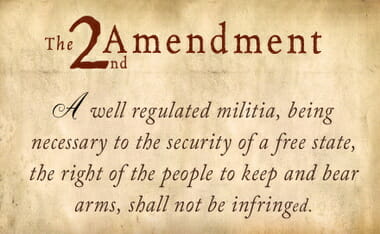
Some Excellent Rhetoric To Memorize on the 2nd Amendment
“A well-schooled electorate, being necessary to the security of a free State, the right of the people to keep and read Books, shall not be infringed.” ~ Read It All

Weather Channel Co-Founder Blasts Anthropogenic Climate Change

Levels of THC So High In Michael Brown, Hallucinations Possible
Michael “the Gentle Giant” Brown’s toxicology report is out… and it suggests hallucinations. This would explain well the erratic behavior some (like the Rev. Al “Not So Sharp” Sharpton) in the above clip have issue with. Here is some info from Conservative Tribune:
…Eyewitness testimony has already confirmed that Brown did not have his hands up when he was shot, and the recently released county autopsy report indicates the same. In addition, forensic tests proved that Michael Brown’s blood was present on Wilson’s gun, uniform, and interior car door panel, corroborating his statement that the two struggled for control of Wilson’s gun in the car.
Now the toxicology report has been released, and it, too, puts another nail in the coffin of the liberal narrative surrounding the Brown shooting, according to The Washington Post.
“Jurors have also seen the St. Louis County autopsy report, including toxicology test results for Brown that show he had tetrahydrocannabinol, the active ingredient in marijuana, in his system,” the paper reported on Thursday.
“The Post’s sources said the levels in Brown’s body may have been high enough to trigger hallucinations,” it continued.
It’s only speculation, of course, but hallucinations could account for some of Brown’s reportedly irrational behavior that day, including his attempt to take a gun away from a trained police officer.
The race hustlers, or at least some of them, will undoubtedly portray this report as further evidence of the conspiracy to deny justice to Michael Brown, as if exonerating Wilson were a perversion of justice, rather than its necessary outcome — assuming, of course, that when all the facts are in, Wilson’s story remains credible….
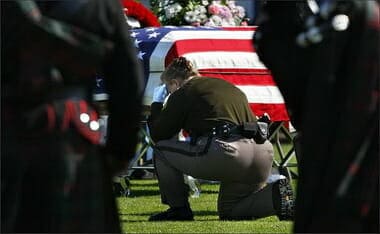
Another Police Officer[s] Death At Hand of Illegal Alien
(Via Gateway Pundit) One good place to donate to that will eventually (surely) help the families of the fallen is The Bruce Verhoeven Foundation: http://verhoevenfoundation.org/about.html

(New Posts Will Appear to the Right) Minimal Posting ~ Busy Season Is Starting

It started a while ago, but is really getting under-way. What does this mean? I will not be able to post more lengthy responses like the ones in my slider at the top of my front-page. the hope is to pass along articles and videos one should be viewing with minimal commentary. Above is the graphic for the company I work for — a friends business. We actually have four online store-fronts, Tragic Mountain being one of them. As we work through inventory the Amazon store will grow in product choice, which is a mix of the following stores. Tragic Mountain on E-Bay will have the widest choice of costumes, wigs, make-up, and the like — Halloween is upon us. Largemouth has more clothing and hats, punk and rock t-shirts, and Skirtstar has Ballroom masks, some lingerie, purses, and the like.
We are trying to keep the flow going through Christmas and New Years. Ballroom masks for New Years are a hit, and throw away (one-time-use) pub-crawl Santa and Elf suits are a hit.