In all my years as a Christian, I have only left two churches. Neither departure was prompted by personality conflicts, disagreements over preferences, or dissatisfaction with the people in the congregation. Both were the result of serious doctrinal concerns. In each instance, a particular book became representative of the theological direction I believed the church was embracing, and ultimately, a direction I could not conscientiously support.
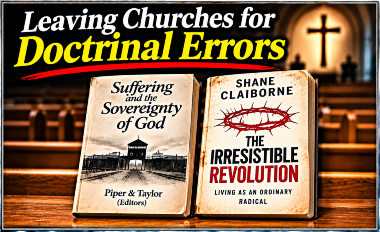
The first involved NorthPark Community Church, where my family and I had been members for approximately ten years. The book in question was Shane Claiborne’s The Irresistible Revolution: Living as an Ordinary Radical. What initially appeared to be a book about Christian living and helping the poor raised much deeper concerns for me about the theological and ideological influences being introduced into the church. This is the story of why that book became a turning point.
Why I Left a Church I Loved:
Revisiting Shane Claiborne’s The Irresistible Revolution
Many years ago, I made one of the more difficult decisions of my Christian life: I left a church where my family and I had worshiped for approximately a decade.
It wasn’t because I disliked the people. Quite the opposite. We loved the congregation of Northpark Community Church, our children had grown up in its ministries, and we had developed meaningful relationships over the years.
My concern was doctrinal.
I had become increasingly troubled by the influence of the Emerging Church movement and what I believed was the gradual introduction of theological liberalism into an otherwise conservative evangelical congregation.
The proverbial last straw came when I learned that a pastor was using Shane Claiborne’s The Irresistible Revolution: Living as an Ordinary Radical in a young men’s college group.
I purchased the book and began reading.
On page 34 of my edition, Claiborne explained that he was donating the advance and royalties from his book to the communities and organizations that had helped inspire it. He described the book as emerging from a broader movement of faith communities engaged in social struggle, and directed readers to Appendix 1 for the names of those involved.
That reference caught my attention.
- Who were these organizations?
- What did they believe?
- What theological and political ideas were influencing this movement?
- And why was a pastor in a supposedly conservative evangelical church introducing these ideas to young Christian men?
I turned to Appendix 1, pages 359–362, entitled Local Revolutions and Ordinary Radicals.*
What I discovered sent me to my computer to investigate the organizations, their statements of belief, their affiliations, and the movements they promoted.
Some were engaged in charitable ministries and community development. Others openly embraced theological approaches or political philosophies that I believed were fundamentally incompatible with historic evangelical Christianity.
My objection was never to feeding the hungry, caring for the poor, or helping the marginalized. Scripture plainly commands Christians to care for those in need.
My objection was to the possibility that biblical Christianity was being reinterpreted through the lens of political revolution, liberation theology, and ideological activism, while foundational doctrines of the faith were increasingly treated as negotiable.
That distinction was central to my decision then, and it remains central to my concerns today.
Which brings me to the other reason for leaving a church. And interestingly enough, the final straw was — drum roll please — a book to solidify bad theology.
The second church I eventually left involved a very different doctrinal controversy, but the circumstances were somewhat similar. Once again, a book became representative of a theological position that I could not accept. This time, the issue centered on determinist Calvinism and the sovereignty of God, particularly the teaching that God not only ordains everything that occurs but actually brings about everything in accordance with His will, including sinful acts and human atrocities. The controversy arose during a men’s group book study involving the writings of A.W. Pink, a prominent determinist Calvinist. Another book, Suffering and the Sovereignty of God, edited by John Piper and Justin Taylor, was also recommended. What I encountered in its pages, particularly on page 42, raised profound concerns about the implications of this theology for God’s character, His holiness, and His relationship to human evil.
Consider the following passage:
“Here the Greek word for ‘works’ is energeō, which indicates that God not merely carries all of the universe’s objects and events to their appointed ends but that he actually brings about all things in accordance with his will. In other words, it isn’t just that God manages to turn the evil aspects of our world to good for those who love him; it is rather that he himself brings about these evil aspects for his glory and his people’s good. This includes—as incredible and as unacceptable as it may currently seem—God’s having even brought about the Nazis’ brutality at Birkenau and Auschwitz as well as the terrible killings of Dennis Rader and even the sexual abuse of a young child.”
— John Piper and Justin Taylor, eds., Suffering and the Sovereignty of God (Wheaton, IL: Crossway Books, 2006), 42.
I found this passage deeply troubling. Notice that the argument goes beyond God permitting evil, allowing human beings to exercise their own sinful choices, or sovereignly bringing good out of terrible circumstances. It explicitly asserts that God Himself brings about these evil acts for His glory and the good of His people. That includes the Holocaust, serial murder, and the sexual abuse of a child. For me, this raised an unavoidable question: What does this teaching say about the character and holiness of God?
But the concerns didn’t end there. The men’s group was studying A.W. Pink’s The Attributes of God, which raised another fundamental issue: the nature and extent of God’s love. In Chapter 16, “The Love of God,” Pink argues that God’s love is reserved for His elect, declaring that “the love of God is a truth for the saints only.” He also challenges the conventional understanding of John 3:16, arguing that the “world” in that passage does not mean humanity generally, but God’s chosen people. This was deeply troubling to me because it appeared to redefine the familiar declaration that “God so loved the world” through the lens of a theological system that restricts God’s saving love to a predetermined minority. I could not reconcile that understanding with what I believed Scripture teaches about God’s love, His character, and His invitation to sinners to come to Christ.
My objections were not simply disagreements over the finer points of Calvinism or the historic differences between Calvinists and Arminians. They concerned much more fundamental questions:
- Does God merely permit evil and sovereignly work through it, or does He actually decree and bring about the evil acts themselves?
- Does God’s sovereignty mean that He actively determines the very atrocities He condemns?
- And can we rightly describe God as love while embracing a theology that, in its determinist formulation, portrays Him as withholding saving love from the vast majority of humanity?
These were not peripheral theological disagreements to me. They went to the very heart of who God is, and ultimately, they became central to my decision to leave a second church. But there was another issue that made the situation particularly difficult. From the pulpit, I regularly heard the Gospel proclaimed in terms of God’s love for the world, Christ’s invitation to sinners, and the call for people to repent and believe. I appreciated that preaching. In fact, some of it sounded remarkably close to what I would describe as Provisionist or Arminian presentations of the Gospel.
Yet I increasingly struggled with the disconnect between those invitations and what the pastors actually believed about salvation. One pastor had previously preached from Joshua 24:15, emphasizing that God had given humanity free will and that people could genuinely choose whom they would serve. When I subsequently asked an elder whether that pastor actually believed what he had said about free will, the answer was an honest but revealing “No.”
Another conversation brought the issue into even sharper focus. After hearing a wonderful, Gospel-oriented presentation from a senior pastor at a men’s gathering, I wanted clarification about his actual theological position. I sent him a text asking whether I was correct in understanding him to be a classic, at least three-point Calvinist, holding to the doctrines of Total Depravity, Unconditional Election, and Irresistible Grace. His response was unequivocal: “I’m a steady 5 pointer.” He went on to explain that in evangelism and in pressing believers into action, he often emphasized one point of his theology while remaining quieter about others.
And therein lies much of my difficulty.
I appreciate the Gospel invitations, the calls to repentance and faith, and the preaching that encourages people to come to Christ. But how do those invitations square with a theological system that teaches (a) unconditional election, (b) limited atonement, and (c) irresistible grace?
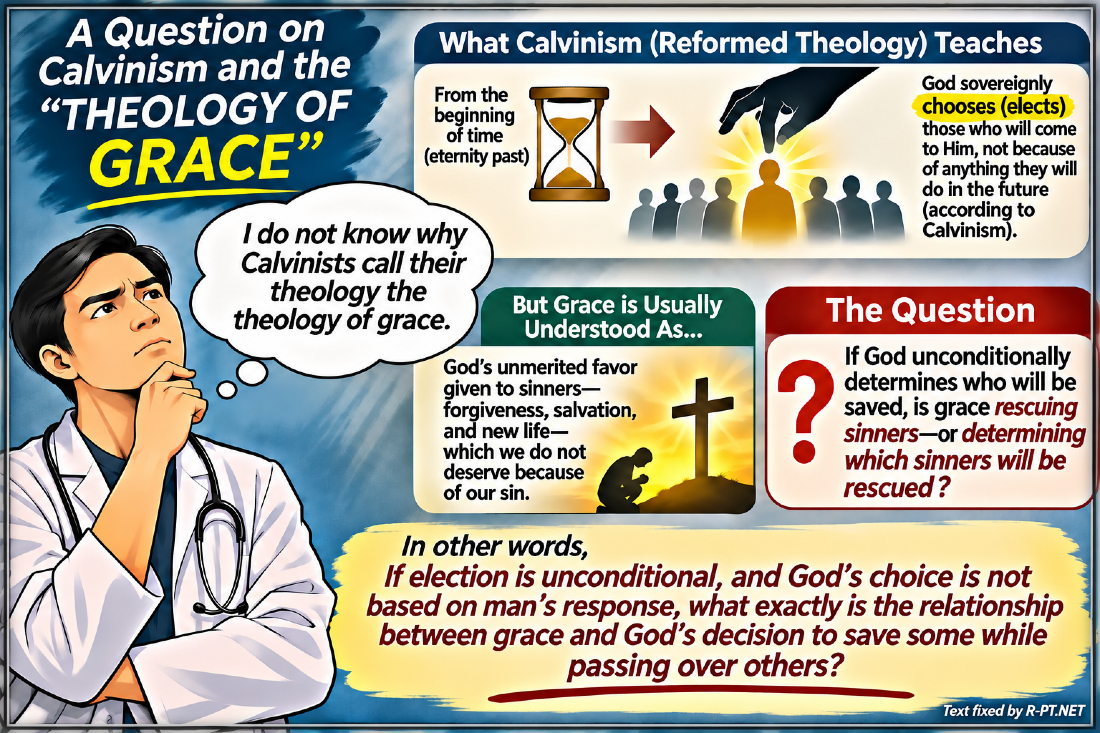
If Christ’s atoning work was intended only for the elect, and the non-elect have no possibility of responding savingly to the Gospel, what exactly is being communicated when the congregation is told that God loves the world and invites everyone to come to Him? I struggle with hearing what sounds like an Arminian or Provisionist invitation from the pulpit while knowing that the underlying theology is firmly five-point Calvinism. I recognize that Calvinists have their own theological explanations for reconciling these things, but I cannot simply overlook the tension.
I actually appreciated that the newer pastor was willing to preach the logical implications of his determinist theology openly, even where I vehemently disagreed with him. At least the congregation could hear what was actually being asserted. My concern was that other presentations seemed to soften or leave unstated those same implications when delivering the Gospel message.
For me, that raised questions of consistency, transparency, and, most importantly, whether the character of God was being accurately represented.
And therein lies much of my difficulty. I appreciated the Gospel invitations, the calls to repentance and faith, and the preaching that encouraged people to come to Christ. But this wasn’t simply a matter of hearing one thing from the pulpit and suspecting another behind the scenes. The determinist theology was being taught openly in the adult classes upstairs, while the pulpit often presented the Gospel in language that sounded much closer to an Arminian or Provisionist understanding of God’s invitation to sinners. I was therefore confronted with both:
- the seemingly open invitation to come to Christ and the underlying theological system that taught God had unconditionally determined who would and would not be saved.
I struggled with sitting under preaching that spoke of God’s love for the world and invited everyone to respond to the Gospel, while also attending classes where the theological framework behind those invitations was presented in distinctly determinist terms. I recognize that Calvinists have their own theological explanations for reconciling these things, but I could not simply overlook the tension between what was being proclaimed, what was being taught, and what the pastors themselves actually believed.
I actually appreciated that the newer pastor was willing to preach the logical implications of his determinist theology openly, even where I vehemently disagreed with him. At least the congregation could hear what was actually being asserted. My concern was not that Calvinism was being hidden entirely, but that the different presentations of the Gospel and God’s sovereignty seemed to leave congregants with substantially different impressions of what the church actually believed. For me, that raised questions of consistency, transparency, and, most importantly, whether the character of God was being accurately represented.
SEE MORE: